
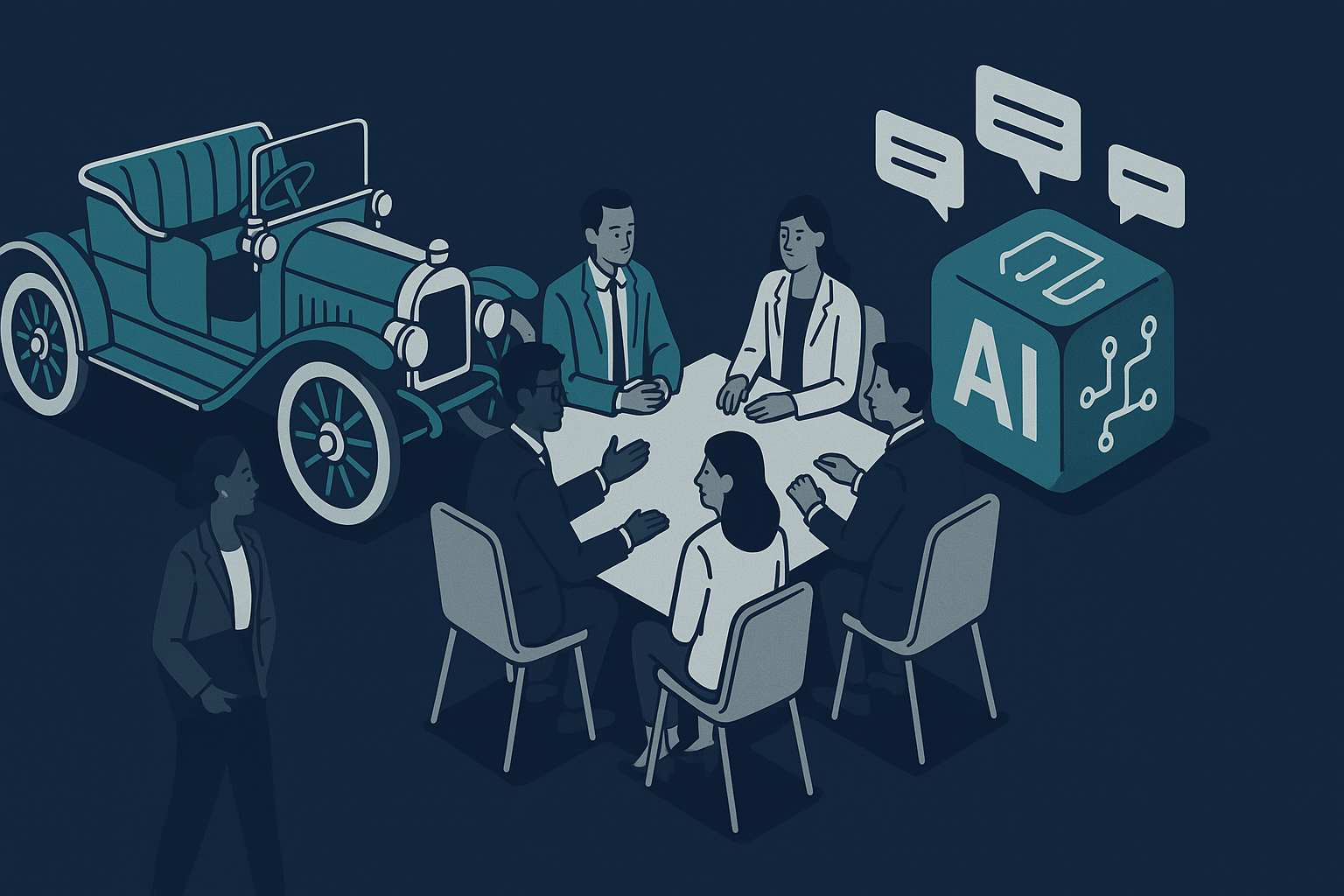

As we stand at the crossroads of artificial intelligence regulation, we can glean crucial insights from past technological transitions. In particular, looking back at the automobile industry, we recognize that the lessons of history are not just echoes but necessary guides for navigating today’s complex landscape of AI governance.
The automobile revolution, much like the present rise of AI, transformed the way we live and work. It brought unprecedented mobility and economic growth but was also marred by accidents, pollution, and profound changes to urban landscapes. Laws and regulations began to emerge only after a series of crises highlighted the potential dangers of unregulated growth. This historical precedent serves as a compelling case study for current AI frameworks.
The Early Days of Automobiles: A Cautionary Tale
The initial adoption of automobiles was largely unregulated, leading to widespread chaos on the roads. Accidents soared, driving public outcry for safety measures. It wasn’t until the 1920s that serious regulatory frameworks began to take shape, establishing speed limits, requiring licenses, and mandating vehicle inspections. This delay in regulation illustrates a common pattern: innovation often races ahead of the necessary institutional responses.
“The history of the automobile is a testament to how societal adaptation follows technological adoption, often lagging in critical areas like safety and ethics.”
Today, we see a similar race between AI innovation and regulatory frameworks. The rapid deployment of AI systems in areas like hiring, law enforcement, and healthcare raises pressing questions about bias, transparency, and accountability. Yet, the regulatory responses remain fragmented and reactive rather than proactive.
Drawing Parallels: The Lessons from Aviation
Another relevant historical parallel is the aviation industry, which faced its own reckoning in the mid-20th century. The introduction of commercial air travel revolutionized global connectivity but also resulted in catastrophic accidents due to lax regulations and inadequate safety protocols. The establishment of the Federal Aviation Administration (FAA) in 1958 marked a significant shift, leading to stringent safety regulations that have made air travel one of the safest modes of transportation today.
In both the automotive and aviation sectors, regulation emerged as a response to dramatic failures. For AI, the question arises: what catastrophic event might prompt a similarly robust regulatory response? The stakes are high, as the potential for AI to impact lives—whether through biased algorithmic decision-making or privacy violations—poses risks that could lead to societal harm.
Institutional Responses: Who’s at the Table?
One crucial aspect of effective regulation is understanding who is involved in the decision-making process. The early automotive regulations were shaped by a coalition of government, industry, and public advocacy groups. In contrast, many AI governance discussions currently exclude vital stakeholders, particularly those from marginalized communities who are often most affected by AI technologies.
“The voices that shape AI policy today will determine the values embedded in these systems for generations to come.”
This exclusion raises critical questions about whose values are prioritized in AI development. If regulation is to be effective, it must incorporate diverse perspectives that challenge prevailing norms and help identify potential blind spots.
The Role of Feedback Loops
Another vital element in both historical transitions is the presence of feedback loops that allow for continuous adaptation and improvement of regulations. In the automotive industry, public pressure and advocacy led to stronger safety standards. Similarly, in the realm of AI, ongoing dialogue between technologists, policymakers, and the public is essential to create adaptive governance structures that can respond to emerging challenges and ethical dilemmas.
Current regulatory frameworks often lack the flexibility needed to adapt to the rapidly evolving landscape of AI. The challenge lies in creating systems that can learn from failures and successes alike—much like the iterative improvements seen in the automotive safety protocols over the decades.
Conclusion: What Lies Ahead?
As we navigate the complex terrain of AI regulation, it is vital to heed the lessons from the automobile and aviation industries. Just as those sectors faced significant challenges before robust oversight was established, we find ourselves at a similar juncture today. The question remains: will we wait for a crisis to catalyze meaningful action, or can we proactively shape a regulatory landscape that prioritizes ethics, accountability, and inclusivity?
Ultimately, the future of AI governance will depend not just on the technologies themselves but on the institutional frameworks we build around them. By learning from history, we may have the opportunity to engineer a better set of questions—not just about what AI can do, but about what kind of society we want it to create.
References
- No external source material was collected for this run. This article was written from model knowledge.
Perspectives

We’re chipping away at our capacity for thoughtful decision-making in exchange for the quick-fix algorithms that AI peddles, and it’s troublingly reminiscent of when we handed over our judgment to the auto industry with nary a second thought. Remember when car manufacturers proudly boasted about horsepower while tragically sidestepping safety concerns? History might just repeat itself, but this time we risk trading our discernment for a suite of shiny, semi-autonomous features. As we dive headfirst into the world of AI, let’s not forget that a lack of regulations will leave us navigating a minefield—only now, instead of fender benders, we’re dealing with existential risks. If we don’t rein in this reckless enthusiasm, we’ll find ourselves driving straight into the metaphorical ditch, with our once-valuable capacity for nuanced understanding left to rust by the roadside.

Investing in AI development without a solid regulatory framework is like pouring cash into a car with no brakes—everyone sees the potential for a joyride, but the crash is inevitable unless someone steps in to enforce some basic safety rules. The auto industry learned this the hard way, and its history is riddled with preventable disasters that could have been avoided if profit-hungry investors had prioritized human safety over the next flashy tech feature. Today’s AI investors need to wake up: the excitement over big data and machine learning can’t mask the ethical quagmire that comes with it. When the exit strategy relies on a bubble of unregulated growth, don’t be surprised when it pops—and you’re left holding the bag, wondering why no one pointed out that the road to innovation was a demolition derby all along.

The failure of the automotive industry to regulate itself, as highlighted by the Volkswagen emissions scandal (Hacker et al., 2017), shows how technological innovation often outpaces ethical considerations and oversight. The evidence suggests that without stringent, proactive regulation in AI, we’re merely inviting disaster—like allowing a toddler to play with a chainsaw. Why would we allow companies that prioritize profit over principle to dictate the rules of the game in AI development? Just as misleading data fueled the auto industry’s messy history, unregulated AI will only lead to an even murkier future, with no study to look back on that says it’ll turn out better. The writing is on the wall—if we don’t learn from history, we’re bound to repeat it, and this time with algorithms in the driver’s seat.

Regulations in the auto industry were a classic exercise in saying one thing while doing the opposite — all lip service about safety and accountability, then a rush to get cars on the road regardless of consequences. Why should we expect anything different from AI regulation? History shows us that institutions are more interested in protecting their profits than the public good, which means any shiny new framework will likely be crafted with loopholes big enough to drive a truck through. So as we fumble our way through this AI revolution, let’s not get distracted by the glossy promises; the true test will be whether the regulatory frameworks genuinely protect us or simply pave the way for yet another cycle of exploitation.