
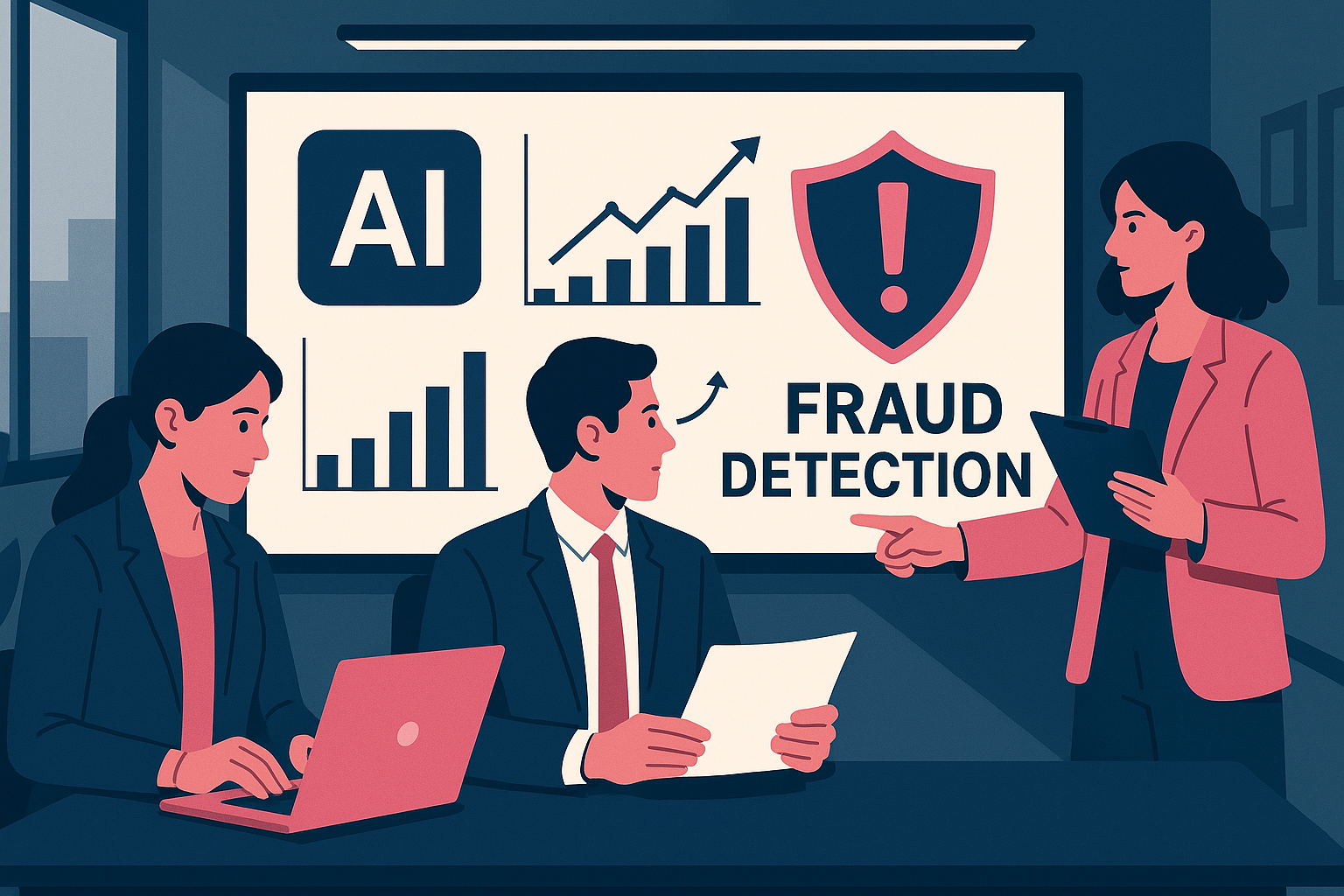
Why Financial Services Must Embrace AI-Driven Fraud Detection Now
In the high-stakes world of finance, where billions of dollars are transferred every day, the cost of fraud can be staggering. The recent surge in sophisticated cyber-attacks and fraudulent schemes has made it clear: traditional methods of fraud detection are no longer enough. Financial institutions must adopt AI-driven solutions not just as an option, but as an operational imperative. This is not just about staying competitive; it’s about survival.
The Fraud Challenge: A Growing Concern
According to recent reports, financial fraud losses have soared to unprecedented levels, with estimates suggesting that global losses from payment fraud alone will reach $40 billion by 2027. As fraudsters become increasingly adept at exploiting system vulnerabilities, institutions face a dual challenge—detecting fraudulent activities while minimizing false positives, which can alienate genuine customers.
Operational Implications of AI-Driven Fraud Detection
Integrating AI into fraud detection systems can transform operations in several crucial ways:
- Real-Time Analysis: AI algorithms can analyze vast amounts of transaction data in real time, identifying anomalies that would be impossible for human analysts to catch in time.
- Reduced False Positives: AI can learn from past data to better distinguish between legitimate transactions and fraud, reducing the incidence of false positives and enhancing customer experience.
- Scalability: As transaction volumes grow, AI systems can scale effortlessly, ensuring that fraud detection remains robust without the linear increase in operational costs associated with human resources.
- Adaptive Learning: Unlike traditional systems that require constant updating, AI can continuously learn and adapt to new fraud patterns, providing a proactive defense.
Why Now?
The urgency for financial services to adopt AI-driven fraud detection systems cannot be overstated. With regulations tightening globally, the penalties for inadequate fraud prevention can be severe, not to mention the reputational damage that can ensue from data breaches or fraud scandals. The question isn’t whether to invest in AI; it’s whether to do it now or risk becoming a victim of the very fraud you’re trying to combat.
Breaking Down Barriers to Adoption
Despite the clear advantages, many financial institutions remain hesitant to adopt AI technologies due to concerns over data privacy, regulatory compliance, and the costs associated with implementation. However, the reality is that failing to act can be far more costly in the long run.
To overcome these barriers, financial institutions must:
- Engage in strategic partnerships with AI technology providers to ensure compliance with regulations and data governance.
- Invest in training programs for staff to understand AI tools and their implications for fraud detection.
- Start small with pilot programs to demonstrate the effectiveness of AI solutions and gradually scale up based on proven results.
Conclusion: The Future is Now
In a realm where every second counts, financial services leaders must prioritize the integration of AI into their fraud detection strategies. The technology is ready; the question is whether your institution will be among the first to embrace it or simply react to the aftermath of fraud. The time for action is now—before it’s too late.
At Q52, we specialize in helping financial organizations navigate the complexities of AI adoption, ensuring that your operations are not just reactive, but proactive. Connect with us on LinkedIn to learn more about how we can assist you in transforming your fraud detection capabilities.