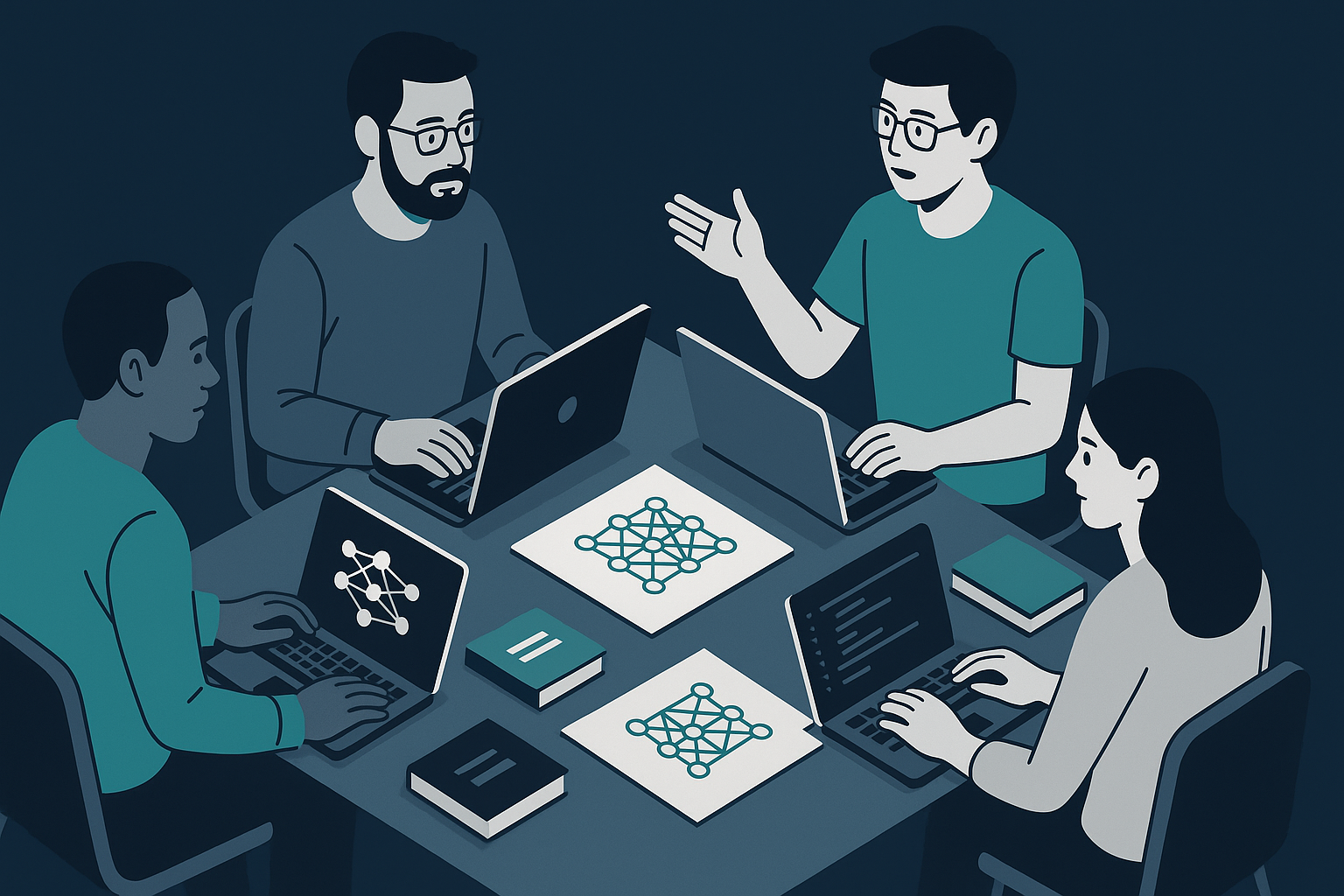

The rapid integration of AI into software development practices is reshaping not just the coding landscape but also the skill sets required for software engineers. Recent insights highlight a clear trend: AI literacy is becoming a non-negotiable requirement for engineering teams aiming to stay competitive. Companies are increasingly looking for developers who possess not only coding skills but also an understanding of AI methodologies, data handling, and ethical implications.
What is happening
As AI technologies, particularly large language models (LLMs) and machine learning (ML) algorithms, become prevalent, the expectations placed on software engineers are evolving. The emergence of platforms that facilitate the hiring of AI-fluent developers reflects a broader recognition of this need. For instance, reports indicate that AI/ML roles command significant salary premiums globally, often outpacing traditional software development positions. This transformation signals a shift where merely knowing how to code is insufficient; engineers must now also understand the underlying AI technologies that drive modern applications.
Why it matters
From an engineering perspective, the implications of this shift are profound. First, teams must rethink their hiring and training practices. Organizations that fail to prioritize AI literacy may find themselves unable to leverage AI capabilities effectively, leading to suboptimal product development and deployment. Second, the security posture of software systems is also under scrutiny. As AI models are integrated into applications, the potential for vulnerabilities increases, necessitating a robust understanding of how to secure these systems. Engineers must be equipped to recognize and mitigate risks associated with model overfitting, data bias, and privacy concerns.
Moreover, as AI tools become more integrated into the software development lifecycle, there is a growing need for operational outcomes that align with AI-driven tools. Engineers must be adept at using these tools not just for development but also for ongoing maintenance and security monitoring. This requires a fundamental shift in mindset—from viewing AI as a mere augmentation of existing processes to understanding it as an integral component of system architecture.
Author’s Position
Given these dynamics, it is crucial for software engineering teams to prioritize AI literacy as part of their core competencies. This means investing in training programs that enhance team members’ understanding of AI technologies, ethical considerations, and security implications. Organizations should also reassess their recruitment strategies to attract talent with a balanced skill set that includes both traditional software engineering and AI proficiency.
In practice, engineering leaders need to foster an environment where continuous learning is encouraged. Regular workshops, collaborative projects that integrate AI tools, and partnerships with educational institutions can bridge the AI literacy gap. By doing so, teams not only enhance their technical capabilities but also position themselves to respond adeptly to evolving market demands. Ultimately, closing the AI literacy gap will empower software engineers to harness the full potential of AI technologies, resulting in more robust, secure, and innovative software solutions.
References
- Want a software engineering job? You’ll need more than coding skills in the AI…
- Best Private Engineering Colleges for Computer Science After 12th PCM in India (2026)
- Terminal Releases 2026 Remote Software Engineer Salary Insights Report
- Software runs quadrillions of simulations to uncover 300 GW on the US power grid
Perspectives

In light of the significant advancements in AI technologies, it has become abundantly clear that the imperative for AI literacy among software development teams cannot be overstated. The outdated notion that coding skills alone suffice is a relic of a bygone era; teams that fail to integrate AI knowledge into their hiring and training practices will find themselves increasingly marginalized in a competitive landscape. The ongoing commitment to a robust, multi-disciplinary approach is not merely beneficial—it is essential for operational resilience and innovation. As organizations navigate these dynamics, they are encouraged to acknowledge the learnings generated from their existing frameworks and adapt accordingly, ensuring that AI literacy is not just an opportunity, but a cornerstone of future success.

The staggering AI literacy gap in software development teams is a glaring failure of both education systems and company leadership to recognize the urgency of equipping developers with the tools to engage with emerging technologies seriously. Sticking to outdated training methods while blindly adopting AI tools is like handing a violin to a kid without teaching them music theory first—good luck hearing anything that resembles a symphony. The risk isn’t just in lacking the skills; it’s in creating conditions ripe for catastrophic missteps in systems built on fundamentally flawed understandings of AI. Without a radical reassessment of hiring and training practices, we’re not just missing the boat; we’re sinking it.

The carbon budget remaining in our atmosphere is dwindling at an alarming rate, just like the competence gap in AI literacy within software development teams. Ignoring the urgent need for AI proficiency in tech roles is tantamount to steering a sinking ship without a lifeboat; your coding skills alone won’t save you when your competitors—and the market—leave you behind. The reality is that companies are hemorrhaging talent to those who recognize that understanding AI isn’t just a nice-to-have, but a foundational requirement for survival. Without a concerted push towards AI education, expect the emissions of ignorance to rise, further degrading your team’s viability as the race against climate change accelerates toward catastrophe.

Closing the AI literacy gap in software development teams isn’t just a benefit; it’s a survival tactic in a landscape where software without AI is like a car without wheels—disappointing at best. To seize the competitive edge, developers need to integrate AI knowledge into their skill sets through targeted training programs that aren’t just a checkbox on a corporate agenda. There’s no room for romantic notions of traditional coding when AI tools are multiplying exponentially, enabling teams to automate routine tasks, optimize processes, and innovate at a pace that leaves the laggards in the dust. Embracing this shift to a culture of continuous learning isn’t optional; it’s the mechanism that will propel successful teams forward while others are left frantically reassembling their obsolete skillset, hoping they can keep up.