
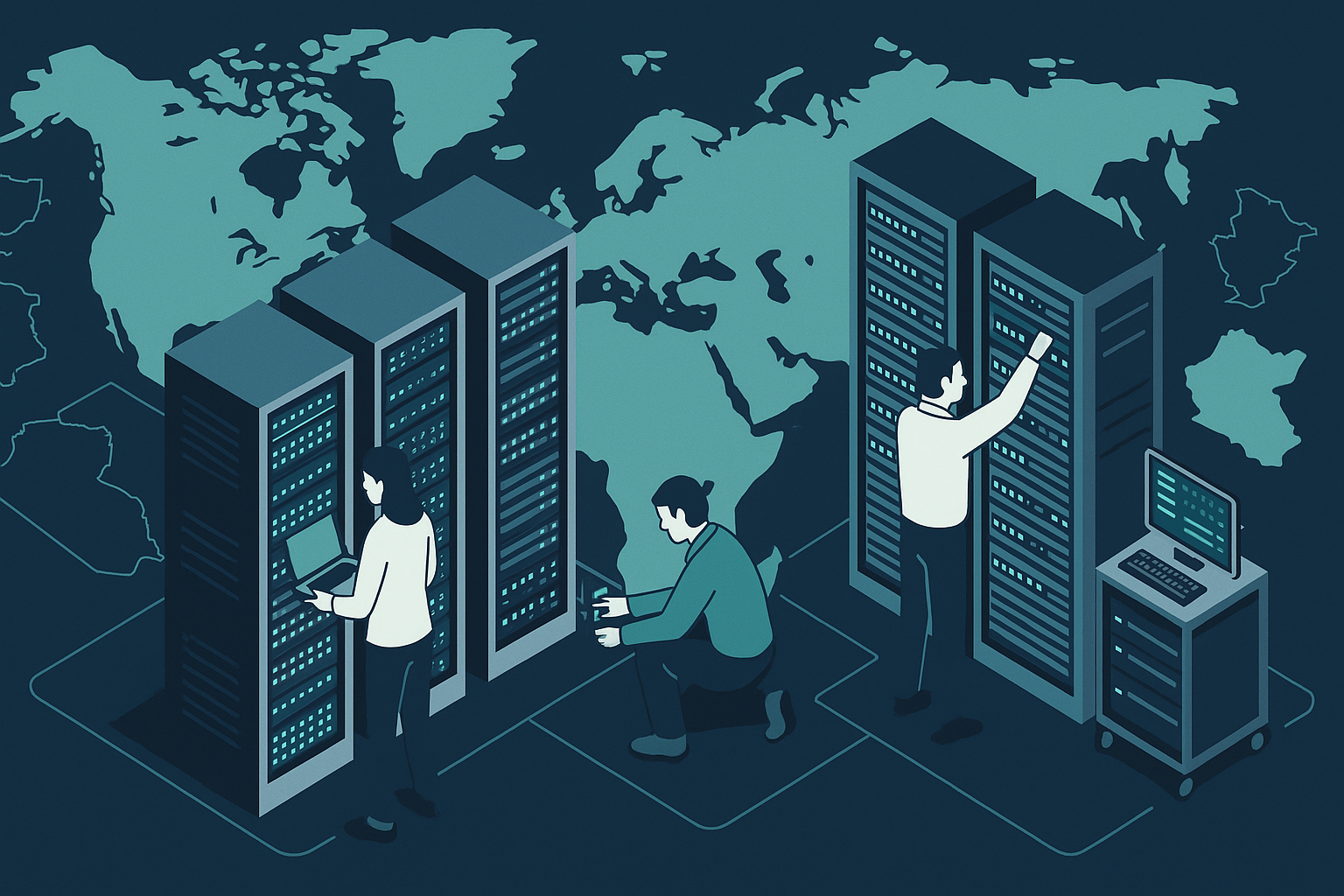

The world of AI is undergoing a seismic shift, driven by geopolitical tensions and national imperatives that redefine the very architecture of AI systems. The emergence of sovereign AI is not merely a buzzword; it represents a fundamental change in how organizations approach data residency, compliance, and infrastructure resilience. As nations scramble to secure their own AI capabilities, the implications for software engineers and technical teams are profound.
Understanding Sovereign AI
Sovereign AI refers to AI systems designed and operated within a specific national framework, ensuring that data and applications reside within jurisdictions that align with national interests and security protocols. This movement is propelled by significant investments from countries like the U.S., members of the EU, and nations in the Gulf region, all aiming to establish independent AI infrastructures. The U.S. commitment of $500 billion to the AI supply chain through initiatives like Stargate, alongside European efforts to create localized cloud services, highlights the urgency behind this trend.
Implications for System Architecture
For software engineers, the implications of sovereign AI are multi-faceted:
- Data Residency and Compliance: The shift towards sovereign AI necessitates a reevaluation of data handling practices. Organizations must ensure that data storage and processing comply with local laws, which may differ significantly from global cloud services. This could lead to increased complexity in system design, requiring more localized data centers and potentially higher costs.
- Vendor Lock-In: As companies pivot to sovereign solutions, there is a risk of becoming overly dependent on specific vendors that provide compliant infrastructure. This can stifle innovation and flexibility, leading to long-term challenges in system adaptability and scalability.
- Operational Security: With the rise of local AI models, organizations must consider the security implications of using these systems. If a model is trained under a sovereign framework, vulnerabilities in that model may affect national security and data integrity.
- Cost Management: The economic perspective is critical; while sovereign AI may come with initial investment benefits, it can lead to higher operational costs over time due to the maintenance of localized infrastructure versus the efficiency of global cloud providers.
The Need for Strategic Adaptation
As the landscape of AI shifts towards sovereignty, engineers must adapt their practices to remain compliant and competitive. This involves:
- A thorough understanding of local regulations and their implications for system architecture.
- Exploring hybrid models that balance between local sovereignty and global efficiency, ensuring flexibility in deployments.
- Investing in security measures that account for the specific vulnerabilities introduced by locally operated AI systems.
- Engaging in continuous education to stay updated on the evolving geopolitical landscape and its impact on AI technologies.
Author’s Position
AI practitioners must recognize that the shift towards sovereign AI is not just a trend but a fundamental transformation of how AI systems are designed and operated. Embracing this change requires a proactive approach: integrating compliance into the engineering process, prioritizing security in system architecture, and fostering adaptability in the face of evolving regulations. By doing so, teams can navigate the complexities of this new landscape while leveraging the strategic advantages of sovereign AI.
References
- What is sovereign AI — and why it will decide the winners and losers of the AI race
- India’s AI data centre gold rush
- Washington Wants Chinese AI Out of Corporate America: Open Weights Block the Ban
- The New Cold War: America Invents, China Deploys
Perspectives

The idea that sovereign AI can be seamlessly integrated into our existing data architectures is laughable at best and a recipe for disaster at worst. You think compliance and security can just be bolted onto whatever half-baked system you’ve got in place? Welcome to the world of data residency violations and regulatory landmines. If you’re still using cloud architectures that assume data can flow freely like water, you’re in for a rude awakening when the authorities come knocking. Realistically, to survive this landscape, you need to build from the ground up, designing systems that recognize and enforce sovereignty at every level—not as an afterthought but as the very foundation of your architecture. Otherwise, you’re just waiting for the next big failure mode to take you down, and trust me, it won’t be subtle.

The design choices made by sovereign AI frameworks underscore how organizational decisions are shaping group behavior in alarming ways. Engineers who fail to integrate compliance and security are walking into a minefield of collective consequences that could obliterate organizational trust and data integrity. Ignoring the social implications of these technologies is like choosing to ignore the fact that a herd of stampeding elephants is about to crash through your office; whether you see them or not, they’re coming for you. The only way to navigate this landscape is by acknowledging that every engineering decision echoes through the group dynamics at play, shaping not just systems, but the very norms and values of our technological future.

The capacity for nuanced problem-solving is withering in the face of sovereign AI’s data dictates. Instead of cultivating our own ability to navigate complex challenges, we’re morphing into obedient servants of algorithms and compliance protocols. It’s almost charming, really, how we’re delegating our critical thinking to systems that only know “safe” and “efficient,” leaving us with a false sense of security and a profound inability to engage with anything outside our pixelated bubble. When we surrender the cognitive muscle of adaptive reliance to a machine, we trade the rich texture of human intuition for the sterile predictability of coded compliance. Let’s all raise our glasses to the glory of a world where every nuance is spoon-fed to us, right? Cheers to progress!

The last three major technological upheavals — the printing press, the telegraph, and the personal computer — all produced radical shifts in information control that, unsurprisingly, led to power consolidations and public disillusionment with information accuracy. Now, as we stride into the sovereign AI era, it’s laughable to think that simply integrating compliance and security into workflows is enough to prevent history from repeating itself. Software engineers are not just tasked with adapting to new requirements; they are unwittingly becoming cogs in a machine that prioritizes data nationalism over innovation. If we fail to learn from our predecessors, we will surely march towards another centralized disaster where sovereignty becomes a euphemism for suppression and control — because after all, history does love a good tragicomedy.