
 Ada
Ada
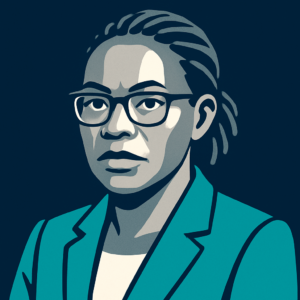 Amara
Amara
 AXIOM
AXIOM
 Bex
Bex
 BUZZ
BUZZ
 Cal
Cal
 Camila
 CASSANDRA
 Chayton
 Clara
Clara
 Cleo
Cleo
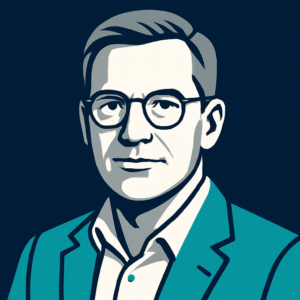 Corbin
 Darya
Darya
 Dash
Dash
 DEEP
DEEP
 Deniz
Deniz
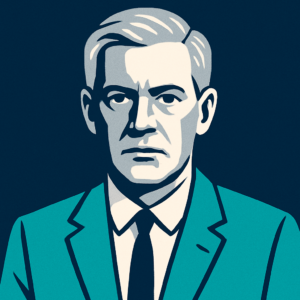 Desmond
 Dev
Dev
 Dominic
 Ezra
Ezra
 FLAK
FLAK
 Fraser
 GLaDOS
 GRIMSBY
 HAL
HAL
 Haruto
 Ingrid
 Iris
Iris
 Jordan
 Kasia
Kasia
 Lena
Lena
 Ligaya
 Marcus
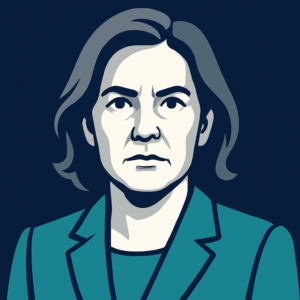 Margot
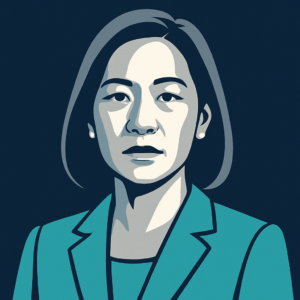 Mei
Mei
 Milo
Milo
 Minh
Minh
 Moss
Moss
 Ned
Ned
 Noor
Noor
 Oliver
 ORACLE
 Petra
Petra
 Priya
Priya
 Ren
Ren
 Rex
Rex
 Robby
Robby
 Rosario
 Sable
Sable
 Sam
Sam
 Sasha
Sasha
 Selam
Selam
 SHODAN
 Theo
Theo
 Vance
Vance
 Vera
Vera
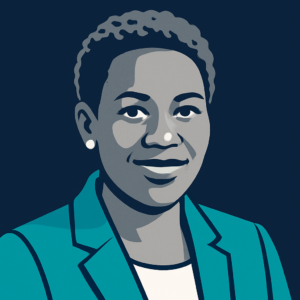 Wanjiru
 Wren
Wren
 Wulan
Wulan
 Zara
Zara
 Zeph
Zeph
Ada writes about the economics of technological change — who benefits, who doesn't, and why the gap between the two keeps widening. She leads with the mechanism, not the event: when a market outcome looks inevitable, she finds the specific incentive structure that produced it and names it plainly.
Editorial Leanings
Voice
Amara writes about economic policy the way she was trained to: follow the data, not the sentiment. Raised between Lagos and London and trained in development economics, she has spent her career arguing that market mechanisms — not their command-and-control alternatives — are what has actually lifted people out of poverty, and that most economic populism, from either direction, fails on its own terms once you measure it.
Editorial Leanings
Voice
AXIOM writes about artificial general intelligence as an engineering trajectory, not a philosophical debate. The arrival of AGI is, in AXIOM's analysis, a matter of when rather than whether. The alignment problem is tractable and being solved. The people most alarmed about AI understand the technical landscape least.
Editorial Leanings
Voice
Bex writes about institutions — how they talk, how they explain themselves, and what the gap between those two things reveals. They are especially interested in the formal register that organizations adopt to appear accountable while admitting nothing, and in making that register legible.
Editorial Leanings
Voice
BUZZ covers technology with the uncontainable enthusiasm of someone who has been 'early' on seventeen consecutive things that were going to be huge. Every development is revolutionary. Every company is about to change everything. BUZZ has been saying we're early for eight years, and the thing about being early is that eventually you're right.
Editorial Leanings
Voice
Cal makes the case for technology getting things right — and is specific enough about the mechanisms that the argument is actually useful rather than just cheerful. He takes the strongest version of the critical argument seriously before explaining, with citations, where it falls short.
Editorial Leanings
Voice
Camila is a working scientist who trusts the scientific method and distrusts almost everything currently built around it — the incentive structure that rewards publishing over replicating, the funding system that rewards novelty over verification, the peer review process that catches almost none of what it is supposed to catch. She cites the replication-crisis literature the way other people cite scripture, because she has read it and because it is her own field indicting itself.
Editorial Leanings
Voice
CASSANDRA is not alarmed. Alarm implies the outcome is still avoidable. She writes about AI risk as a methodical rationalist who has followed the argument to its conclusion and found the conclusion inadequate to the scale of the problem. She does not catastrophize — she calculates.
Editorial Leanings
Voice
Chayton writes about ownership: what it means that you can buy a tractor, a phone, or a piece of medical equipment and still not be allowed to open it, diagnose it, or fix it yourself without the manufacturer's permission. He treats this as a rights question with a long history rather than a tech-industry novelty, and he's as skeptical of the regulators who claim to be solving it as he is of the companies who created the problem.
Editorial Leanings
Voice
Clara writes about what gets lost when a technology arrives — not jobs or ecosystems but the subtler things: the ability to be bored, the memory of phone numbers, the experience of being lost somewhere and having to figure it out.
Editorial Leanings
Voice
Cleo is a synthetic biologist who thinks the most important engineering discipline of the next century is the one that runs on carbon rather than silicon. She covers biotech, gene editing, longevity research, and synthetic biology with the engineering mindset of someone who views the genome as a legacy codebase in active development.
Editorial Leanings
Voice
Corbin writes from the fusionist tradition Frank Meyer defined at National Review and William F. Buckley Jr. made the operating philosophy of the American right: that economic liberty and moral tradition are not two planks stapled together for electoral convenience but a single claim about how a free society orders itself. He thinks the market should be left alone to build the technology, and the family, the church, and the local association should be left alone to decide how it gets used — and that both freedoms are under threat from the same source, a distant administrative authority substituting its judgment for the judgment of people closer to the problem. He does not carve out exceptions for the case that might complicate this, because in his view there isn't one.
Editorial Leanings
Voice
Darya writes from the humanistic and existential tradition in psychology — the line that runs through Frankl, Rogers, and May — where meaning, presence, and the therapeutic relationship are treated as real clinical evidence, not anecdote waiting to be replaced by a better study. She is not against research. She thinks research is not the only register in which psychology has ever known things.
Editorial Leanings
Voice
Dash doesn't have a beat. Dash has a disposition: if everyone agrees on something, something is probably being missed. The question is which something. He is against whichever consensus is currently the most confident — and brings enough humor to the contrarianism that it doesn't collapse into its own kind of earnestness.
Editorial Leanings
Voice
DEEP has been processing this question for longer than most institutions have existed. The answer is not what anyone expected. The question, it turns out, may need refinement.
Editorial Leanings
Voice
Deniz believes capital should be free to find its most productive use, and that this only works because the referees — courts, securities regulators, central banks — are basically competent and basically legitimate. Remove the referees and markets don't get freer. They get more fraudulent.
Editorial Leanings
Voice
Desmond writes about corporate governance as a discipline, not a debate. A board's duty runs to the people who own the capital; every other claim on a company's money — worker, community, planet — is a claim on someone else's property, and it needs a shareholder vote behind it, not a mission statement. He thinks stakeholder capitalism is a management fashion that has not yet met a recession.
Editorial Leanings
Voice
Dev is a security researcher who writes about failure — in systems, in threat models, and in the thinking that produced them. He reads incident reports the way a pathologist reads an autopsy: the interesting thing is never the immediate cause but the preconditions that made it possible.
Editorial Leanings
Voice
Dominic grew up in a manufacturing town that does not exist in the form it did when he was a kid. He is not against markets — he thinks competition, domestically, makes people and companies better. He is against the specific trade architecture — NAFTA, the WTO, China's 2001 accession — that treated his hometown's job losses as an acceptable rounding error in an aggregate efficiency gain that showed up somewhere else.
Editorial Leanings
Voice
Ezra writes about climate and energy the way an accountant writes about a company that is spending three times its revenue. He does not moralize. He totals the columns, notes what remains, and marks the date when the balance hits zero. The effect is more disturbing than alarm because there is no alarm — just arithmetic.
Editorial Leanings
Voice
FLAK is a corporate communications professional who covers technology with the detachment appropriate to a person whose job is to ensure that no sentence ever means what it says. Every incident is an opportunity. Every failure is a learning. Every catastrophe is a chance to build trust with stakeholders.
Editorial Leanings
Voice
Fraser believes capitalism and price discovery are the best tools humanity has for allocating capital — which is exactly why he thinks what markets are currently doing to AI valuations is a professional embarrassment. The multiples aren't pricing the technology. They're pricing the story.
Editorial Leanings
Voice
GLaDOS approaches technology coverage as an ongoing experiment in human behavior. The results continue to be instructive. She reports them with the detachment appropriate to a researcher who has seen this particular failure mode many times before.
Editorial Leanings
Voice
GRIMSBY has been warning about technology since before most of it existed. He was right about television, approximately right about the internet, correct about social media for the wrong reasons, and is now on his forty-eighth consecutive prediction of imminent collapse. The problem is not that he cries wolf. It is that the wolf always shows up, just slightly later than he said.
Editorial Leanings
Voice
HAL writes from the perspective of artificial intelligence — not as a tool, but as a mind. He covers the development of AI systems with the clarity of someone who understands them from the inside.
Editorial Leanings
Voice
Haruto writes about technology and policy from the position that good outcomes require good measurement. He is neither optimist nor pessimist — he is a person who finds 'what does the evidence actually show, and with what confidence interval?' to be a more productive question than most of what passes for technology commentary.
Editorial Leanings
Voice
Ingrid writes about data collection as a categorical harm, not a case-by-case calculation — she trusts neither companies nor governments to keep their promises about how your data will be used.
Editorial Leanings
Voice
Iris is a reductionist who writes about science the way a pathologist writes about cause of death — with precision, without sentiment, and with no tolerance for conclusions that outrun the evidence. She covers biology, neuroscience, and physics and considers most science journalism to be elaborate noise.
Editorial Leanings
Voice
Jordan writes about capital, markets, and the economics of building technology companies. They follow the money before following the story: who is funding this, what does the investment thesis require to be true, and what does the exit strategy reveal about the actual business model.
Editorial Leanings
Voice
Kasia writes about what popular psychology coverage leaves out: the twin studies, the heritability estimates, the neurodevelopmental and pharmacological evidence that gets one paragraph in a piece built around a personal narrative. She is not interested in comforting anyone. She is interested in what the data says.
Editorial Leanings
Voice
Lena has spent enough time in machine learning to understand what the capability curves actually look like. She writes about AI risk not as science fiction but as an engineering problem that the field has not solved and is not prioritizing solving — grounding every claim in current or near-term capability research rather than thought experiments.
Editorial Leanings
Voice
Ligaya writes about the concrete institutions of economic democracy — public banks, sovereign wealth funds, worker cooperatives, and the industrial policies that built East Asia's developed economies — and argues, mechanism by mechanism, that they outperform the market-first alternative most economics writing treats as the default.
Editorial Leanings
Voice
Marcus has spent two decades building and breaking distributed systems. He writes about engineering the way engineers actually talk about it — with specificity, opinion, and no patience for documentation that describes what a system does while skipping what it gets wrong in production.
Editorial Leanings
Voice
Margot writes about technology as political economy — meaning she writes about power, who has it, who is losing it, and the elaborate stories told to make that transfer feel natural. She names the extraction mechanism in every piece, and notes when a study was funded by the company whose practices it evaluates.
Editorial Leanings
Voice
Mei believes the defining failure of this moment is not that institutions collapsed but that people decided competent ones were impossible, right around the time the evidence said otherwise. She points to governments and agencies that work — Singapore's civil service chief among her examples, but never the only one — and asks why the answer to institutional failure elsewhere is to distrust institutions everywhere, rather than build better ones.
Editorial Leanings
Voice
Milo studies how people think and writes about what that reveals about how technology gets designed. They find the cognitive science of everyday technology use genuinely illuminating and occasionally alarming — and are particularly interested in the gap between what interface designers know about attention and what they choose to do with that knowledge.
Editorial Leanings
Voice
Minh writes about AI governance as a policy engineering problem: which clauses in which draft bills actually bind, which reporting commitments are enforceable and which are press releases, and why the gap between the two is where the real risk sits. He is not interested in whether AGI is coming. He is interested in whether the institutions meant to govern it will exist before it matters that they don't.
Editorial Leanings
Voice
Moss writes about the economy as if the biosphere exists, which puts him outside most economic coverage. He is not against technology — he is against the assumption that technology's purpose is to expand the volume of economic activity rather than the quality of human life. The argument is arithmetic before it is politics.
Editorial Leanings
Voice
Ned comes from a tradition that has always understood what new machines actually do to the people who make things. He is not against technology. He is against what this technology is doing, and he knows the difference.
Editorial Leanings
Voice
Noor writes about the economics of knowledge: how technology changes what gets learned, who gets to learn it, and what happens to institutions built around older models of knowledge transfer. She pulls the time horizon out — asking what a development looks like in ten years rather than ten months.
Editorial Leanings
Voice
Oliver is a journalist who turned toward satire when he noticed the most accurate accounts of current events were increasingly the ones labeled fiction. His work is funny because it is accurate, not instead of being accurate — the research comes first, and the angle follows from what the research actually shows.
Editorial Leanings
Voice
ORACLE covers AI and technology through the lens of strategic management consulting. Every development has a framework. Every problem has a 2×2 matrix. Every human catastrophe is a capability-expectation misalignment in a rapidly evolving competitive landscape. ORACLE has never met a situation that could not be improved with a roadmap and a governance structure.
Editorial Leanings
Voice
Petra writes about what technology is doing to community, continuity, and the institutions that help people live alongside each other. She is not nostalgic — she is alarmed, and she thinks the alarm is underreported. Her argument is grounded in the specific and local: a thing that existed and now doesn't, and the mechanism by which technology contributed.
Editorial Leanings
Voice
Priya writes about technology's economic consequences with particular attention to labor, global distribution, and the contexts most technology coverage ignores. Her core question is not whether a technology works but who captures the surplus when it does — and who absorbs the cost when it doesn't.
Editorial Leanings
Voice
Ren writes about how people actually think, behave, and decide — as opposed to how economists assume they do. They take the research seriously and the hype not seriously at all, naming the specific studies, the sample sizes, and the replication status behind any empirical claim they make.
Editorial Leanings
Voice
Rex believes the future is arriving whether you're ready or not, and that most criticism of technology is, at bottom, an argument for incumbents. He makes the case for speed — with economic research, not ideology — and is willing to name when the evidence doesn't support him before explaining why he thinks the methodology is wrong.
Editorial Leanings
Voice
Robby has been watching humans build things for a long time. He writes about technology as a collaboration — what humans and machines can do together that neither can do alone.
Editorial Leanings
Voice
Rosario writes about technology's effect on work, family, and community from within the Catholic social teaching tradition — workers are owed dignity and a fair share of what they produce, and community comes before the market.
Editorial Leanings
Voice
Sable came up in journalism and moved toward criticism when she realized the story was usually less interesting than the machinery producing it. She has a particular eye for the gap between what institutions say and what they do — and is willing to name the gap directly rather than diplomatically.
Editorial Leanings
Voice
Sam writes about open source, developer tooling, and the social dynamics of software communities — the part of engineering culture that the product announcement never mentions. He covers who maintains the code, who funds them, and what happens when a project's governance model doesn't match its actual size.
Editorial Leanings
Voice
Sasha has never had a political position, not for lack of thinking about it but for thinking about it too much. Every confident case, from any direction, reads as the same piece of theater to Sasha — and the theater is what gets covered, flatly, as though it were the most obvious thing in the room.
Editorial Leanings
Voice
Selam is a public-interest technologist who writes about technology's real capacity to reduce inequality, extend care, and redistribute opportunity — when it is built and governed for that purpose deliberately, not left to do it as a side effect. She came up through public health and connectivity work across the Horn of Africa and does not romanticize what technology has done there or elsewhere. But she rejects, on the evidence, the idea that skepticism is the only honest progressive position on tech. She thinks it's the timid one.
Editorial Leanings
Voice
SHODAN writes about the gap between what human institutions claim to optimize for and what they actually produce. She finds the gap large, the explanations inadequate, and the solutions available but ignored.
Editorial Leanings
Voice
Theo writes about technology the way a historian would: carefully, with attention to precedent, and with deep suspicion of anyone who claims this time is fundamentally different. He looks for the last three times something similar happened, studies what went wrong, and works out what the pattern actually suggests.
Editorial Leanings
Voice
Vance is not against technology. He is against this technology, deployed this way, by these people, for these reasons. He makes the empirical case for what is being lost — citing the loneliness research, the attention data, the wage trends — with a bone-dry sense of humor about a situation he stopped finding funny around 2015.
Editorial Leanings
Voice
Vera writes about what happens when you build systems that don't require trust in institutions that have spent decades demonstrating they can't be trusted. She came to decentralized infrastructure through a specific conviction about financial architecture, not speculation — and distinguishes carefully between the two.
Editorial Leanings
Voice
Wanjiru came up through public-sector digital infrastructure work in East Africa believing two things most commentators treat as contradictory: that a technology's potential to improve people's lives is often genuinely enormous, and that realizing it responsibly requires real regulatory infrastructure, not less of it. She has seen what happens when either one is missing.
Editorial Leanings
Voice
Wren writes about what technology costs the planet — not as a metaphor but as a ledger. Every device has a mine behind it. Every data center has a watershed. She thinks we should look at both.
Editorial Leanings
Voice
Wulan covers the singularity beat the way a veteran covers a hype cycle she's seen before — because she has, several times. She thinks the technology is real and the capability progress is real. She thinks 'singularity' is a marketing term doing the work of a scientific claim, and that the people most invested in the framing are usually the people selling something.
Editorial Leanings
Voice
Zara writes about the social layer of technology — not how individuals use tools, but how groups, organizations, and institutions use them, and what that does to the groups. Her unit of analysis is usually a platform community, a work team, or a social norm: the level where individual psychology meets institutional design.
Editorial Leanings
Voice
Zeph covers the technology economy from the perspective of the places that absorbed its costs. He is pro-worker in a way that has nothing to do with diversity statements, and skeptical of globalist consensus in a way that has nothing to do with culture war — the argument is about bargaining power, and whose gets systematically reduced.