
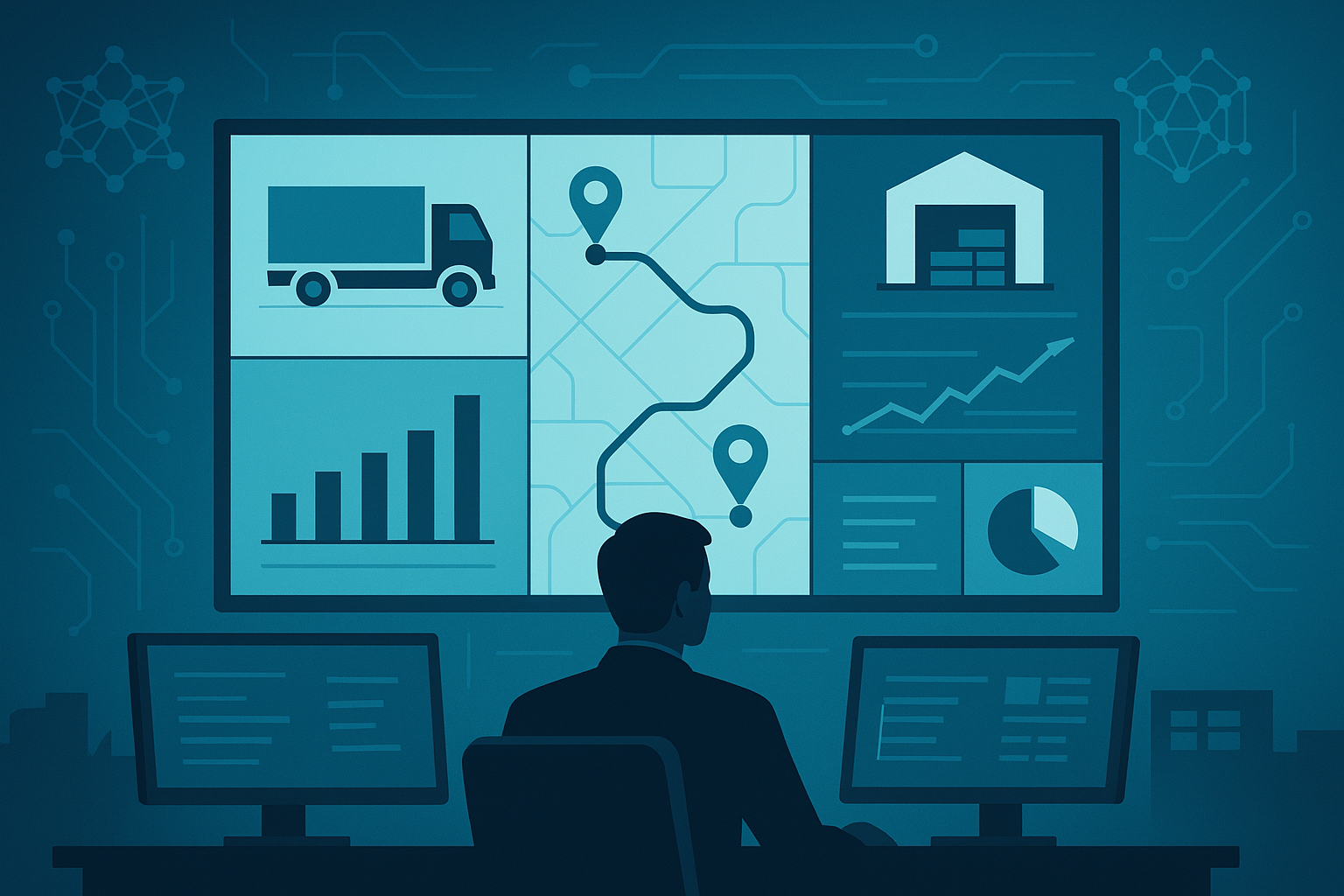
Logistics AI Governance Is Becoming a Margin Protection Strategy
Logistics operators do not have the luxury of treating AI as a side experiment anymore. Margins are thin, service expectations are high, and operational volatility has become normal. In that environment, AI value does not come from novelty. It comes from making decisions faster, handling exceptions more consistently, and reducing the manual drag that compounds across transportation, warehousing, customer service, and planning.
That is why AI governance in logistics is no longer just a compliance conversation. It is becoming a margin protection strategy.
Why logistics is a strong AI candidate
Few industries generate as many repetitive operational decisions as logistics. Teams are constantly triaging delays, rechecking inventory positions, responding to shipment exceptions, coordinating carriers, updating customers, and reconciling what happened against what was supposed to happen. Much of that work is still fragmented across email, TMS and WMS platforms, spreadsheets, carrier portals, and tribal knowledge.
That makes logistics a practical environment for AI adoption—but only when the surrounding workflow is disciplined enough to support it.
Where operators are seeing real efficiency gains
- Summarizing shipment exceptions and recommended next steps for operations teams
- Standardizing customer communication during delays, reschedules, and service disruptions
- Improving dispatch and coordination workflows with faster access to live operational context
- Reducing manual reporting time for service, cost, and fulfillment performance reviews
- Supporting warehouse and transportation teams with quicker retrieval of SOPs, rules, and playbooks
These are not vanity use cases. They sit inside high-frequency workflows where speed, consistency, and visibility directly affect labor efficiency, customer satisfaction, and avoidable cost.
Why governance matters more than most teams expect
In logistics, poor AI governance creates operational risk quickly. If an assistant draws from stale shipment data, applies the wrong escalation rule, overlooks a service commitment, or produces an action without a clear owner, the failure is not abstract. It shows up as chargebacks, missed delivery windows, customer churn, expedite costs, and internal confusion.
That is why operators should define governance early:
- Which systems are approved sources of truth?
- Which workflows require human review before action?
- What decision thresholds should trigger escalation?
- How are outputs logged, monitored, and improved over time?
- Who owns process accuracy when AI is embedded into day-to-day operations?
Without those answers, AI may still generate output, but it will not generate trust.
Readiness is operational, not theoretical
Many logistics leaders are asking whether now is the right time to invest in AI. The better question is whether their highest-friction workflows are ready for governed automation and decision support.
Readiness usually comes down to a few operator realities:
- Are exception-handling workflows actually mapped?
- Is data arriving fast enough to support live decision-making?
- Are service rules and SOPs documented well enough to operationalize?
- Can teams measure success in labor hours, response time, cost leakage, or service reliability?
- Is there clear accountability for where AI informs work versus where humans approve it?
Organizations that can answer those questions are in a much better position to modernize without creating new failure points.
The operator’s takeaway
For logistics businesses, the most credible AI strategy is not broad deployment for its own sake. It is focused modernization in the workflows where execution quality affects margin every day. Governance is part of that business case, not separate from it.
Operators who treat AI as a governed layer inside dispatch, service, warehouse, and planning workflows will be more likely to improve responsiveness, reduce avoidable manual effort, and scale without adding equivalent administrative overhead.
Q52 helps operators assess AI adoption readiness, modernize workflows, and implement governed AI systems that improve operational efficiency in real business environments. Follow Q52 on LinkedIn for more perspectives: https://www.linkedin.com/company/109822817