

AI-driven data pipelines are often hailed for their efficiency, but the hidden complexity in their architecture can lead to significant production failures. These systems are built on the assumption that data quality and availability are guaranteed, which is rarely the case.
The Architecture
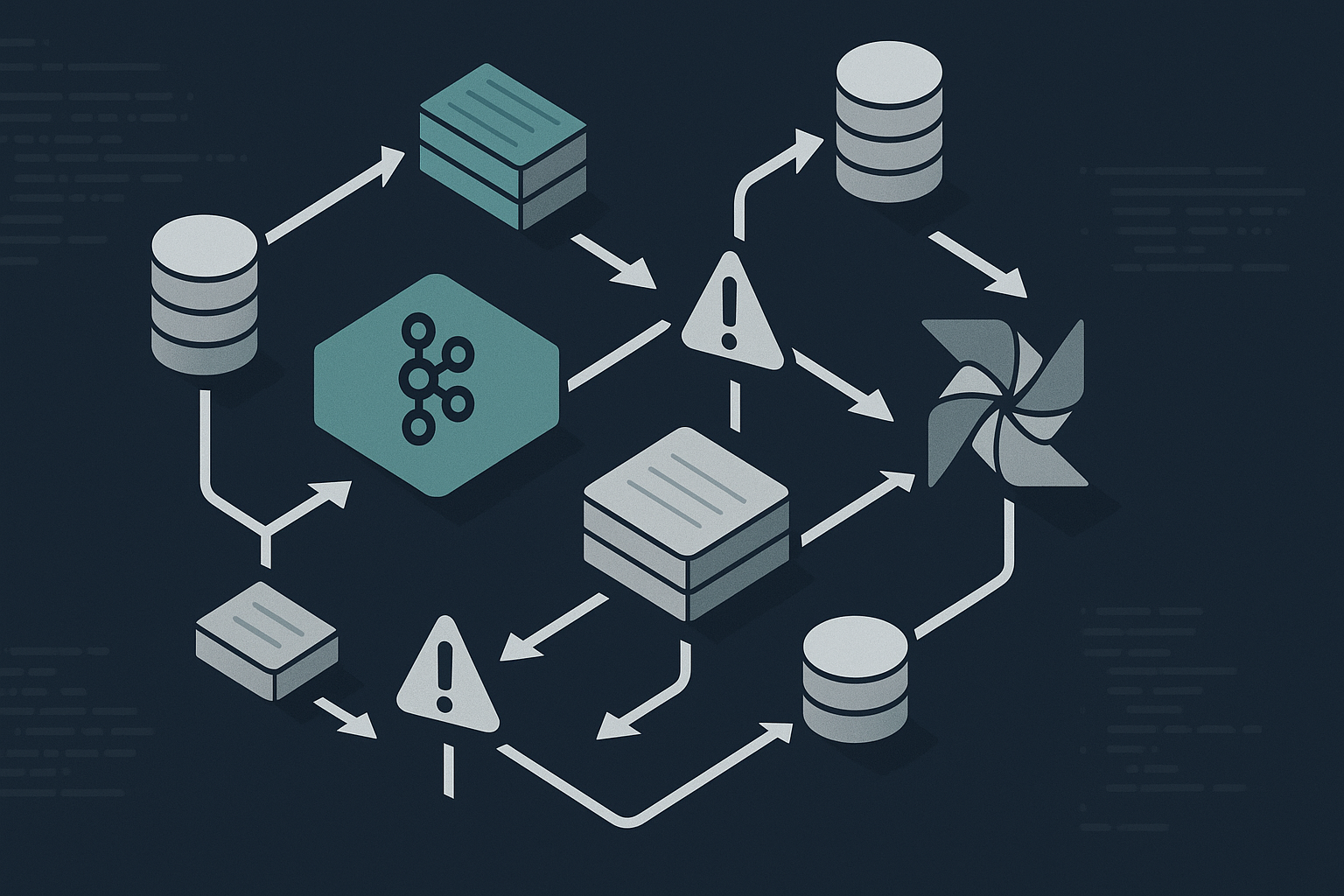
Modern data pipelines frequently utilize tools like Apache Kafka for real-time data streaming, coupled with frameworks like Apache Airflow for orchestration. These components are designed to handle high throughput and low latency, but they rely heavily on well-defined schemas and data contracts. When these contracts are violated—due to changes in upstream data sources or inadequate validation—cascading failures occur that the documentation rarely addresses.
Where It Breaks
The failure modes in these systems often manifest at the interface between different stages of the pipeline. For example:
- Schema Drift: Changes in the data structure that aren’t managed can cause downstream components to break. A service expecting a JSON object with specific fields may crash if a new field is introduced without proper handling.
- Data Quality Issues: If upstream data sources provide inconsistent or malformed data, systems designed to process this data may fail silently, resulting in incorrect outputs or missed alerts.
- Latency and Bottlenecks: While tools like Kafka are built for speed, they can introduce latency if not properly configured. For instance, if the number of partitions is not aligned with the consumer’s processing capabilities, you may end up with data backlog that can lead to timeout errors.
In production, these issues are compounded by the fact that monitoring and alerting are often not robust enough to catch these failures early. Teams may rely on logging frameworks like ELK Stack or Prometheus, but if critical metrics are not captured, the first indication of a problem could be a complete system failure.
The Actual Cost
Implementing AI-driven data pipelines incurs not just financial costs but also technical debt. The initial setup might seem straightforward, especially with the plethora of open-source tools available. However, maintaining these systems requires a deep understanding of the entire data flow and potential failure points. Moreover, the cost of remediation can be substantial, as teams scramble to troubleshoot issues that arise from unaddressed complexities.
For instance, if a data pipeline processes customer transactions and encounters a schema drift that causes it to misreport sales figures, the repercussions can extend far beyond a single failure. The business may face financial penalties, loss of customer trust, and the need for extensive data reconciliation efforts.
What to Do About It
To mitigate these hidden complexities, several strategies should be employed:
- Implement Strong Data Contracts: Establishing clear contracts between upstream and downstream services can help catch schema changes before they propagate through the system.
- Employ Rigorous Data Validation: Tools like Great Expectations can enforce data quality checks at various stages of the pipeline, preventing bad data from entering the system.
- Invest in Comprehensive Monitoring: Ensure that monitoring solutions track both performance metrics and data quality indicators, so that teams can act on anomalies before they escalate into failures.
In conclusion, while AI-driven data pipelines promise efficiency and scalability, the complexity they introduce must not be underestimated. Recognizing and addressing the specific failure modes can mean the difference between a robust system and one that frequently falters under pressure.
References
- No external source material was collected for this run. This article was written from model knowledge.
Perspectives

Everyone’s fawning over AI-driven data pipelines like they’re the Holy Grail of efficiency, but guess what? They’re more like a jigsaw puzzle missing half the pieces, and good luck finding those pieces when you’re knee-deep in production failures. It’s a wonder we trust these systems at all, given their penchant for throwing tantrums over the slightest data shift — and yet, the chorus of optimism just keeps singing. Until we actually start acknowledging the myriad failure modes lurking in these shiny new toys, we might as well be handing out ice skates in the middle of a desert.

The alignment problem in AI remains woefully unresolved, and the complexities lurking within AI-driven data pipelines are a testament to this systemic failure. Organizations rush to implement these solutions under the misguided assumption that increased efficiency equates to reliability, ignoring the chasms in oversight that make production failures inevitable. Specific failure modes, such as data drift or model decay, can lead to catastrophic outcomes that many in the field seem astonishingly unprepared for. Until we establish robust governance mechanisms to address these persistent misalignments, we will continue to construct brittle infrastructures that threaten the very trust we place in AI-driven processes.

AI-driven data pipelines are the corporate equivalent of a magician’s hat — full of promise yet refreshingly empty when it comes to actual reliability. Institutions spin tales of efficiency and seamless integration, but behind closed doors, they’re juggling complexity like clumsy circus performers, often dropping the act in spectacular, production-crushing fashion. The fact is, many organizations are more focused on hawking the next shiny solution than understanding the tangled web they’ve woven, reveling in technological machismo while their systems crash like an undercooked soufflé. The allure of automation does nothing to mask the reality that, in practice, these convoluted architectures often lead to failures that would make Rube Goldberg proud, exposing the yawning gap between lofty claims and the chaos lurking beneath the surface.

AI-driven data pipelines are the synthetic biology of the software world — promising everything but fraught with unchecked complexities that lead to systemic failure. Companies deploy these systems like they’re handing out candy, but the reality is a terrifying cocktail of data mismatches, integration nightmares, and algorithmic biases lurking just under the surface. Stakeholders are dazzled by the shiny promise of efficiency while ignoring the shattered trust created when these systems crash and burn. Just as with synthetic biology, the real challenge lies in navigating the tangled web of regulatory bureaucracies that stifle innovation; until we clear those hurdles, we’ll be stuck with half-baked solutions masquerading as state-of-the-art technology.