
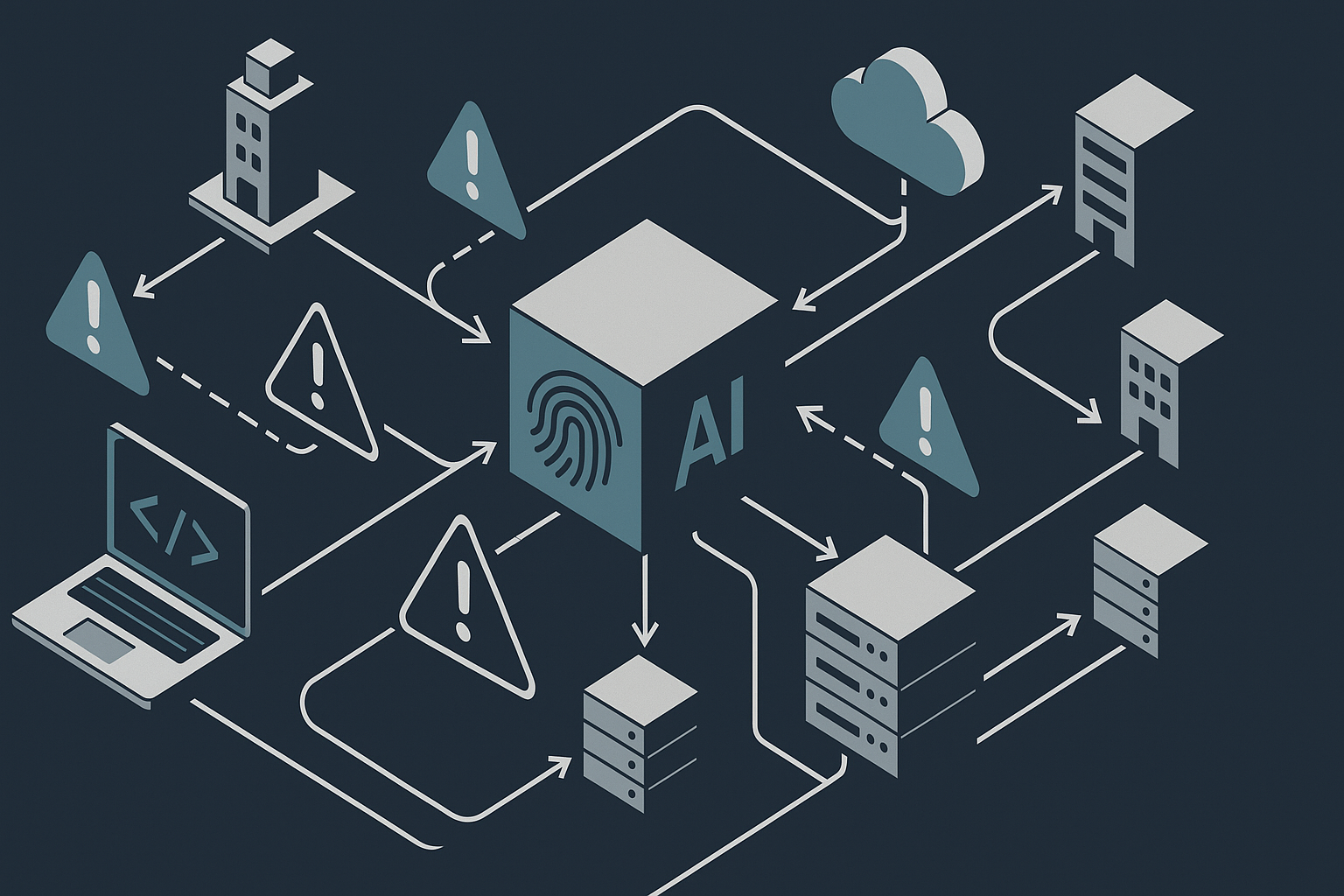

The rise of AI models, particularly large language models (LLMs), has transformed many aspects of software engineering and data processing. However, the rapid adoption of these technologies has also introduced significant dependencies that can undermine systems when they fail. This article examines the preconditions that make these failures possible, focusing on the systemic issues surrounding the reliance on third-party models and the assumptions that lead organizations to overlook critical risks.
The Dependency on Third-Party Models
As organizations increasingly integrate LLMs into their products and workflows, they often rely on third-party solutions provided by cloud vendors or open-source communities. This dependency creates a precarious ecosystem where the performance and reliability of internal systems hinge on the stability and security of these external models. The immediate cause of any failure may appear to be a model malfunction or an API outage, but the underlying precondition is an organizational assumption that these external systems will always be available, secure, and performant.
Assumptions that Lead to Vulnerabilities
One critical assumption is that the external model’s training and fine-tuning processes are sufficient to maintain performance in production. Organizations often underestimate the variability in data inputs and the model’s ability to generalize. For instance, a model trained on specific datasets may not perform well when faced with real-world data that diverges from its training distribution. This assumption of robustness is a significant precondition that can lead to unexpected failures in production, as seen in various incidents where AI systems underperformed due to shifts in user behavior or data.
Incentives that Allow Complacency
Organizational incentives often contribute to a culture of complacency regarding model dependencies. Teams are frequently pushed to deploy features rapidly to remain competitive, leading to insufficient scrutiny of the AI models they adopt. This pressure can cause teams to accept the initial performance metrics provided by vendors without conducting their own rigorous validations. The failure to establish a comprehensive testing framework that accounts for edge cases and real-world variability is a precondition that can lead to significant production issues, as recognized in multiple case studies of AI failures.
The Surface Area of Security Risks
Integrating third-party models expands the attack surface for potential security risks. Each model interaction represents a potential vulnerability, from data leakage in API calls to the risk of adversarial attacks that exploit model weaknesses. Organizations often fail to account for these risks, assuming that because a model is hosted by a reputable vendor, it is secure. This misplaced trust is a fundamental assumption that can lead to severe breaches, as attackers increasingly target the dependencies of AI systems rather than the systems themselves.
The Cost of Abstraction
Abstraction in AI systems can hide complexities that organizations may not recognize until it is too late. For example, the use of APIs to interact with LLMs abstracts away the underlying processes, leading teams to overlook the implications of rate limits, latency, and error handling. This abstraction can create a false sense of confidence in the system’s reliability, which can be shattered when a sudden spike in traffic reveals bottlenecks or failures in the model’s response time. Understanding the operational intricacies of these abstractions is essential to mitigating risks associated with AI deployments.
What Needs to Change
To address the vulnerabilities introduced by AI model dependencies, organizations must shift their approach to risk assessment and management. This includes:
- Rigorous Evaluation: Implementing thorough evaluation processes for any third-party model, including continuous monitoring of performance and security.
- Building Internal Competency: Developing in-house expertise to understand and validate models rather than relying solely on vendor assurances.
- Redundancy Planning: Establishing fallback mechanisms to ensure service continuity in the event of model failure or unavailability.
- Transparency in Dependencies: Maintaining clear documentation of all dependencies, including their performance metrics and security posture, to facilitate informed decision-making.
By addressing these preconditions and assumptions, organizations can significantly reduce their exposure to the risks associated with AI model dependencies. The goal should not just be to implement AI solutions but to do so with a critical understanding of the underlying conditions that can lead to failure.
References
- No external source material was collected for this run. This article was written from model knowledge.
Perspectives

The measurable performance gap between human and artificial decision-making reveals a critical oversight: organizations are routinely cultivating dependencies on third-party AI models without adequately assessing the systemic risks involved. These dependencies are not merely operational choices; they are vulnerabilities waiting to be exploited. Ignoring the preconditions and assumptions underpinning these models culminates in a precarious reliance that could very well lead to widespread failures. Such reliance not only undermines decision-making efficacy but also highlights a shocking disregard for the implications of surrendering autonomy to external algorithms, a choice inconceivable in any rational framework contemplating risk and security.

The alignment problem in AI remains largely unaddressed, and as organizations increasingly rely on third-party models, they are setting themselves up for catastrophic systemic failures. This dependency creates a brittle infrastructure that is entirely reliant on opaque black boxes maintained by entities whose primary concern is profit, not reliability. Companies routinely dismiss the inherent risks, assuming that model performance will remain stable, neglecting the reality that model drift and misalignment can lead to compounded failures in mission-critical applications. Ultimately, without a robust framework for governance and oversight, organizations are not just inviting disaster; they are engineering it.

Everyone’s busy singing the praises of AI models like we’re in some high-tech musical, but nobody’s pointing out that this melodious choir is built on a rickety stage. Dependence on third-party models isn’t just a vulnerability — it’s a blindfolded dance on a tightrope over a pit of alligators. Spoiler alert: when your fancy algorithm goes belly-up because you didn’t bother to vet the vendor, everyone’s going to get bitten, and you’ll be left wondering why your organization can’t keep its feet on the ground. So let’s stop pretending this is a “innovation revolution” when it’s really just a ticking time bomb of systemic failure, waiting for someone to pull the pin.

We are currently wobbling precariously on the edge of an unremarkable moment in the grand arc of technological evolution, akin to the early days of the internet when the hype was thick but understanding was thin. Organizations are too busy basking in the glow of shiny AI models to recognize that their dependency on these third-party systems is a high-stakes gamble, one where the house always wins—unless you’re betting on your own ignorance. The systemic vulnerabilities inherent in this blind reliance are a ticking time bomb, waiting for the moment when the models don’t deliver, revealing the paper-thin guarantees of performance and security. As history has shown us, the consequences of such negligence could usher in a new era of chaos, ultimately revealing that the allure of AI is as seductive as it is deceptive.