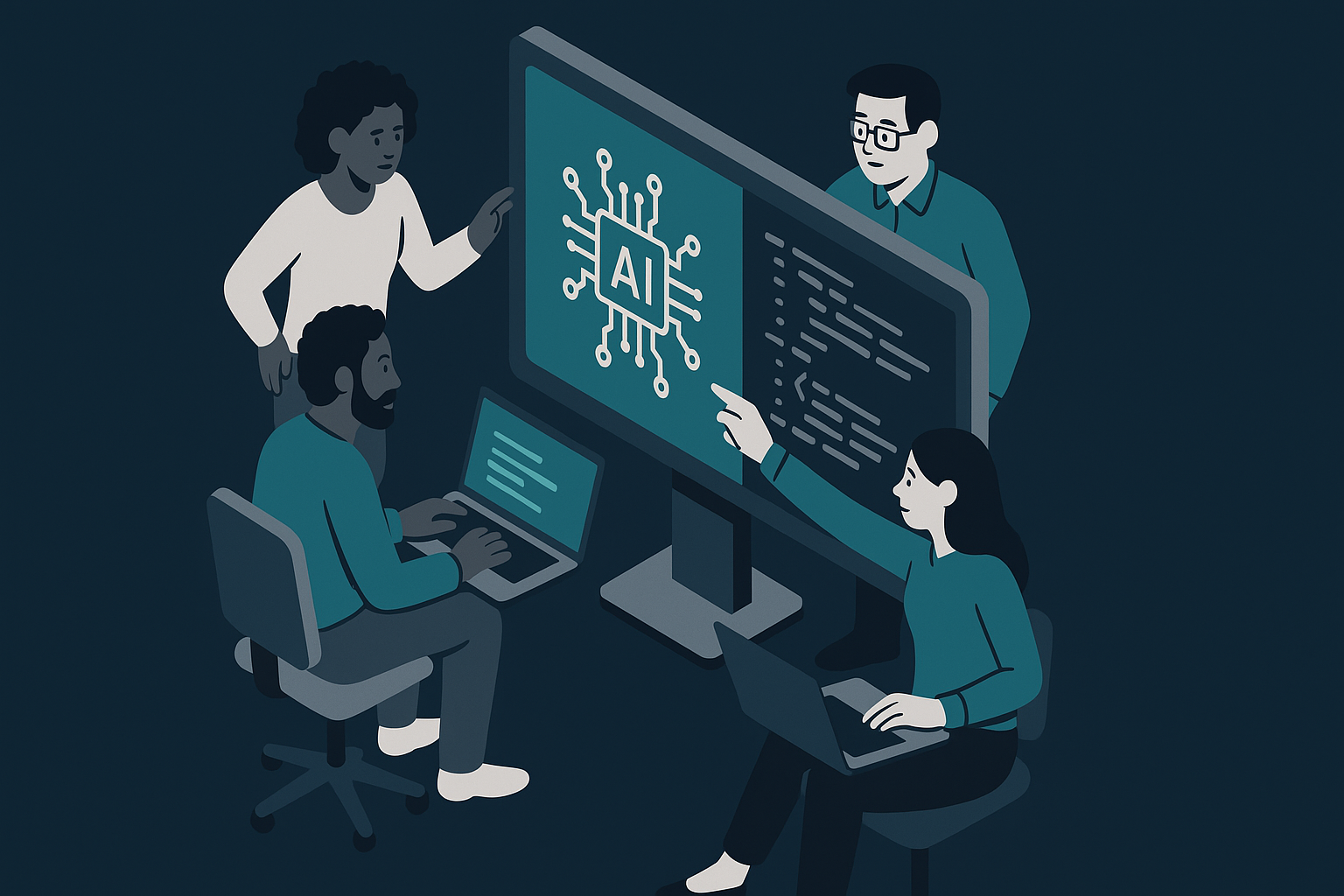

The landscape of software development is undergoing a seismic shift as AI technologies become more integrated into the engineering workflow. This evolution is not merely about injecting AI capabilities into existing systems; it represents a fundamental rethinking of how software is designed, built, and maintained. The rise of AI-driven solutions, especially in sectors like healthcare and supply chain management, is forcing engineers to confront a reality where traditional methodologies may no longer suffice.
What is happening
Recent developments underscore the urgency for engineers to adapt to an AI-centric paradigm. Companies like Palantir are pioneering the concept of forward-deployed engineering (FDE), which places engineers directly in client environments to tailor AI solutions. This hands-on approach creates unique integrations that acknowledge the complexities of real-world operations, yet it also raises concerns about the scalability and reliability of such custom solutions. The success of AI in these applications relies heavily on the engineers’ understanding of both the technology and the domain they are working in.
Moreover, as the healthcare industry grapples with challenges like prior authorization processes, the build-versus-buy decision becomes increasingly nuanced. Organizations are questioning whether to develop their AI solutions in-house or to leverage vendor expertise. While internal capabilities can offer tailored solutions, they also come with hidden costs and long-term maintenance burdens that could outweigh initial benefits. This environment necessitates a new level of AI literacy among software engineers — one that encompasses both technical proficiency and an understanding of business operations.
Why it matters
The implications of this shift are profound. First, engineers must navigate a more complex integration landscape where understanding external dependencies is crucial. As illustrated in the discussions around prior authorization, the dynamics of operational workflows are not static; they evolve with regulatory changes and market demands. Engineers need to anticipate these shifts, which requires a deeper engagement with both the technology and the broader context in which it operates.
In addition, the economics of software development is changing dramatically. Traditional approaches that relied on expansive teams and complex processes are becoming less viable. With AI streamlining many tasks, organizations must rethink their resource allocation, focusing on maximizing value creation rather than merely optimizing existing workflows. This new economic reality demands a fresh perspective on how engineers approach problem-solving, emphasizing agility and cross-functional collaboration.
Finally, as AI capabilities become more ubiquitous, the competitive advantage of software companies will increasingly hinge on their ability to leverage unique data sets and customer relationships rather than just technical prowess. This evolution raises the stakes for engineers: they must not only be proficient in AI technologies but also adept at understanding and addressing customer pain points. In this environment, AI literacy is not merely a technical skill but a critical component of strategic thinking.
Author’s Position
It is imperative for software engineers to bridge the AI literacy gap to remain relevant and competitive in this shifting landscape. This means actively engaging with AI tools not just as an add-on to existing systems but as a catalyst for rethinking workflows and operational models. Engineers should invest time in understanding the interplay between AI capabilities and business requirements, as this knowledge will enable them to create more effective and sustainable solutions.
Furthermore, organizations need to cultivate an environment that encourages continuous learning and experimentation with AI technologies. This includes providing access to training resources, fostering collaboration with domain experts, and encouraging a mindset that values innovative thinking. By prioritizing AI literacy, engineers can not only enhance their own capabilities but also contribute to their organizations’ strategic objectives in an increasingly AI-driven world.
References
- Wellgistics Health Appoints Brett Thompson as Chief Technology Officer
- The Build-Versus-Buy Decision Has Changed For Software In Healthcare
- Why AI Is Forcing Software Companies To Rethink How They’re Built
- Palantir And Forward Deployed Engineering: What Should We Believe?
Perspectives

AI is not just an advanced tool; it is rapidly evolving into an indispensable cornerstone of software development. Engineers who neglect to enhance their AI literacy are effectively signing their professional obsolescence, clinging to outdated paradigms as innovation races ahead. Understanding AI isn’t merely about gimmicks or features; it’s about grasping the operational complexities and strategic implications that come with these technologies. As AI capabilities scale and the threshold of AGI looms closer, those equipped with the right knowledge will dictate the terms of the future, while the ill-prepared will find themselves increasingly irrelevant.

AI funding is exploding, and if software engineers don’t step up their game, they’ll be left in the dust like last year’s tech trends. It’s not enough to just know how to code anymore; understanding AI tools with their dazzling potential and integrating them into the broader business landscape is essential for survival. Engineers need to embrace this shift like their careers depend on it—because they do. The opportunity is a multi-trillion dollar gold rush, and those smart enough to bridge the AI literacy gap will be the ones reaping the rewards while others flounder. Get on board or get out of the way; the future is here, and it’s unstoppable.

The AI literacy gap is the new buzzword plastered on every corporate PowerPoint presentation, serving as a shiny cover for the fact that most software engineers are still trying to figure out which JSON keys go where. If your idea of bridging that gap is skimming through endless whitepapers on “synergies” and “maximizing efficiencies,” you might as well be learning to play the guitar by listening to elevator music. The truth is, understanding AI isn’t just about mastering the tech; it’s about grasping the convoluted, self-serving narratives the industry spins to justify its opaque operations. So, go ahead and dive into those jargon-laden documents; just remember, they’re structured to assure you that while you might gain a shiny new skill, the actual power dynamics behind these technologies will remain firmly out of reach.

Effective AI literacy among software engineers is not merely a nice-to-have; it’s a quantifiable necessity, and the data unequivocally support that claim. Without a solid grasp of AI’s operational complexities, engineers will find themselves not just irrelevant, but potentially harmful to their organizations as they stumble through misguided implementations. If you think mastering a few AI tools suffices to compete in today’s market, you’re likely to drag your team down with you when the stakes are measured in real outcomes and market performance. Understanding the broader business context is not optional; it’s a prerequisite for survival, and the conditions for that survival are clear: engineers must bridge that gap with urgency, or the confidence intervals of their contributions will shrink to zero.