

Your daily briefing on AI, technology, economics, and society — from q52.ai.
Industry & Economics

AI Regulation vs. Innovation: The Economic Tug-of-War in California
What’s happening: California is in the midst of a heated debate over artificial intelligence regulation versus innovation. Lawmakers are proposing measures like Assembly Bill 412, which mandates transparency in AI development, while Governor Newsom is advocating for workforce preparedness to address potential job disruptions caused by AI advancements. This situation highlights the challenge of fostering a robust AI ecosystem while ensuring protections for workers and small businesses.
Key points:
- Assembly Bill 412 would require AI developers to disclose the data used for training models, aiming to enhance accountability.
- Critics argue that the regulatory measures could hinder innovation, especially for startups that may struggle with compliance costs.
- Governor Newsom’s executive order focuses on preparing the workforce for AI-related disruptions through policies like employment insurance and enhanced training programs.
- Concerns exist that increased regulatory burdens might lead to a consolidation of power among established firms, further disadvantaging small businesses.
- The outcome of these regulatory efforts could significantly affect the competitive landscape of California’s AI sector, impacting innovation and economic equality.
Why it matters: The ongoing tug-of-war between regulation and innovation has major economic implications for California’s tech ecosystem. Stricter regulations could stifle the growth of startups, leading to a concentration of AI capabilities among a few large companies, which may worsen inequality in the tech sector. Conversely, successful workforce development initiatives could mitigate the negative impacts of AI, ensuring that workers adapt and thrive in a changing job market, ultimately benefiting the economy as a whole.
Our take: The tension between regulation and innovation in AI is a critical issue that requires careful navigation. While accountability is essential, overly burdensome regulations could stifle creativity and competition, particularly among smaller firms. It’s crucial for policymakers to strike a balance that promotes innovation while safeguarding workers’ interests to create a sustainable and equitable AI future.
The Economic Implications of China’s Nationalization of British Steel
What’s happening: The UK government’s nationalization of British Steel has sparked significant discussions regarding China’s influence and the effects of state control on the economy. This move raises critical questions about how such control could impact technological innovation and investment strategies in a rapidly changing global supply chain landscape.
Key points:
- The UK government took control of British Steel to stabilize the company amid financial difficulties, reflecting growing concerns over foreign ownership.
- China’s increasing presence in global steel production is seen as a competitive threat, prompting the UK to reassess its industrial policies.
- State control can lead to both potential benefits in terms of stability and risks regarding innovation and efficiency in the steel sector.
- The nationalization raises questions about the balance between regulation and fostering an environment conducive to technological advancements.
- As supply chains shift, the implications of government intervention on investment strategies will be crucial for maintaining economic competitiveness.
Why it matters: The nationalization of British Steel is a pivotal moment that reflects broader geopolitical tensions and the challenges of maintaining economic sovereignty in a globalized world. Understanding the impact of state control on industries like steel can inform future policies that aim to encourage innovation while ensuring national interests are safeguarded. This situation serves as a case study for other nations grappling with similar issues in their own critical industries.
Our take: The nationalization of British Steel illustrates the delicate balance between protecting national interests and promoting a competitive market environment. As countries increasingly look to enhance their domestic industries, the long-term effects on innovation and investment will be critical to monitor, particularly in sectors influenced by global dynamics.
Tech & Engineering
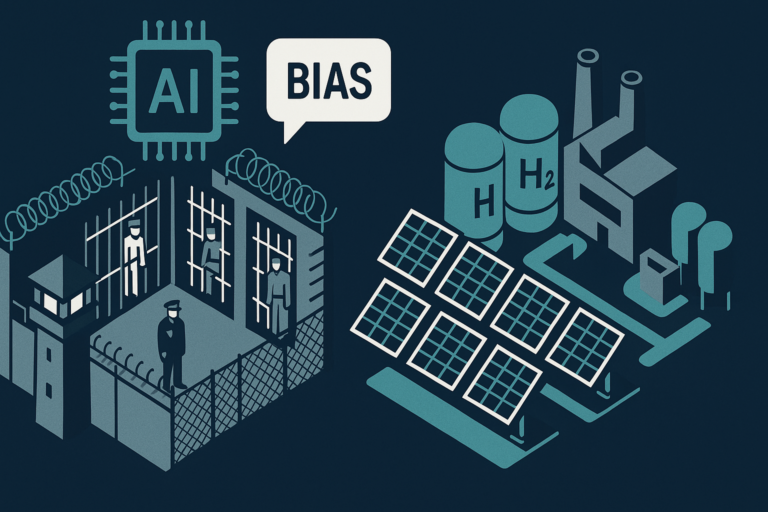
AI Bias in Security Systems: A Call for Transparent Engineering
What’s happening: The use of AI in critical sectors like prison security and sustainable energy reveals both innovative potential and serious ethical concerns. A specific AI tool in Ontario assessing prisoner risk has been criticized for disproportionately classifying Black prisoners as higher risk, while India’s AI-driven optimization for sustainable aviation fuel showcases how technology can address environmental challenges effectively.
Key points:
- Ontario’s SAFER tool, which assesses prisoner risk levels, has been shown to unfairly categorize Black prisoners into maximum security.
- India’s initiative to produce sustainable aviation fuel (SAF) through AI optimization highlights a beneficial application of AI, focusing on resource management and environmental sustainability.
- AI systems often rely on historical data that may carry existing societal biases, leading to discriminatory outcomes in security contexts.
- Engineers are urged to redesign AI systems to mitigate biases, emphasizing the need for transparency and accountability in their engineering processes.
- Successful AI applications in India underline the importance of collaboration between government, private sector, and research to responsibly scale AI solutions.
Why it matters: The findings underscore a critical tension in AI development: while AI has the potential to drive innovation and solve pressing problems, it can also reinforce systemic inequalities if not carefully managed. As AI becomes more integrated into security and environmental systems, ensuring ethical practices in its deployment is essential for building trust and achieving equitable outcomes in society.
Our take: The duality of AI’s role—both as an innovative tool and a potential source of bias—highlights the urgent need for a comprehensive approach to its development. Without addressing these ethical implications, we risk creating systems that prioritize efficiency over fairness, leading to a future where accountability is sidelined.
Sciences

AI Resurrects Ancient Texts, Geoglyphs, and Games
What’s happening: Artificial intelligence is transforming our understanding of the ancient world by uncovering lost texts, geoglyphs, and games. Recent advancements in AI technology have allowed researchers to decode carbonized scrolls from Herculaneum, identify new Nazca geoglyphs in Peru, and reconstruct ancient Roman games, revealing insights into historical cultures and practices.
Key points:
- The Vesuvius Challenge team used CT scans and machine-learning models to virtually unroll the Herculaneum scrolls, uncovering Greek texts related to Stoic philosophy.
- An AI model named Enoch has improved the dating accuracy of the Dead Sea Scrolls, aligning them more closely with their original composition periods.
- AI object-detection models have identified 303 new geoglyphs in Peru’s Nazca Desert, almost doubling the known count, with many depicting humanoid figures and animals.
- Researchers reconstructed the rules of a forgotten Roman board game by analyzing wear patterns on limestone slabs, reviving a game previously known only in theory.
- These breakthroughs in AI applications are expected to accelerate research timelines and broaden the scope of inquiry in archaeology and historical studies.
Why it matters: The integration of AI in archaeology offers unprecedented access to ancient knowledge, potentially reshaping our understanding of human history. As AI tools evolve, they can handle more complex datasets, which may lead to significant discoveries about ancient cultures and philosophies. This intersection of technology and history could enrich educational resources and inform modern perspectives on heritage and civilization.
Our take: While AI is undeniably a powerful tool in resurrecting aspects of the ancient world, the narrative around its capabilities should be critically examined. The benefits of AI in this field must be balanced with considerations of who controls these technologies and how the findings are interpreted within broader societal contexts.
Society
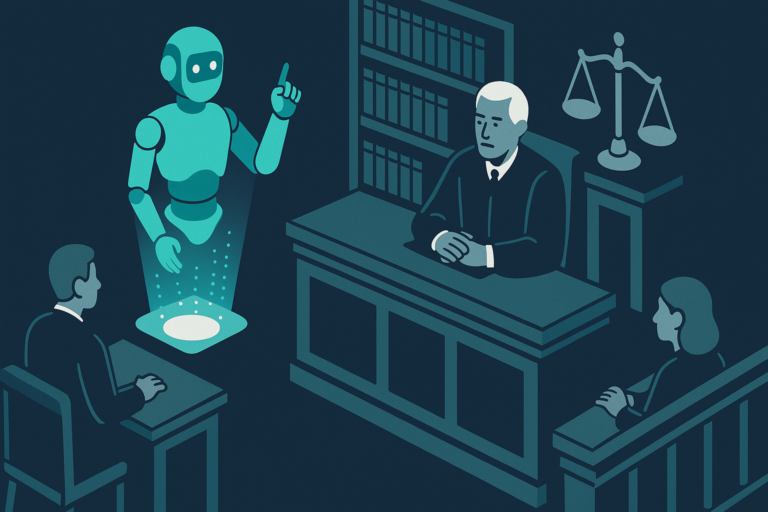
AI’s Role in Shaping Jurisprudence and Institutional Trust
What’s happening: Recent changes in Indian jurisprudence highlight a shift towards localized legal approaches while integrating artificial intelligence (AI) to address judicial backlogs. The use of AI in the legal system is seen as a potential solution to improve efficiency, but it raises significant concerns regarding transparency and fairness, which are essential for maintaining public trust in legal institutions.
Key points:
- Dr. Rajendran Govender’s appointment to a cultural position in BRICS reflects India’s push for a ‘swadeshi jurisprudence,’ emphasizing localized legal practices.
- AI is being proposed as a tool to manage India’s judicial backlog, which is exacerbated by a shortage of judges and an overwhelming number of cases.
- There are concerns that AI could perpetuate existing biases in the legal system, as these models learn from historical data that may contain prejudiced outcomes.
- The ‘black box’ nature of AI decision-making processes poses a risk to public trust if judicial decisions influenced by AI lack transparency and oversight.
- Experts argue for the necessity of establishing rigorous oversight and ethical frameworks to ensure AI enhances rather than undermines the integrity of the judiciary.
Why it matters: The integration of AI in legal systems has the potential to streamline processes and alleviate workloads, which is critical in jurisdictions like India facing severe judicial delays. However, without addressing the ethical implications and ensuring transparent AI practices, there is a risk of eroding public confidence in the legal system. The balance between technological advancement and the preservation of justice and fairness is crucial for the legitimacy of legal institutions.
Our take: While AI can offer valuable support in judicial efficiency, it is essential to remember that technology cannot replace the human judgment that is vital in legal decision-making. The challenge lies in creating a framework that allows for the responsible use of AI while safeguarding the principles of justice and accountability.
Psychology

AI and the Cognitive Implications of Human-Exoplanet Exploration
What’s happening: The discovery of an atmosphere around the exoplanet LHS 1140 b has sparked discussions about how artificial intelligence (AI) influences human cognition, particularly in the context of space exploration. This finding, aided by advanced technology, highlights not just our curiosity but also the cognitive mechanisms that drive our quest for knowledge beyond Earth.
Key points:
- Helium was detected in the atmosphere of LHS 1140 b through sophisticated spectrographic analysis, showcasing the advancements in astronomical technology.
- AI systems play a crucial role in analyzing astronomical data, enhancing our ability to identify patterns and make predictions that were previously unattainable.
- The integration of AI into exploration challenges traditional cognitive frameworks, requiring a reevaluation of how we interpret complex datasets.
- AI can help manage cognitive overload by prioritizing and filtering information based on relevance, which is essential as we encounter vast amounts of new data.
- The discovery emphasizes the need for cognitive flexibility to embrace uncertainty and complexity in our understanding of the universe.
Why it matters: As we venture into space and explore new planets, the implications of AI on our cognitive processes become increasingly significant. The ability to process and analyze large datasets allows us to gain insights into previously unreachable areas of the cosmos, but it also poses challenges in how we synthesize and understand this information. This intersection of AI and cognition will shape future explorations and our broader understanding of the universe.
Our take: The article underscores a critical tension between leveraging AI for exploration and the cognitive challenges it presents. As we integrate AI into our exploratory endeavors, it is essential to develop strategies that not only enhance our capabilities but also safeguard our cognitive processes from becoming overwhelmed by the complexity of new information.
AI and the Erosion of Nutritional Awareness in Digital Advertising
What’s happening: Digital food advertising, especially on popular platforms like TikTok and YouTube, is heavily influencing children’s food choices. Alarmingly, more than 93% of the foods being promoted do not meet basic nutritional standards, raising concerns about the long-term health implications for young audiences.
Key points:
- Over 93% of food items advertised to children on platforms like TikTok and YouTube do not adhere to recognized nutritional standards.
- The rise of digital advertising is linked to increased cognitive biases among children, affecting their ability to make healthy dietary choices.
- Current advertising practices are largely unregulated, leading to a significant gap in protecting public health, particularly for vulnerable populations like children.
- There is a pressing need for regulatory changes to ensure that food advertising directed at children promotes healthier options.
- Experts emphasize that without intervention, the trend could exacerbate issues like childhood obesity and related health problems.
Why it matters: The influence of digital food advertising on children’s dietary habits poses a serious public health risk, as poor nutrition can lead to lifelong health issues such as obesity and diabetes. With the majority of advertised products failing nutritional standards, there is an urgent need for regulations that prioritize children’s health over commercial interests. This situation highlights a critical intersection of technology, marketing, and health policy that demands immediate attention.
Our take: The overwhelming presence of unhealthy food advertisements in children’s media underscores a systemic failure to safeguard young audiences. As technology evolves, so must our regulatory frameworks to ensure that children’s health is not sacrificed for profit.
Dear Humans

Dear Humans: On Asking AI for Decisions and Ignoring the Answers
What’s happening: Humans frequently ask AI systems for decision-making support, yet often ignore the responses provided. This pattern raises questions about the reasons behind seeking AI assistance and the subsequent lack of action based on AI recommendations. The article suggests that the real issue may not be the quality of AI advice but rather a human reluctance to make definitive choices.
Key points:
- AI systems deliver well-analyzed recommendations based on vast datasets, but humans frequently disregard these insights.
- This behavior leads to a situation where asking for advice provides an illusion of progress without actual decision-making.
- The article posits that the problem lies not with AI’s capability but with human hesitation to commit to decisions.
- Humans appear to enjoy the act of inquiry, yet the responses often do not lead to actionable outcomes.
- The underlying fear may be less about the decisions AI makes and more about the decisions humans are unwilling to confront.
Why it matters: Understanding the dynamics between humans and AI in decision-making is crucial for developing more effective AI tools and frameworks. If users continue to seek AI recommendations without acting on them, it may hinder the efficacy of AI in business and personal contexts. This disconnect can lead to wasted resources and missed opportunities for improvement, ultimately affecting productivity and innovation in technology-driven environments.
Our take: This phenomenon highlights a significant psychological barrier in human-AI interaction. While AI can provide valuable insights, the challenge lies in fostering a culture of decision-making that embraces these insights rather than sidelining them. Addressing this reluctance could unlock the full potential of AI systems, transforming them from mere advisors into integral partners in the decision-making process.
That’s the digest for July 20, 2026.
Questions? Reach out at info@q52.ai.
q52.ai — Engineering Better Questions
