

Your daily briefing on AI, technology, economics, and society — from q52.ai.
Industry & Economics

AI’s Impact on Cloud Infrastructure Economics: A Capital Allocation Challenge
What’s happening: Qualcomm’s acquisition of Modular and Groundcover’s $100 million funding highlight a significant shift in AI-driven cloud infrastructure. Qualcomm aims to challenge NVIDIA’s dominance in AI software with a portable solution for efficient AI workloads, while Groundcover focuses on providing cost-effective observability solutions as companies face rising telemetry expenses due to increased AI usage.
Why it matters: These developments could disrupt existing market dynamics by promoting competitive pricing and innovation in AI software, potentially democratizing access for smaller firms. Additionally, Groundcover’s emphasis on cost efficiency addresses the urgent need for companies to optimize their IT expenditures, redirecting savings toward other growth initiatives amid escalating AI demands.
Our take: The current investment trends underscore a recalibration of capital allocation in technology, where companies prioritize efficiency over hype-driven valuations. This shift could lead to a more sustainable tech economy focused on practical solutions that deliver real operational benefits.
Tech & Engineering

AI’s Cost-Benefit Shift: Claude Opus 5 and PolyAI’s Impact
What’s happening: Anthropic’s Claude Opus 5 has reduced costs by 50% while maintaining competitive performance, marking a shift toward economically viable AI solutions. PolyAI’s new real-time voice model offers low-latency, natural conversational capabilities, enhancing enterprise voice support and addressing delays in customer interactions.
Why it matters: The affordability of Claude Opus 5 allows more companies to adopt advanced AI technologies, expanding their operational capabilities without high costs. This shift pressures competitors to adjust their pricing and offerings. PolyAI’s advancements in voice interactions can streamline customer support, potentially decreasing reliance on human agents and improving overall service efficiency.
Our take: These developments highlight a critical moment for AI practitioners to reassess their strategies. With lower costs and greater accessibility, the focus should shift from merely integrating AI to maximizing its return on investment while considering the associated security and ethical implications.
Sciences

Open-Source AI Model Kimi K3 Poised to Transform Research Access
What’s happening: Moonshot AI has released Kimi K3, the largest open-weight AI model to date, making it accessible to researchers and developers without the high costs associated with proprietary models. This move is expected to democratize AI research, allowing smaller laboratories and independent scientists to compete more effectively with larger institutions by utilizing a sophisticated model capable of complex data analysis in fields like genomics and climate modeling.
Why it matters: The open-sourcing of Kimi K3 removes financial and technical barriers, empowering a wider range of researchers to conduct impactful studies and potentially leading to a surge in innovations, particularly in underfunded areas. This shift may also force established labs to reconsider their pricing and accessibility strategies, influencing the competitive landscape of AI research and accelerating the pace of scientific discovery over the next several years.
Our take: While Kimi K3’s release is a major step toward democratizing AI, it also risks saturating the research field with lower-quality outputs from less experienced users, complicating the landscape of credible scientific inquiry.
Society

The Dual Frontiers: AI in Research and Aviation’s Endless Horizons
What’s happening: Recent advancements in AI and aviation are highlighting a shared commitment to innovation. OpenAI’s move to provide ChatGPT access to 100,000 researchers aims to integrate AI into scientific work, enhancing data analysis and collaboration. Simultaneously, Qantas’s Project Sunrise achieves record-breaking nonstop flights, pushing the boundaries of long-haul travel and redefining global mobility.
Why it matters: The integration of AI tools in research could accelerate scientific progress, but it also raises concerns about inequality, as only well-resourced institutions may fully harness these technologies. In aviation, while enhanced connectivity can foster economic and cultural exchanges, the environmental impact of increased flights poses significant ethical questions regarding sustainability and equity in accessing these advancements.
Our take: The intersection of AI and aviation underscores a critical need for governance that prioritizes transparency and equitable access. As these technologies evolve, it is essential to embed human-centric values to ensure they benefit society as a whole, rather than exacerbating existing disparities.
Psychology
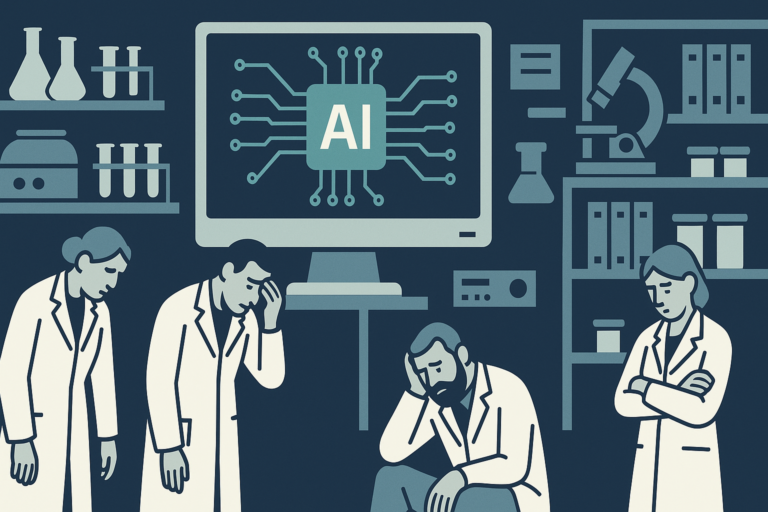
The Erosion of Expertise: How AI Is Shaping Scientific Identity
What’s happening: The dismantling of DeepMind’s AlphaFold team, known for its groundbreaking work in protein folding, signals a shift in the AI landscape where specialized scientific expertise is being overshadowed by generalized AI applications. This transition suggests that companies are prioritizing broad AI capabilities over targeted problem-solving, which could undermine the traditional value placed on deep specialization in scientific inquiry.
Why it matters: This trend raises critical concerns about the future role of human experts in science as reliance on AI systems grows. With AI’s ability to analyze data and generate seemingly infallible models, there is a risk that decision-makers may increasingly defer to AI, diminishing the importance of specialized knowledge. Such dynamics could lead to a decline in rigorous scientific inquiry, ultimately affecting innovation and the resolution of complex challenges.
Our take: The shift towards generalized AI at the expense of specialized teams should alert stakeholders in science and technology. Balancing AI’s capabilities with the preservation of specialized expertise is crucial to ensure that scientific progress remains grounded in deep knowledge and targeted problem-solving.
That’s the digest for August 03, 2026.
Questions? Reach out at info@q52.ai.
q52.ai — Engineering Better Questions
