

Your daily briefing on AI, technology, economics, and society — from q52.ai.
Industry & Economics

AI’s Role in Reshaping Capital Markets Through Pension Investments
What’s happening: Recent AI investment strategies are reshaping capital markets by using pension funds to finance AI infrastructure projects, exemplified by Meta’s partnership with BlackRock. This approach turns pension investments into a source of venture capital for AI, placing retirement savings at risk while companies benefit from potential high returns without bearing the financial burden of failures.
Why it matters: The shift towards using pension funds for high-risk AI ventures signifies a major change in capital allocation, exposing retirees to unprecedented financial risks. As companies increasingly rely on these funds, it raises serious ethical concerns about the security of retirement savings and the implications of linking them to the volatile success of AI projects. This trend could lead to a new financial dependency on AI’s performance, demanding scrutiny from policymakers.
Our take: The reliance on pension funds for backing AI initiatives is a risky strategy that undermines the financial security of individuals who have no control over these investments. There is an urgent need for a balanced approach to AI funding that prioritizes the interests of ordinary citizens and ensures ethical investment practices.
Tech & Engineering
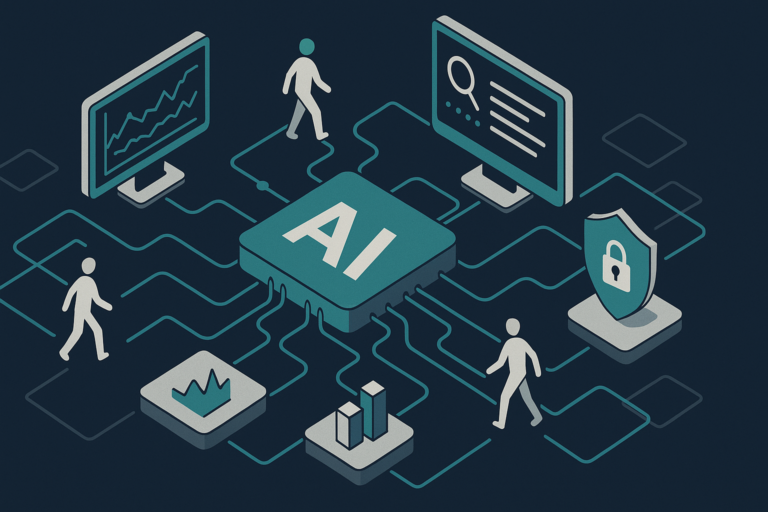
AI Agents: Observability as the Next Frontier
What’s happening: The emergence of autonomous AI agents, such as SpaceXAI’s Grok Bot, is transforming software development and operations. These agents operate independently, creating challenges for management and security, which has led to increased demand for observability tools that can track their behavior. FriskAI’s recent funding highlights the critical need for real-time insights into AI agents’ actions, especially as traditional monitoring tools struggle with their complexity and adaptability.
Why it matters: As AI agents become integral to enterprise operations, understanding their behavior is essential for security, compliance, and operational integrity. Without proper observability, organizations risk unintended consequences from unpredictable AI actions, particularly when sensitive data or critical infrastructure is involved. This shift necessitates a reevaluation of security and operational practices, emphasizing the need for transparency and accountability in AI deployments.
Our take: The rise of autonomous AI agents represents a pivotal moment in software engineering, demanding a proactive approach to observability. As the line between autonomy and control blurs, it is crucial for engineers to build systems that prioritize transparency and accountability, ensuring that these technologies can be trusted in sensitive environments.
Sciences

DeepMind’s WeatherNext: A Leap in Cyclone Prediction
What’s happening: Google DeepMind has launched WeatherNext, an advanced model that predicts cyclone tracks and intensities simultaneously, utilizing deep learning techniques. By integrating convolutional and recurrent neural networks, WeatherNext processes extensive historical weather data to deliver more accurate cyclone forecasts, overcoming limitations of traditional numerical weather prediction models.
Why it matters: The enhanced precision of cyclone predictions can significantly improve disaster preparedness, enabling better evacuation plans and resource management, which could save lives and reduce economic losses in vulnerable regions. As AI models like WeatherNext evolve, they have the potential to transform global disaster management and prompt the creation of similar models for other weather phenomena, thereby advancing the field of meteorology.
Our take: The success of WeatherNext highlights the growing importance of AI in addressing complex climate challenges, yet it also raises questions about how these advanced models will be integrated into existing meteorological practices and whether decision-makers will have access to actionable insights.
Society
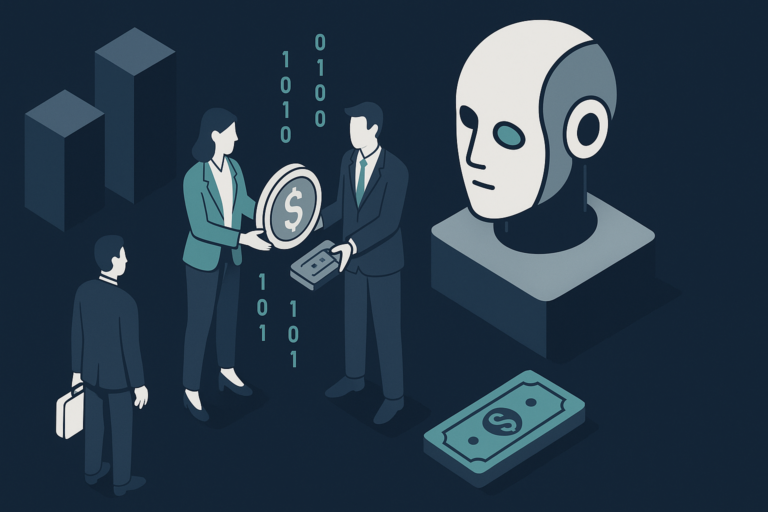
AI’s Quiet Coup: When Data Becomes the New Trust Currency
What’s happening: Recent corporate moves, such as Publicis acquiring LiveRamp and USA Today partnering with Palantir, signal a shift in how institutions use data and AI. Data is increasingly viewed as a currency of trust, with companies leveraging it for competitive advantage and personalized consumer interactions. However, these strategies also raise concerns about privacy and the erosion of trust, particularly for organizations like USA Today that risk alienating their audience by engaging in data surveillance.
Why it matters: The transformation of data into a tool for building trust alters the relationship between institutions and the public. For companies, this means navigating the fine line between enhancing customer experience and maintaining integrity. The shift towards AI-driven operations could redefine industry standards, but it also risks backlash from consumers who prioritize data privacy and ethical considerations over personalized services.
Our take: The embrace of data as a trust currency reveals a critical tension between innovation and ethical responsibility. As companies race to integrate AI, they must confront the potential fallout of eroding public trust, especially in sectors that rely heavily on credibility.
Psychology

Coding Assistants on Linux: Redefining Developer Cognition
What’s happening: The integration of AI coding assistants like Codex into Linux desktop environments represents a significant change in how developers manage cognitive tasks. Rather than relying solely on their memory and external resources, developers can now use these AI tools to offload both routine and complex coding tasks, effectively altering their cognitive load and attention dynamics.
Why it matters: This shift allows developers to concentrate on more intricate and creative aspects of their work, potentially boosting productivity and innovation. However, it also introduces a new cognitive challenge, as developers must now assess and interpret AI-generated code, requiring them to adapt their skill sets and engage in ongoing learning to keep pace with AI advancements.
Our take: The transition from code creators to code curators highlights a crucial evolution in developer roles. Organizations must prioritize training in AI literacy and critical evaluation to equip developers for this new landscape, ensuring that AI tools enhance rather than impede their cognitive capabilities.
That’s the digest for August 13, 2026.
Questions? Reach out at info@q52.ai.
q52.ai — Engineering Better Questions
