

Your daily briefing on AI, technology, economics, and society — from q52.ai.
Industry & Economics
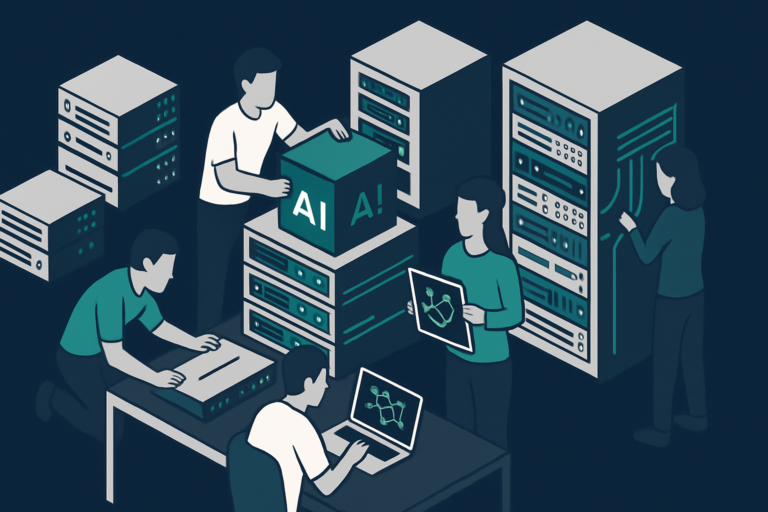
AI Infrastructure: The Quiet Revolution Reshaping Capital Deployment
What’s happening: Recent advancements in AI infrastructure are changing how capital is allocated in the tech sector. Startups like Aranya are converting bare-metal servers into AI clusters, focusing on operational efficiency and scalability, while companies like Manus and HiBob illustrate the complexities of funding and market consolidation. This shift indicates a growing emphasis on leveraging hardware for AI workloads, which can improve cost efficiency and accelerate model training.
Why it matters: The implications of these changes are significant for the tech landscape. By enhancing hardware utilization, firms like Aranya are addressing a major bottleneck in AI deployment, making AI technologies more accessible to smaller companies. This democratization could level the playing field against larger tech giants, while the breakdown of the Meta-Manus deal highlights the geopolitical challenges in tech acquisitions, emphasizing the need for regional autonomy in AI development.
Our take: The focus on infrastructure efficiency in AI presents both opportunities and challenges. While it promises to foster competition and innovation among smaller firms, it also raises questions about how geopolitical tensions will shape the future of AI development and investment.
Tech & Engineering

Anthropic’s Fable 5.1: Engineering for Market Leadership
What’s happening: Anthropic has launched Claude Fable 5.1, a new AI model that competes directly with OpenAI’s Astra. The release features a significant 75% reduction in cache read costs and a substantial improvement in performance metrics, with Terminal-Bench scores rising from 24.7% to 52.6%. Despite these advancements, Fable 5.1 remains priced at a premium, raising concerns about its competitiveness in the market.
Why it matters: The enhancements in Fable 5.1 could lead to greater efficiency and lower operational costs for enterprise users, especially in areas like coding and data analysis. However, the high price point compared to lower-cost competitors may hinder its adoption, forcing businesses to weigh performance benefits against financial implications. This situation could lead to a reevaluation of AI procurement strategies within organizations, influencing future investments in AI technology.
Our take: While Fable 5.1 showcases impressive technical advancements, its market strategy may not align with the current demands of enterprises seeking cost-effective solutions. A focus on integrating diverse AI models could provide more flexibility and better align with varying business needs.
Sciences

MAPL-EMIT: AI’s Role in Unveiling Methane Emissions from Space
What’s happening: Google and NASA’s Jet Propulsion Laboratory have developed the MAPL-EMIT model, which enhances the detection of methane emissions from space using AI. This model, trained on 3.6 million synthetic plumes, achieves an 84% recall rate and can identify 50% more methane sources than previous methods, including pinpointing 24 of the world’s largest landfills. This advancement allows for better tracking of methane, a greenhouse gas significantly contributing to global warming.
Why it matters: With methane responsible for about 25% of global warming, MAPL-EMIT provides a critical tool for regulatory bodies to enforce environmental standards more effectively. The open access to the model and data enables countries that signed the Global Methane Pledge to verify compliance and implement strategies to reduce emissions. This could influence climate policy and accountability on a global scale, potentially transforming how emissions are monitored and managed.
Our take: While MAPL-EMIT represents a significant technological leap in climate monitoring, it also raises concerns about the socio-economic implications for communities under scrutiny. The balance between environmental accountability and the potential anxiety caused by such surveillance must be addressed as these technologies become more widespread.
Society

AI’s Hidden Cost: Who Really Benefits from Technological Advancements?
What’s happening: AI advancements are benefiting a small group of powerful corporations while undermining broader societal equity. Companies like Best Buy and Incore Bank are automating processes that reduce job opportunities and concentrate profits, echoing historical patterns seen during past technological shifts. The result is a growing gap between those who profit from AI and those who are negatively impacted, as seen in the automation of creative roles and compliance positions.
Why it matters: The concentration of AI benefits raises important questions about trust in institutions and the ethical implications of AI deployment. As companies prioritize efficiency over transparency, communities risk being marginalized in decision-making processes, leading to increased inequality. This trend could hinder AI’s potential to enhance human decision-making and innovation if not addressed through regulatory frameworks that ensure accountability and equitable distribution of AI’s advantages.
Our take: The current trajectory of AI development highlights a critical need for inclusive dialogue about its implementation. Without worker involvement and ethical considerations, AI risks becoming a tool that exacerbates existing inequalities rather than alleviating them.
Psychology

The Psychological Gravity of AI-Driven Expectations
What’s happening: Recent advancements in AI technologies, particularly Google’s Pics tool and OpenAI’s Astra model, are significantly shifting user expectations regarding creativity and productivity. These tools are embedding AI into daily tasks, which alters how individuals anticipate and engage with digital content, leading to a blend of human and AI-generated creativity. The psychological impact of these technologies shapes decision-making processes and influences perceptions of authenticity in creative work.
Why it matters: As reliance on AI tools grows, users may start to question the originality of their ideas and the value of human input in collaborative settings. This cognitive shift can redefine expertise and creativity, potentially diminishing the perceived worth of human contributions as AI systems become capable of performing complex tasks. Understanding these dynamics is crucial for businesses and professionals to navigate the evolving landscape of human-AI interaction effectively.
Our take: The integration of AI into creative workflows necessitates a reevaluation of psychological frameworks surrounding creativity and expertise. As AI’s role expands, it’s vital to foster awareness of its impact on human contributions and perceptions of value in professional environments, ensuring a balance between leveraging AI capabilities and maintaining the integrity of human creativity.
That’s the digest for September 03, 2026.
Questions? Reach out at info@q52.ai.
q52.ai — Engineering Better Questions
