

Your daily briefing on AI, technology, economics, and society — from q52.ai.
Industry & Economics
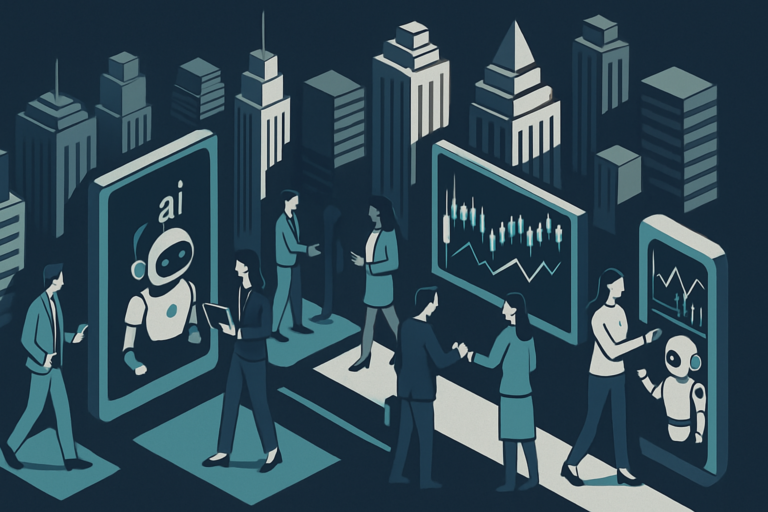
AI’s Role in Shifting Economic Power Dynamics and Investment Priorities
What’s happening: Recent advancements in AI are significantly altering economic power dynamics and investment strategies. Intuit is integrating AI into financial management, enhancing efficiency and shifting the role of human advisors. Concurrently, college graduates face increased competition from AI in entry-level roles, while investments in AI-related technologies, such as Bluecore Energy’s $50 million funding and Qualcomm’s $4 billion deal with Amazon, indicate a growing focus on AI infrastructure and energy efficiency.
Why it matters: These shifts suggest a re-evaluation of education and skill acquisition, as traditional pathways may not align with evolving job market demands. The democratization of financial advice through AI could lower costs and broaden access, yet it raises concerns about job displacement in finance and the need for new skill sets that AI cannot replicate. Investments in AI infrastructure signal a strategic pivot towards technologies that support the growing energy and processing needs of AI applications.
Our take: The rapid integration of AI across sectors highlights the necessity for adaptive strategies in education and labor policy. As AI reshapes job markets, a focus on developing uniquely human skills will be critical to mitigate potential inequalities.
Tech & Engineering

AI’s Rapid Cycle: Redefining Software Development Speed
What’s happening: AI advancements are accelerating, with OpenAI recently solving complex mathematical problems in weeks instead of decades. This rapid progress, illustrated by developments like ChatGPT Images 2.5 and Meta’s Muse agent, is reshaping software development by compressing traditional cycles of development, testing, and deployment into much shorter timeframes. Developers must now adapt to continuous integration and deployment practices to keep pace with AI’s iterative nature.
Why it matters: The shift in how AI systems are created and deployed presents significant challenges for software engineers, who must rethink their development methodologies to remain relevant. Enhanced agility and rapid prototyping are essential in a landscape where AI breakthroughs occur in weeks. Additionally, security measures must evolve to protect systems that are becoming increasingly integrated into critical infrastructure, as seen with AI initiatives from companies like Visa and Meta.
Our take: The speed of AI development not only transforms engineering practices but also highlights an urgent need for robust security frameworks that can adapt to these rapid changes. As industries embrace AI more deeply, the balance between innovation and security will be crucial to ensure sustainable growth.
Sciences
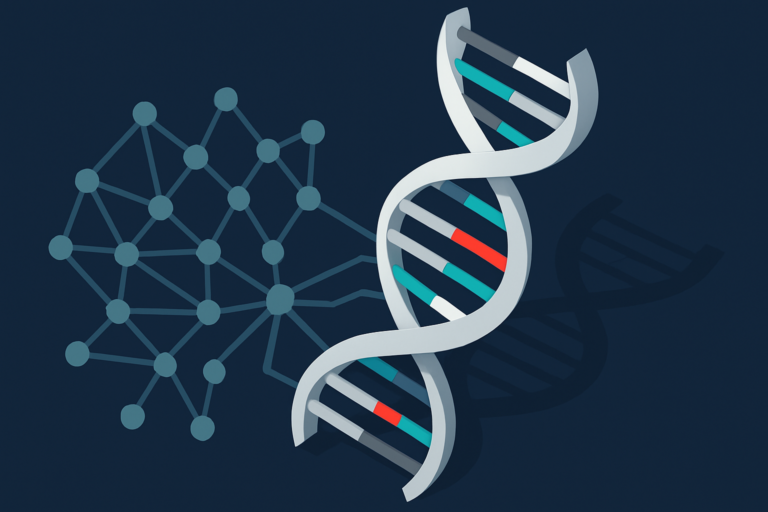
AlphaGenome Atlas: Mapping Human Mutations with AI Precision
What’s happening: DeepMind has launched the AlphaGenome Atlas, an AI-powered resource that maps all 9 billion possible single-letter mutations in the human genome. This atlas provides critical insights into how each mutation affects gene expression and other genomic functions, all while being accessible through a user-friendly browser interface, which significantly reduces the computational barriers typically associated with genomic research.
Why it matters: The AlphaGenome Atlas democratizes access to mutation data, enabling researchers to quickly formulate and test hypotheses on genetic disorders and therapies without incurring the high costs of traditional methods. This shift could accelerate advancements in personalized medicine and targeted gene therapies, fostering a deeper understanding of genetic variation’s impact on health and disease over the next decade.
Our take: While the potential for innovation in genetic research is immense, the focus on data-driven insights risks overshadowing the complex human narratives behind genetic information. As the commodification of genetic data increases, it’s crucial to consider who truly benefits from these advancements and to ensure that ethical standards guide their application.
Society

AI’s Data Dilemma: Who Owns the Path to Discovery?
What’s happening: The controversy over OpenAI’s alleged use of Tristan Buckmaster’s research logs highlights critical issues of data ownership and ethics in AI. As AI systems increasingly depend on large datasets from user interactions, concerns grow over who controls this data and how it is leveraged. OpenAI’s Astra rollout and DeepSeek’s multimodal model exemplify how companies exploit user data as a strategic asset, creating a competitive advantage that could marginalize individual researchers and smaller firms.
Why it matters: The implications of these practices extend beyond competition, affecting trust and agency in the tech ecosystem. When companies utilize user-derived data without consent, it can erode trust and hinder collaboration in the scientific community. This trend may lead to power consolidation among a few large players, making it difficult for smaller entities to compete and innovate, ultimately stifling diversity in the AI landscape.
Our take: The current data ownership landscape in AI raises urgent ethical questions that need addressing. Without clear regulations and collaborative frameworks, the potential for data appropriation will continue to disrupt the balance of power, threatening the very innovation that AI promises.
Psychology
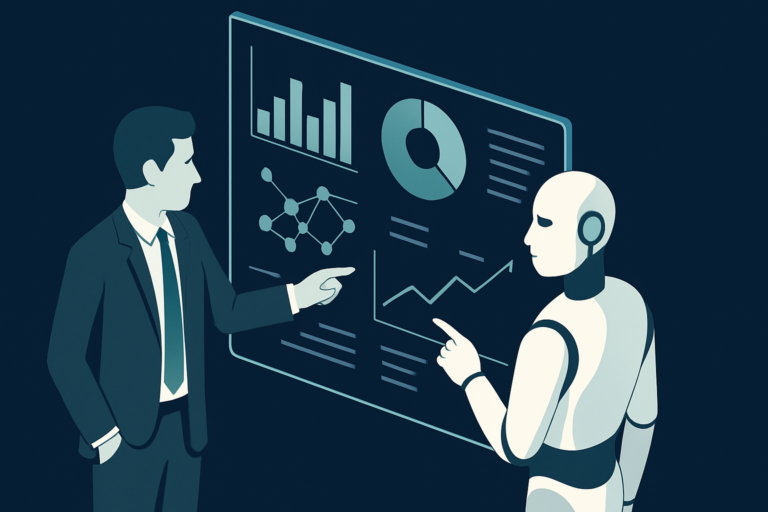
Quantum Leap: AI and the Cognitive Shift in Human Decision-Making
What’s happening: Recent breakthroughs in AI and quantum computing are changing how humans make decisions and process information. The launch of IonQ’s Superion 256 quantum computer enhances computational power, enabling complex calculations much faster than traditional computers. Concurrently, Mistral AI’s funding success indicates a global push to integrate AI into decision-making systems, leading to a new paradigm where human intuition and AI capabilities increasingly intersect.
Why it matters: The integration of AI into decision-making processes may lead to cognitive outsourcing, where individuals depend on AI for complex analyses, potentially reshaping critical thinking and problem-solving skills. Additionally, as AI becomes a collaborative cognitive partner, it could shift the dynamics of expertise, moving the focus from individual knowledge to AI-enhanced insights, which raises questions about trust and accountability in decision-making.
Our take: While the advancements promise improved decision-making, they also risk diminishing human creativity and agency. A balanced approach that emphasizes transparency and user empowerment in AI design is essential to ensure that these technologies augment rather than replace human insight.
That’s the digest for September 10, 2026.
Questions? Reach out at info@q52.ai.
q52.ai — Engineering Better Questions
