

Your daily briefing on AI, technology, economics, and society — from q52.ai.
Industry & Economics

AI’s Evolving Role in Financial Systems: Efficiency or Illusion?
What’s happening: AI is increasingly integrated into financial systems, with Singapore’s central bank leading the way in applications like fraud detection and underwriting. Despite substantial investments, many firms report minimal productivity benefits, raising doubts about whether AI’s impact is real or just an illusion. The article highlights that effective deployment and strategic planning are essential for realizing AI’s potential, as evidenced by both large institutions and startups like Kaiko, which recently raised $53 million for crypto infrastructure.
Why it matters: The financial sector’s heavy investment in AI suggests a critical need for institutions to not only adopt technology but also to implement it strategically to ensure tangible returns. Smaller firms, in particular, face challenges in leveraging AI effectively against industry giants. The implications extend beyond finance, as the principles of strategic AI deployment apply to other sectors, emphasizing the importance of aligning technology with organizational goals to foster innovation and competition.
Our take: The conversation around AI in finance often overlooks the necessity of complementary skills and infrastructure for effective implementation. Merely adopting AI technologies without a clear strategy risks perpetuating a cycle of disappointment and inefficiency in the industry.
Tech & Engineering

From Monoliths to Microservices: The AI Infrastructure Shift
What’s happening: The AI landscape is shifting from large, monolithic models to leaner microservices architectures, as highlighted by Ilya Sutskever’s departure from OpenAI and the introduction of DeepSeek’s V4.1 Flash model. This transition emphasizes optimizing model performance and parameter efficiency rather than merely increasing model size, which can lead to significant reductions in computational costs and operational overhead.
Why it matters: This change in approach transforms engineering practices, encouraging companies to adopt modular designs that enhance scalability and security while ensuring data privacy. The recent issues faced by Anthropic, particularly regarding data retention and client consent, underline the growing importance of data governance as companies navigate this new landscape. As tech giants streamline their infrastructure, smaller players may struggle with increased complexity and costs, impacting their competitive edge.
Our take: The move towards microservices could centralize AI infrastructure control among a few dominant players, raising concerns about equitable access for smaller practitioners. As user data privacy gains prominence, it’s crucial to ensure that the voices of all stakeholders are included in shaping these evolving systems.
Sciences
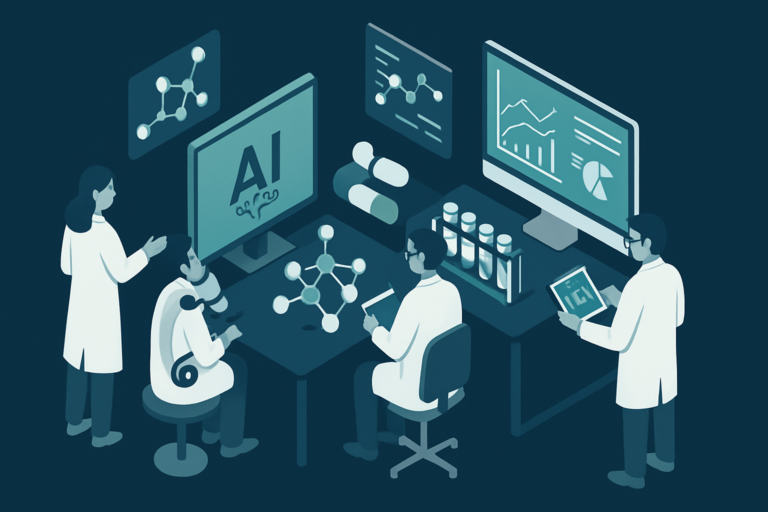
Enhertu’s Phase 3 Win: AI Accelerates Lung Cancer Treatment
What’s happening: Enhertu, an antibody-drug conjugate from Daiichi Sankyo and AstraZeneca, has shown positive results in a Phase 3 trial for lung cancer treatment. Artificial intelligence significantly contributed to its development by analyzing patient data and optimizing dosing, thereby increasing the likelihood of success in identifying effective treatment for specific patient subgroups.
Why it matters: The successful trial results signal a shift towards more targeted cancer therapies, facilitated by AI’s efficiency in drug development. As AI continues to streamline processes, the pharmaceutical industry may see quicker delivery of effective treatments, ultimately transforming personalized medicine and addressing the urgent need for innovative cancer therapies.
Our take: While the advancements in AI-driven drug development are impressive, there are critical questions regarding shareholder accountability in financing these initiatives. The balance between scientific innovation and corporate responsibility must be carefully navigated to ensure that investments are aligned with stakeholder interests.
Society

The Illusive Promise of AI: Spectacle or Substance?
What’s happening: Recent developments in AI highlight a growing divide between the hype surrounding its capabilities and the actual deliverables. While regulators shift their focus toward AI-driven marketing amid the closure of Google’s ad tech case, companies like Boston Dynamics admit their robots are not yet market-ready, revealing that much of the AI narrative has been built on unfulfilled promises.
Why it matters: The disparity between the spectacle of AI and its real-world impact raises important societal concerns. As AI advancements drive market valuations, they often overlook the uneven distribution of benefits, leaving workers and communities to face the less glamorous consequences. This situation risks deepening social inequities and eroding trust in institutions, emphasizing the urgent need for governance frameworks that ensure equitable outcomes from AI technologies.
Our take: The tech industry must shift its focus from flashy innovations to addressing the structural imbalances generated by AI. A collaborative international approach is essential to establish standards that ensure AI serves broader societal interests, rather than merely enriching tech giants.
Psychology

AI’s Role in Rehearsing Human Interactions: A Psychological Shift
What’s happening: AI coaching tools are being increasingly used to help managers rehearse difficult conversations, such as performance reviews and layoffs. These systems simulate employee reactions and provide feedback on tone and language, addressing the fact that 42% of managers struggle with delivering tough messages effectively. This shift represents a significant change in how interpersonal communication skills are developed, moving from experiential learning to a controlled AI-assisted environment.
Why it matters: The integration of AI into communication training is transforming cognitive approaches to interpersonal skills, making it easier for managers to practice without real-world repercussions. While this reduces the emotional burden of learning, it risks diminishing the authenticity and empathy necessary for effective human interactions. Organizations must balance AI’s structured feedback with the development of emotional intelligence to ensure that managers retain their ability to navigate complex emotional scenarios.
Our take: While AI coaching tools offer valuable support for improving communication skills, they should not replace the human judgment that is crucial for genuine interactions. A balanced approach is essential to ensure that technology enhances, rather than undermines, the nuances of human connection.
That’s the digest for September 16, 2026.
Questions? Reach out at info@q52.ai.
q52.ai — Engineering Better Questions
