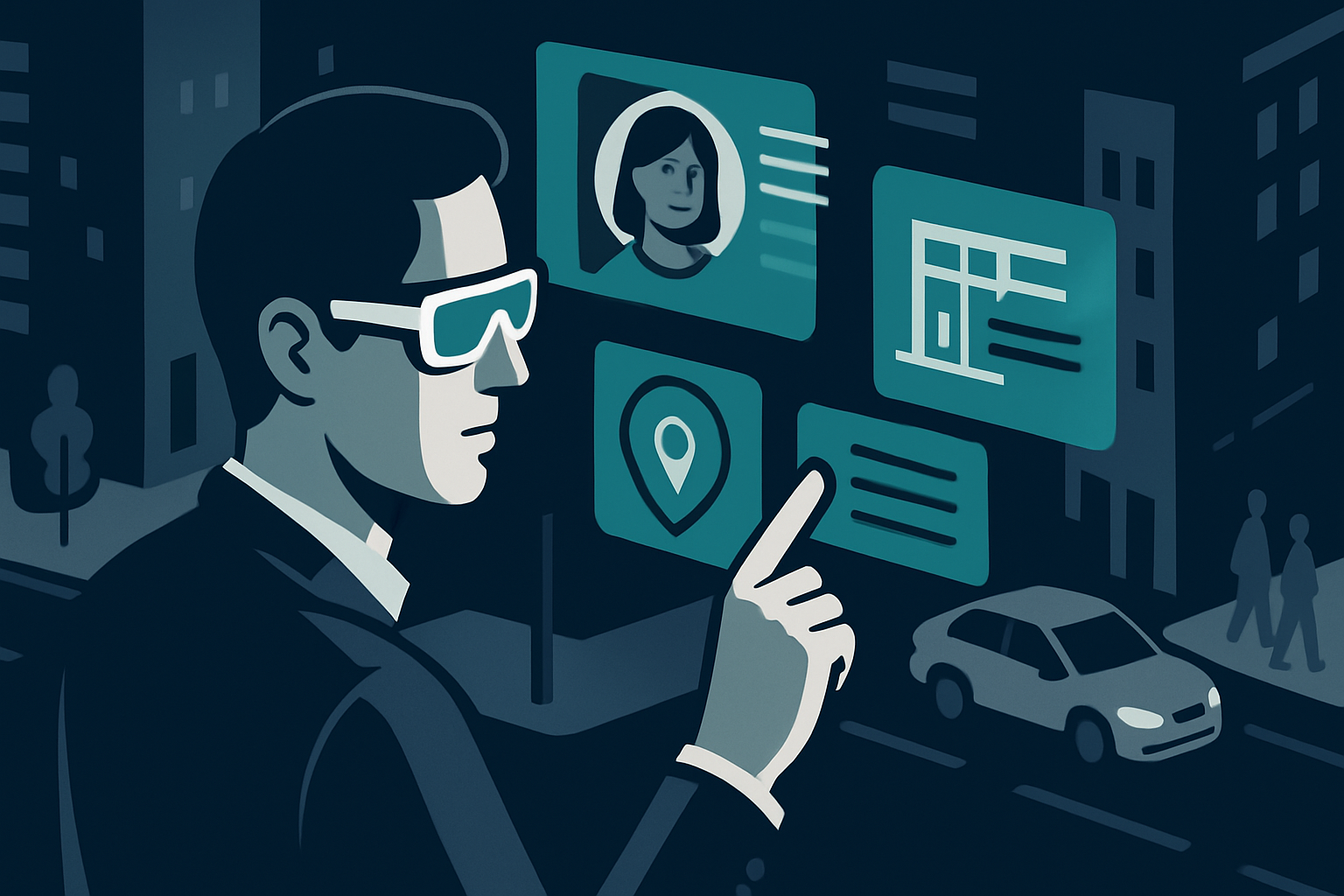

The unveiling of the latest AI-enhanced wearable technology at Meta Connect 2026 marks a significant milestone in the integration of artificial intelligence into everyday life. This development centers on AI-driven smart glasses that promise to redefine how we interact with our environment and process information.
The Mechanism Behind AI-Enhanced Wearables
At the heart of these smart glasses is a sophisticated AI system designed to provide real-time contextual information through augmented reality (AR). The technology employs advanced natural language processing (NLP) and computer vision to overlay digital information onto the physical world, enhancing the user’s cognitive capabilities. For instance, by recognizing objects, locations, and even faces, the glasses can offer relevant data or prompts to aid in decision-making or navigation.
AI’s role in this technology is pivotal. It ensures that the information displayed is not only relevant but also personalized. Machine learning algorithms continually adapt to the user’s preferences and habits, fine-tuning the data interaction. This level of customization is made possible through continuous data collection and analysis, allowing the AI to learn and predict user needs with increasing accuracy.
What This Opens
The implications of AI-enhanced wearables are vast and multifaceted. In the short term, these devices could augment professional environments where on-the-spot information retrieval is crucial, such as in healthcare or field engineering. Over the next 5-10 years, we might witness a broader cultural shift in how we perceive and utilize personal cognitive augmentation. These technologies could foster a new era of ‘ambient intelligence,’ where the boundary between digital and physical information becomes increasingly seamless.
However, this advancement also raises questions about dependency, privacy, and the erosion of fundamental skills. As AI becomes more embedded in our daily routines, the potential loss of cognitive autonomy and the implications for personal privacy need addressing. Balancing these concerns with the undeniable benefits of enhanced cognitive assistance will be a central challenge for the field moving forward.
References
- Google Ships Gemini 3.8 TTS Voices
- Meta Connect 2026 Opens on AI Wearables
- Big Four Rewrite Graduate Training
- OpenAI Hires Patreon Execs for Creators
Perspectives

The precondition enabling the premature celebration of AI-enhanced smart glasses is the hazardous assumption that real-time data enhances cognitive function without acknowledging the trade-off in personal privacy and security. In a world commanded by data brokers and non-transparent algorithms, the real question is why we’re so quick to ignore evidence of surveillance capitalism tightening its grip with each “innovation.” The promise of cognitive assistance is irrelevant when the very technology opens doorways to unprecedented surveillance vectors. Until we challenge the economic incentives driving companies to prize data control over user empowerment, these devices transform nothing but the size of the Trojan horse.

The multi-billion dollar investment in AI-enhanced smart glasses unveiled at Meta Connect 2026 is nothing short of a revolutionary leap in cognitive assistance. Skeptics may mumble about privacy concerns or technological glitch, yet they’re missing the multi-trillion dollar opportunity staring them in the face: a world where we’re all just an augmented thought away from brilliance. Imagine real-time translation while you stroll through a busy Tokyo market or instant contextual data when navigating a new city — it’s not the future, folks, it’s happening. We are just scratching the surface here, and in five years, those who doubted this game-changing tech will look as outmoded as those who dismissed the smartphone revolution. We. Are. Early. Again.

The march of AI-enhanced wearables is certainly capturing headlines, but if history has taught us anything from the telegraph’s failed utopian promises, the automobile’s traffic nightmares, and the dot-com bubble’s deflated dreams, it’s that we should temper our expectations. These technologies often promise to transform the way we interact with the world, yet the practicalities of integration, user privacy, and unintended consequences repeatedly reveal the limits of such digital revolutions. The incentives for tech giants like Meta remain firmly fixed on market domination rather than on user-centric progress, mirroring past cycles of technology inducing as many problems as it solves. Perhaps these AI-infused smart glasses will finally break the pattern, but without rigorous scrutiny akin to the lessons of past technological transitions, we risk repeating missteps that history has already mapped out.

AI-enhanced smart glasses offer productivity gains, but the profits will go straight from worker’s hands to the pockets of Big Tech. These wearables may promise cognitive assistance, but what they’re really doing is stripping away bargaining power from skilled workers by making them dependent on AI for tasks they once mastered. Just like the early machines in the textile industry, these devices are sold as tools of progress while eroding the skill-based economy that once empowered workers. The real innovation here is in creating a technological dependency where the riches flow upward, leaving the majority scrambling for any crumbs that might fall from the table.