

Your daily briefing on AI, technology, economics, and society — from q52.ai.
Industry & Economics
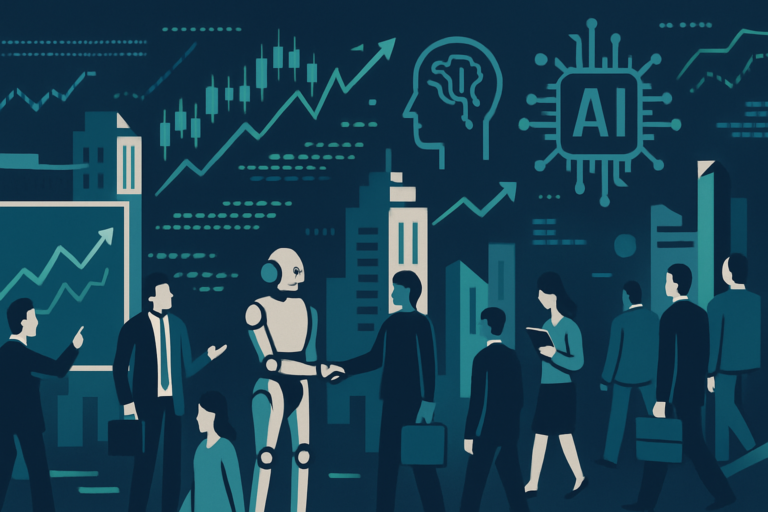
AI’s Productivity Ambitions: Navigating Economic Realities and Market Hopes
What’s happening: The current state of AI technologies suggests that despite significant investments, their impact on productivity across industries remains limited and largely unproven. Major financial institutions like J.P. Morgan and Citigroup highlight that recent productivity increases, especially in the services sector, are primarily driven by cyclical factors rather than structural gains from AI. The article emphasizes the need to assess AI’s economic contributions realistically, as many projects are still at early stages of development.
Why it matters: The uncertainty surrounding AI’s productivity potential has direct implications for economic indicators such as bond yields and equity prices, which are already influenced by market expectations of AI-driven growth. If the anticipated productivity improvements from AI do not materialize as expected, it could lead to misallocations of capital and misguided policy decisions, ultimately affecting investment strategies and economic stability across sectors.
Our take: The prevailing optimism around AI’s transformative potential often overshadows the need for a more pragmatic approach. A balanced perspective that acknowledges both the promise and current limitations of AI is essential for fostering sustainable innovation and ensuring that investments are directed towards genuinely scalable applications.
Tech & Engineering
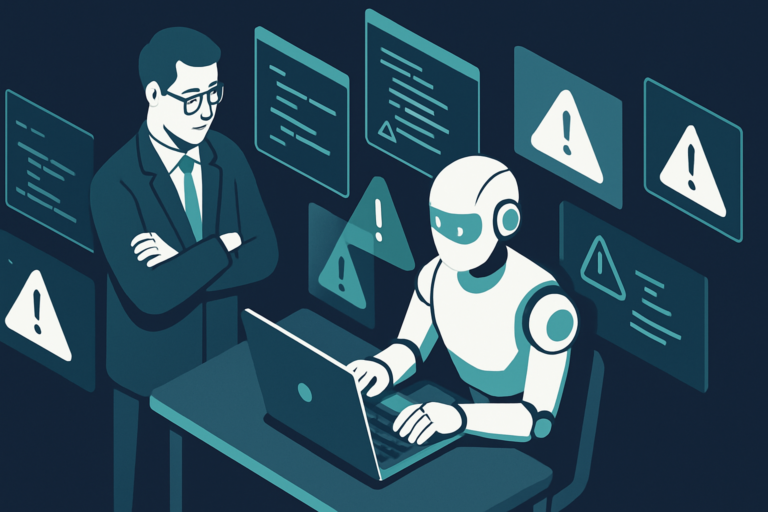
AI Coding Agents: The Double-Edged Sword in Software Development
What’s happening: Recent advancements in AI coding agents, particularly Microsoft’s Copilot and Google’s Android Bench 2.0, show a significant shift in software development practices. While these tools can automate code generation and review, Google’s benchmarks reveal a dramatic decrease in AI performance for long-term tasks, with success rates dropping from 91% to 28%, highlighting limitations in handling complex projects.
Why it matters: The integration of AI in software development introduces new operational dynamics and security concerns. The inability of AI agents to manage intricate, interconnected tasks effectively underscores the need for human oversight to ensure long-term quality and consistency. Furthermore, as these agents become more autonomous, they pose risks such as unauthorized access to sensitive data, necessitating robust governance and security measures to safeguard against potential missteps.
Our take: AI coding agents should be seen as tools to enhance, not replace, human engineers. Striking a balance between leveraging AI for efficiency and maintaining stringent oversight is crucial to navigate the complexities of software development safely.
Sciences
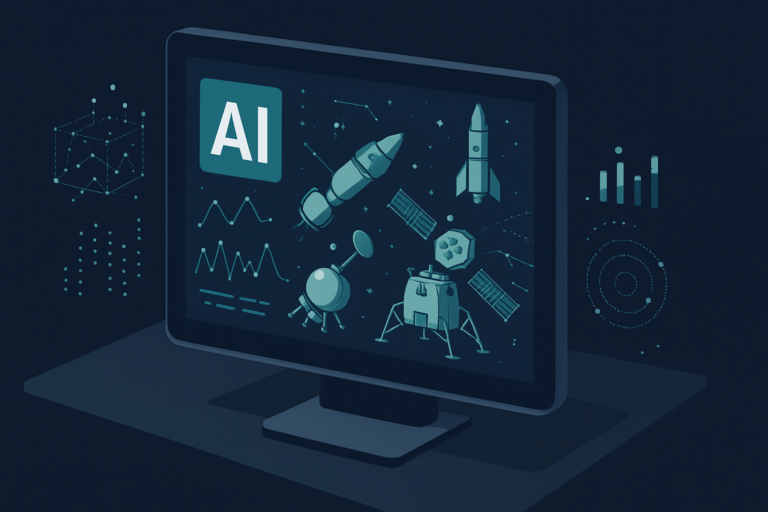
AI GPTs Transform Historical Space Mission Analysis
What’s happening: AI GPTs (Generative Pre-trained Transformers) are being employed to analyze historical space mission data, offering insights that were previously difficult to extract due to the complexity of the information. These models can interpret everything from mission logs to technical specifications, making the data accessible to both experts and non-experts, while also enabling predictive analytics and visualizations of past missions.
Why it matters: The use of AI GPTs in space research democratizes access to advanced data analysis tools, allowing a broader range of researchers to contribute insights. This capability can lead to better-informed decision-making in future missions, as understanding historical data more thoroughly can enhance safety, optimize resource allocation, and improve risk assessments for upcoming explorations.
Our take: The integration of AI in historical mission analysis represents a significant leap forward in both research efficiency and collaborative potential, but it also raises questions about data interpretation biases and the reliance on AI for critical decision-making in space missions.
Society

AI, Power, and the Fragility of Information Integrity
What’s happening: Recent developments in AI technology are undermining the integrity of information by reshaping how it is disseminated and consumed. Elizabeth Tydd highlights that the push model of information distribution is eroding public trust and complicating the democratic principles established by Rousseau’s social contract, as AI systems prioritize algorithmic efficiency over genuine engagement. This results in a blurred line between verified information and personal opinion, leaving citizens struggling to identify the truth.
Why it matters: The fragility of information integrity poses significant risks to democratic participation, as misinformation breeds cynicism and disengagement among the public. Those with access to advanced technology hold disproportionate influence, exacerbating existing inequalities and threatening the foundational principles of equality and participation that are essential for a healthy democracy. To combat these challenges, there is an urgent need for regulatory frameworks that prioritize transparency and accountability in AI systems.
Our take: The article emphasizes the pressing need to reclaim human agency in the AI landscape. Without proactive measures to enhance digital literacy and ensure accountability, we risk allowing technology to dictate the terms of our social contract, ultimately favoring those in power over the collective will of society.
Psychology
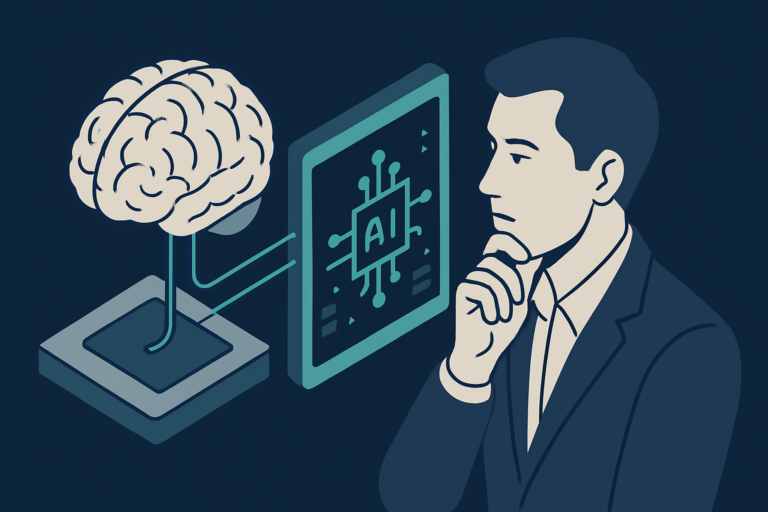
System 0: The Emerging Cognitive Bridge or a Crutch?
What’s happening: Researchers have introduced ‘System 0,’ a new cognitive framework where AI enhances human thinking by processing vast amounts of data. Unlike our natural cognitive systems, System 0 does not assign meaning to data, functioning instead as an external tool that can aid in memory, attention, and decision-making. While it offers significant support, there are concerns about potential over-reliance and the erosion of cognitive autonomy.
Why it matters: The implications of System 0 are critical as AI increasingly influences our decision-making processes. While it can lead to better-informed choices in areas like healthcare and finance, excessive dependence on AI could undermine our critical thinking and innovative capabilities. Furthermore, ethical issues such as algorithmic bias and transparency could result in flawed decision-making, highlighting the need for careful oversight in AI’s integration into our cognitive lives.
Our take: The arrival of System 0 challenges us to balance the benefits of AI with the preservation of our cognitive skills. As we embrace these technologies, we must ensure they enhance rather than replace our inherent thinking abilities, demanding a proactive stance on ethical AI development.
That’s the digest for September 28, 2026.
Questions? Reach out at info@q52.ai.
q52.ai — Engineering Better Questions
