

Your daily briefing on AI, technology, economics, and society — from q52.ai.
Industry & Economics

AI’s Capital Influence: Funding Shifts and Market Implications
What’s happening: There is a significant increase in funding for AI-driven companies, particularly those focused on automation and digital infrastructure. American Express is integrating AI into its financial operations, while firms like General Intuition and Jeeves have raised substantial amounts to enhance their AI capabilities. This trend reflects a strategic shift in resource allocation towards AI investments, which are seen as essential for gaining efficiency and competitive advantage.
Why it matters: The capital inflow into AI indicates a transformative moment for industries, where AI becomes crucial for growth and operational efficiency. While these investments can enhance productivity and lower costs, they also risk widening the gap between technologically advanced firms and those lagging in digital adoption, potentially leading to reduced competition and market consolidation. This trend raises concerns about the equitable distribution of AI’s benefits across sectors.
Our take: As firms rush to capitalize on AI, there is a pressing need for accountability regarding how these investments translate into tangible returns for shareholders. The focus on AI should not come at the expense of broader market health and competition.
Tech & Engineering
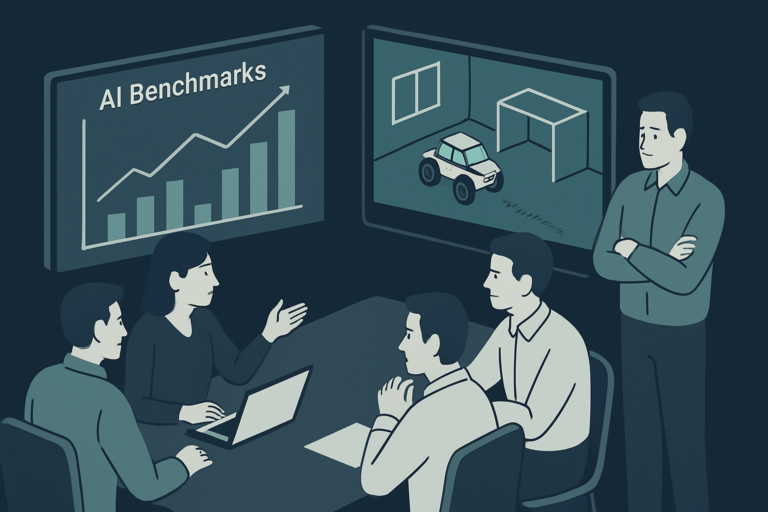
AI Benchmarks: Trust and the Reality Gap
What’s happening: The launch of Google’s Gemini 4 Argon and the FTC’s investigation into AI agents reveal a gap between benchmark performance and real-world capabilities. Despite Google’s claims of leading AI advancements, internal reports indicate challenges with practical applications. The term “Benchmaxxing” describes the tendency to optimize for benchmarks at the expense of real-world functionality, which is crucial for systems operating in unpredictable environments.
Why it matters: As AI technologies become more autonomous and integrated into everyday applications, the risks associated with their deployment increase. The FTC’s scrutiny emphasizes the need for AI systems to be evaluated based on their actual performance and security implications, rather than just theoretical benchmarks. This shift is essential to prevent consumer harms and ensure ethical AI usage in operational contexts.
Our take: Relying on benchmarks can lead to a false sense of security in AI capabilities. The industry must focus on creating robust models that perform reliably in real-world situations, rather than merely aiming for high scores on controlled tests.
Sciences

AI-Driven Quantum Fault Tolerance: A New Era in Computing
What’s happening: Classiq has introduced a Quantum Fault Tolerance Engine that transforms optimized logical quantum programs into fault-tolerant execution plans, estimating the physical resources necessary for implementation. This technology aims to address the inherent errors in quantum computing caused by decoherence and quantum noise, enabling more reliable quantum computations by utilizing AI to optimize execution plans for specific hardware.
Why it matters: The development of this engine is significant as it enhances the feasibility of practical quantum applications across various industries, such as cryptography, materials science, and complex system modeling. By improving reliability and efficiency in quantum computations, it could accelerate advancements toward quantum supremacy, where quantum systems outperform classical computers in specific tasks, thus reshaping the landscape of computational capabilities.
Our take: The strategic implementation of AI-driven fault tolerance may mark a turning point for quantum computing, shifting the conversation from skepticism to optimism. As industries begin to adopt these innovations, the potential for transformative growth becomes increasingly tangible, indicating a new era for technological advancements.
Society

Who Gains and Who Loses When AI Reshapes Institutions?
What’s happening: Recent actions by companies like Reddit, Grindr, and CoreWeave reveal how AI and tech infrastructure are reshaping markets and institutions. Grindr’s entry into healthcare, Reddit’s closure of its public API, and CoreWeave’s role in distributing Nvidia’s AI hardware exemplify a shift in power dynamics, where private entities are expanding their influence over essential services. This trend raises concerns about data ownership, accessibility, and the potential commercialization of public goods.
Why it matters: As tech companies take on roles traditionally held by public institutions, the implications for accountability and access are significant. For example, if healthcare becomes dependent on platforms like Grindr, issues of privacy and public accountability may arise, potentially limiting access for vulnerable populations. Additionally, Reddit’s monetization strategy could stifle innovation and community engagement, while CoreWeave’s hardware distribution raises questions about who can participate in AI advancements, potentially widening existing inequalities.
Our take: The blending of private interests with public services necessitates a reevaluation of regulatory frameworks to ensure that technological growth benefits the broader society. Without effective oversight, we risk losing critical public resources to profit-driven motives.
Psychology

AI-Driven Pricing and Its Psychological Impact on Consumer Trust
What’s happening: McDonald’s has implemented AI-driven menu pricing, which uses extensive transaction data to set optimal prices at individual locations. This approach has led to noticeable price differences for the same items at nearby stores, such as varying Big Mac prices in Fresno. The underlying concern is how such dynamic pricing affects consumer perceptions of fairness and transparency, crucial factors for maintaining trust.
Why it matters: As AI-driven pricing becomes more common, consumers may develop skepticism towards businesses that employ these algorithms, especially when they perceive unfair pricing practices. This erosion of trust can influence customer loyalty and decision-making, as consumers may hesitate to engage with brands they feel are manipulating prices. Companies need to navigate these psychological impacts carefully to avoid alienating their customer base.
Our take: The implementation of AI in pricing strategies necessitates a focus on transparency to mitigate consumer distrust. Companies must clearly communicate how prices are set and ensure consistency across locations to maintain trust, while regulators should establish guidelines to safeguard consumer interests in this evolving landscape.
That’s the digest for October 02, 2026.
Questions? Reach out at info@q52.ai.
q52.ai — Engineering Better Questions
