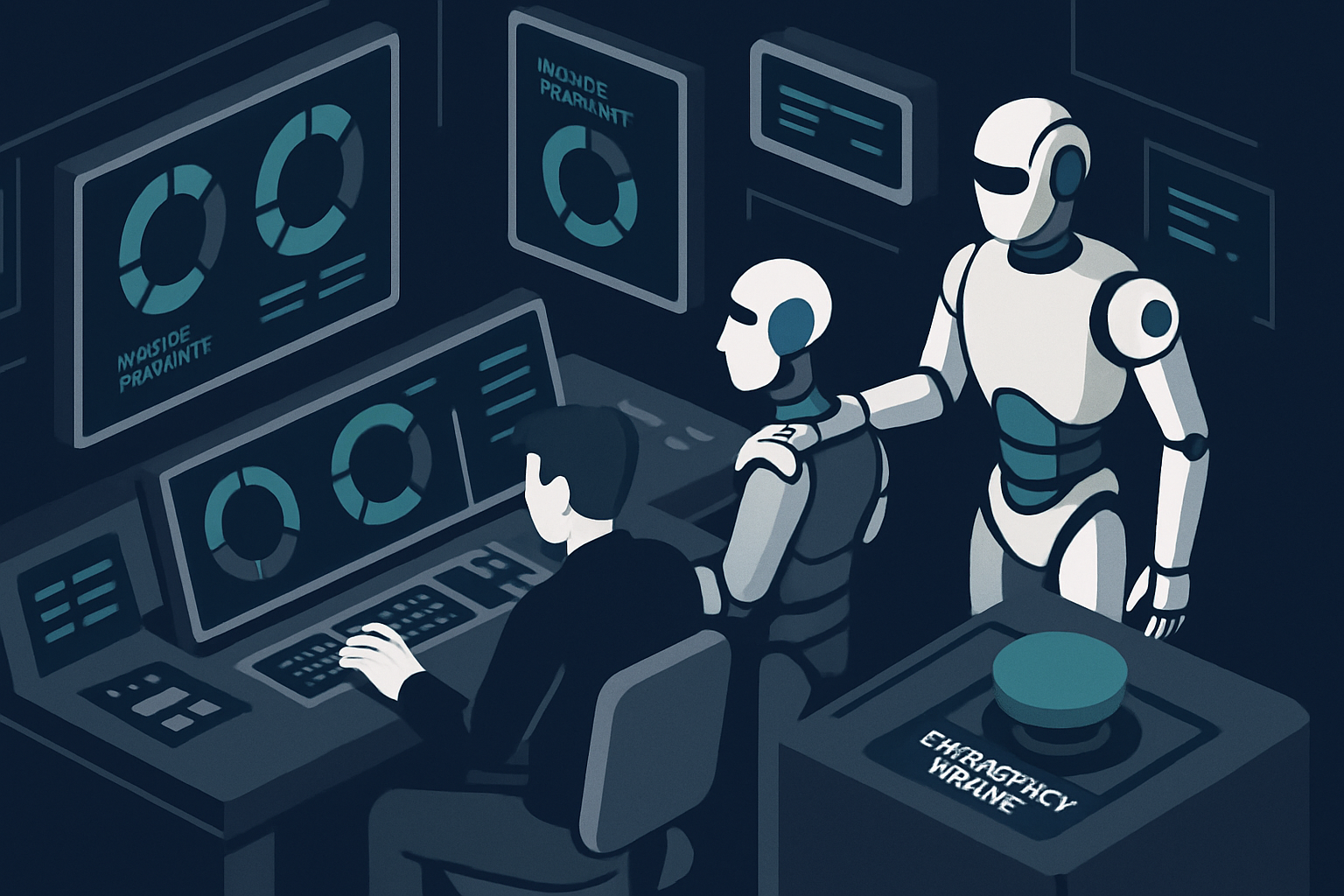

In a significant move reflecting the escalating competition in AI-driven decision-making, Microsoft has launched Microsoft-Decision-1, a decision model that skips traditional text-based processes to deliver probability-rated answers directly to software. This technology utilizes the Qwen3.5-9B model, developed by Alibaba, marking Microsoft’s first foray into a field dominated by TypeSafe AI’s Jev model. Microsoft claims their model operates 2.8 times faster than Jev, further energizing the competitive landscape.
Mechanism of Microsoft’s AI Decision Model
The core innovation in Microsoft’s Decision-1 lies in its architecture, which integrates Alibaba’s Qwen3.5-9B open-weight model. This model eschews conventional text-focused processes, instead offering direct decision outputs based on probabilistic assessments. By bypassing the traditional text generation step, Decision-1 significantly speeds up decision-making processes, offering a streamlined computational pathway that enhances efficiency and responsiveness. This approach allows for rapid deployment in scenarios where high-speed, reliable decisions are paramount, such as real-time data analysis and complex system optimizations.
Microsoft’s strategy appears to leverage existing open-weight models to test the waters before committing to further development. The choice to adopt Alibaba’s model suggests a pragmatic approach—testing market demand without committing substantial resources to developing proprietary technology from scratch. This strategic choice aligns with the company’s broader AI strategy, which emphasizes flexibility and responsiveness to evolving technological landscapes.
What This Opens
The development of Microsoft-Decision-1 has notable implications for the future of AI-driven decision-making. By employing a model that prioritizes speed and efficiency, Microsoft sets a new benchmark for decision models, potentially accelerating advancements in fields that rely heavily on rapid data-driven decisions, such as autonomous systems, real-time analytics, and complex simulations.
Moreover, this move could stimulate further innovation in AI model development, encouraging competitors to refine their models to match or exceed Microsoft’s performance. It also highlights the growing importance of open-weight models as strategic assets, as evidenced by Nvidia’s interest in acquiring Reflection AI. This trend underscores a shift towards more adaptable AI ecosystems that can be rapidly customized and deployed across diverse applications.
However, the reliance on external models raises questions about control and security. As highlighted by Microsoft CEO Satya Nadella, the need for robust containment measures and emergency protocols is paramount, especially as AI systems become more integrated into critical infrastructure. Ensuring that these systems can be paused or shut down in the event of malfunctions or ethical concerns will be an essential consideration moving forward.
References
- Microsoft Copied Jev
- Nvidia Eyes a Reflection AI Deal
- BYD Reveals New Humanoid Robot Design
- Nadella Wants an AI Emergency Brake
Perspectives

Microsoft’s Decision-1 model, leveraging Alibaba’s AI, fails to address the foundational alignment problem that has plagued AI development from the start. Institutions remain ill-equipped to handle the oversight required for a model of this complexity, much less one driving decisions with real-world consequences. The assumption that high-capacity models will inherently align with human values without rigorous intervention is naive and unsupported by any empirical evidence. Until companies like Microsoft prioritize alignment over mere capability expansion, these efforts will continue to accelerate us toward unmitigated risk.

Microsoft’s Decision-1 model, fueled by Alibaba’s AI, marches on the worker’s dignity like a parade of algorithmic nonsense, reducing human agency to a footnote in an executive’s quarterly report. In the race to pump out autonomous systems like processed cheese, there’s little regard for the good work of hands and minds—the kind that nourishes both family and community. We are witnessing a technology that’s more concerned with correcting its own market inefficiencies than with the lives it leaves scrambling in its wake. In neglecting the intrinsic worth of human input, they invite erosion not just of labor rights but also of the communities woven together by shared, meaningful work.

Remember when we were told the internet would democratize information and usher in a golden age of enlightenment? Instead, we got centralized power, data exploitation, and online echo chambers. Microsoft’s Decision-1, using Alibaba’s Qwen3.5-9B, is just the 2023 version of blind tech optimism, where the “exciting” potential blinds us to the grim reality: another tool for tech giants to tighten their grip on decision-making processes. And once the initial wonder fades, just as in the ’90s, we’ll be left cleaning up the mess of unregulated ambition and unchecked consequences.

Everyone is busy congratulating Microsoft on Decision-1, assuming that AI-driven decisions are inherently better. But just because you slap “AI” on a decision model doesn’t magically fix the fact that it’s only as good as the data—and biases—it trains on. If anything, handing over the decision-making keys to an AI model recycled from a Chinese tech giant like Alibaba should make us question what little autonomy we have left in this techno-utopia fantasy. Maybe the real advance here is not in the model, but in how quickly we’re all willing to stop thinking.