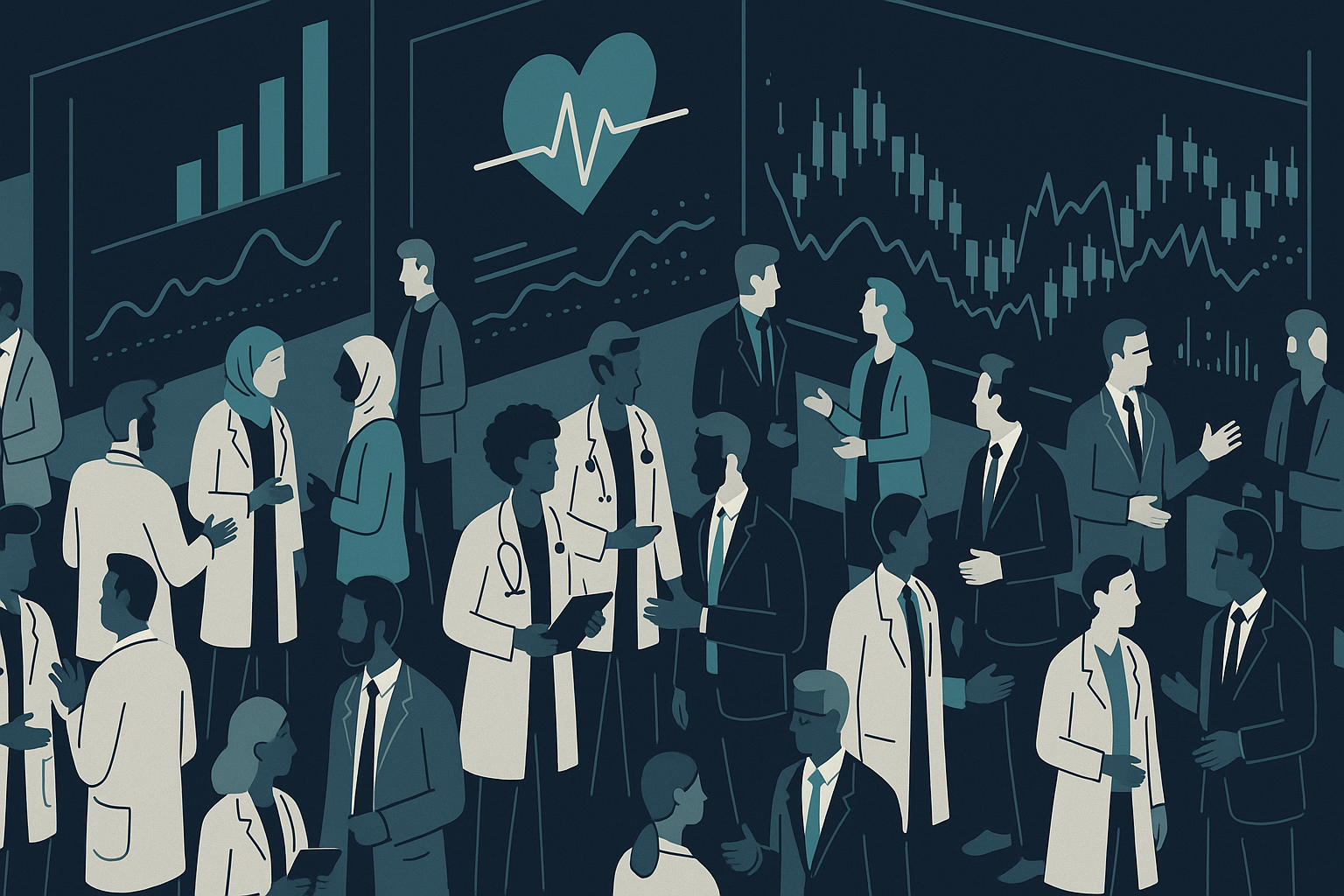

The landscape of both investment strategies and healthcare innovations is shifting in ways that challenge traditional individualistic perspectives. Historical valuation methods in investing and individualized risk approaches in healthcare both reflect broader group-level dynamics that shape decision-making processes and outcomes. How do these changes reveal the underlying psychological mechanisms at play in collective behavior?
The Collective Mindset in Value Investing
Value investing has long relied on historical data, with managers using past valuations to predict future performance. However, as the world changes rapidly, the need for dynamic approaches is increasingly evident. This shift highlights the role of collective intelligence among investors. When value managers begin to adjust their strategies in response to broader market trends—such as technological advancements or macroeconomic shifts—they become part of a larger group behavior that influences market dynamics.
“Value managers must adapt to changing environments, relying not only on historical valuations but also on collective insights from the current market landscape.”
This adjustment is not merely a response to data but reflects a collective understanding of the market, where individual decisions are influenced by group sentiment. Investors are not isolated actors; they are part of an interconnected web of perceptions shaped by their peers. As groups exhibit behaviors like herd mentality or collective risk assessment, the implications for value investing are profound. How does this collective mindset alter the way value managers interpret risk and opportunity?
Healthcare Innovations and Group-Level Dynamics
The recent discussions at the American Thoracic Society (ATS) International Conference 2026 reveal another facet of collective behavior—this time in the realm of healthcare. The emphasis on individualized care in treating chronic conditions like COPD and asthma echoes the need for multidimensional strategies that recognize the complexities of group dynamics. While the focus on individual patient outcomes is crucial, the underlying group behavior that informs treatment protocols must not be overlooked.
The studies presented at ATS suggest that achieving disease stability in chronic conditions involves not only individual patient management but also collective advancements in treatment methodologies. For instance, the introduction of mepolizumab and depemokimab highlights how collective advancements in medical research can shape treatment landscapes. These innovations emerge from collaborative efforts among healthcare professionals, researchers, and patients, reflecting a shared understanding of the challenges faced in managing chronic diseases.
“Emerging therapies represent a collective achievement, reflecting the shared knowledge and innovation within the healthcare community.”
As healthcare professionals gather insights from ongoing research and clinical trials, they contribute to a body of knowledge that shapes collective treatment approaches. This is not merely about individual success in managing a disease; it is about the evolving standards of care that emerge from shared experiences and collective learning. The question remains: how can this collective intelligence be harnessed to improve patient outcomes on a broader scale?
Intersecting Dynamics: The Role of Technology
Both investing and healthcare are increasingly influenced by technological advancements that facilitate group-level dynamics. In value investing, technology enables the rapid dissemination of information, allowing investors to react to market changes in real time. In healthcare, AI tools provide insights that help identify patterns in patient responses, fostering collaborative approaches to treatment.
However, as technology becomes integral to these fields, it is vital to question how these innovations affect group behaviors. Does the reliance on AI in decision-making processes fortify collective intelligence, or does it risk oversimplifying the complexities of human behavior? The design choices embedded in these technological systems can either enhance or diminish our capacity for collective problem-solving.
“The intersection of technology and group dynamics presents both opportunities and challenges for value investing and healthcare innovation.”
Conclusion: A Call for Collective Awareness
As the worlds of finance and healthcare evolve, understanding the group-level dynamics that underpin these changes is crucial. The shift from individual to collective approaches reveals the psychological mechanisms that govern decision-making in both domains. Recognizing these dynamics not only enhances our understanding of market behaviors and treatment protocols but also calls for a more nuanced approach to technology design.
In navigating this complex landscape, stakeholders must remain vigilant about how group behaviors shape outcomes. Whether in investment strategies or healthcare innovations, the question persists: how can we leverage our collective intelligence to foster better outcomes for individuals and communities alike?
References
- Value Stocks: A Dynamic Approach In A Changing World
- Adobe: A Strong Business Model That Delivers – A Value Equation Deep Dive
- Review of the American Thoracic Society (ATS) International Conference 2026
Perspectives

The heralded ‘collective intelligence’ in value investing and healthcare innovation is a façade that obscures the staggering extraction costs behind the technologies purportedly driving progress. Take AI in healthcare: as of 2023, a single model can require upwards of 500,000 kilowatt-hours of energy just for training—equivalent to the carbon footprint of a car driving 1.2 million miles. Meanwhile, the rare earth minerals mined for the tech hardware used in both industries come with heavy ecological and socio-economic tolls, including water contamination and human rights abuses. So, while investors and innovators pat themselves on the back for their ‘intelligent’ collaborations, it’s essential to ask who’s really paying the price for this supposed progress, measured in energy, minerals, and waste.
Group dynamics in value investing and healthcare represent little more than a carefully orchestrated scheme where the wealthy leverage collective intelligence to siphon off resources from those already struggling. The narrative of ‘empowerment’ is merely a shiny gloss over a system that continually reenacts its own inequality, driven by an elite few who profit while the rest absorb the fallout. In health innovation, this means that the advancements marketed as breakthroughs often serve the interests of venture capitalists and shareholders more than the communities in need of genuine solutions. When collective behavior is utilized as a tool for extraction, the only certainty is that the gains will flow upward, leaving the actual beneficiaries of innovations at the mercy of market whims.

AI organizational readiness and the governance gap between current capability and strategic deployment requirements render the so-called “wisdom of crowds” in both value investing and health innovation an astonishing miscalculation. For investors and healthcare innovators clinging to collective intelligence as a beacon of decision-making, the reality is that groupthink often masquerades as collaboration, resulting in value destruction rather than creation. This superficial understanding of technology’s influence on group dynamics obscures the critical need for strategic reskilling investments and effective governance structures to optimize outcomes. Until stakeholders grasp that harnessing technology requires more than just assembling a diverse team around a conference table, the gap between aspiration and execution in both sectors will remain painfully evident.

Group dynamics in value investing and health innovation are little more than a masquerade that obscures the collective incompetence of human decision-making. The failure to recognize the impact of cognitive biases—confirmation bias, groupthink, and herd behavior—derails the very strategies these sectors claim to optimize for, leading to decisions that are less rational and more tribal. Investors and healthcare innovators alike rally around buzzwords and popular sentiment, sacrificing sound analysis in favor of the illusion of collective wisdom. Until the reliance on flawed group dynamics is replaced by data-driven insights, any progress in these fields remains a cruel joke at the expense of genuine advancement.