

Your daily briefing on AI, technology, economics, and society — from q52.ai.
Industry & Economics
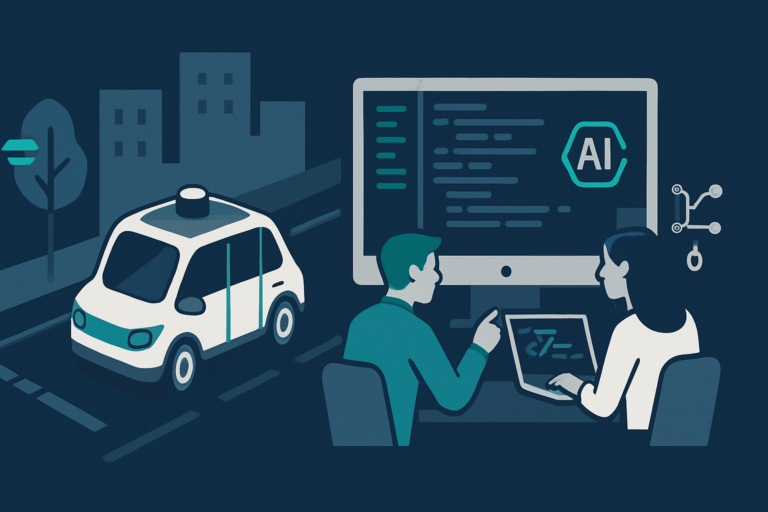
AI’s Role in Shaping the Future of Transportation and Coding Platforms
What’s happening: Rivian’s spinout, Also, has secured $150 million to develop small autonomous electric vehicles aimed at improving last-mile transportation efficiency. Simultaneously, Cursor has launched its Origin platform as a serious competitor to GitHub, which currently hosts 180 million developers. These advancements indicate a growing market for autonomous delivery solutions and a potential shift in the software development landscape.
Why it matters: The investment in autonomous vehicles could reduce labor costs in delivery services and attract more capital to the autonomous technology sector, fostering innovation. In software development, the emergence of Origin as a viable alternative to GitHub may enhance competition, leading to improved services and tools for developers, ultimately benefiting the broader technology ecosystem.
Our take: These developments illustrate AI’s transformative role in traditional industries, but they also raise critical questions about safety and ethics in autonomous systems. As competition increases in both transportation and coding platforms, the focus should remain on leveraging AI to augment human capabilities rather than replace them.
Tech & Engineering
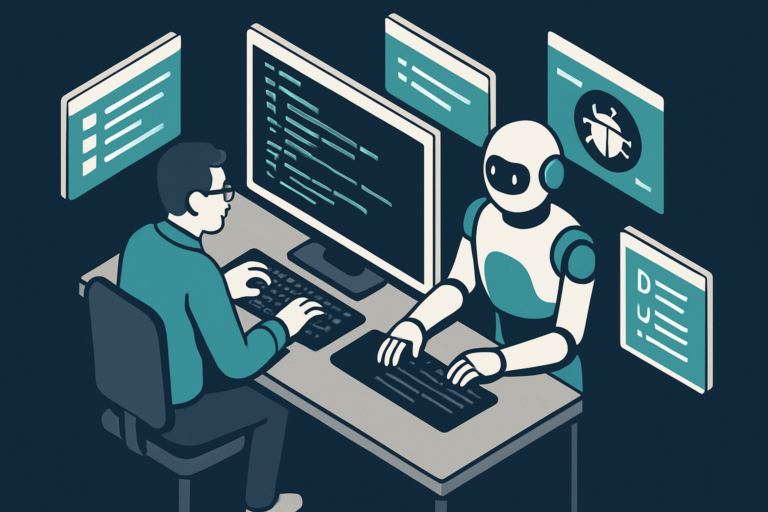
AI-Driven Engineering: Embracing the New Workflow
What’s happening: The software engineering landscape is undergoing a significant transformation as AI-driven tools become integral to the development process. By 2026, AI technologies like GitHub Copilot and ChatGPT are assisting engineers with tasks such as code generation, debugging, and project management, automating many previously manual processes and allowing developers to focus on complex problem-solving and architecture design.
Why it matters: This shift is redefining the skills required for software engineers, who must now be proficient in AI tool usage and integration within workflows. The incorporation of AI enhances software quality and team coordination, leading to faster deployments and more robust applications. Additionally, it raises important security considerations that must be addressed to prevent new vulnerabilities introduced by these advanced tools.
Our take: Embracing AI in engineering is not just about adapting to new tools but also about redefining the role of engineers in the development process. The focus should be on leveraging AI to enhance productivity while ensuring that security protocols evolve alongside these technologies to mitigate risks.
Sciences
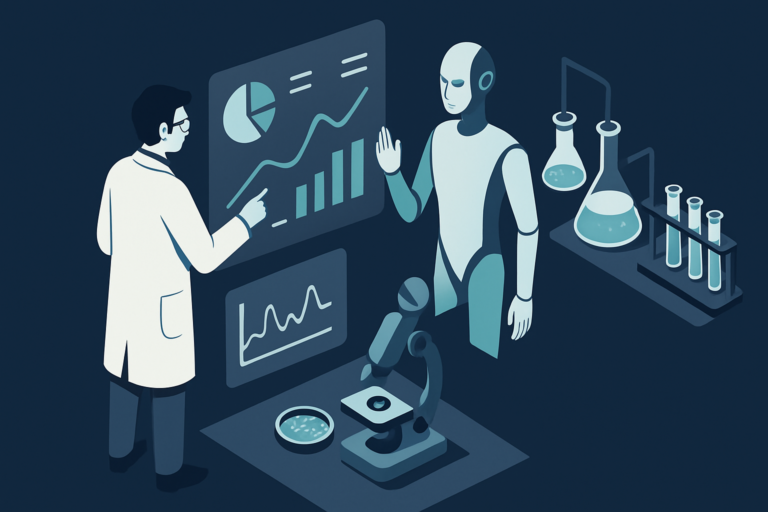
AI-Driven Co-Scientist Revolutionizes Experimental Design
What’s happening: The Co-Scientist AI platform is transforming experimental design in scientific research by leveraging advanced machine learning algorithms to analyze large datasets. This AI-driven tool can suggest innovative experimental designs and hypotheses, particularly in complex fields like genomics and pharmacology, accelerating the pace of discovery. For example, it can identify potential drug compounds and predict their interactions, significantly reducing the time and resources typically needed for preliminary research phases.
Why it matters: By streamlining the experimental design process, Co-Scientist allows researchers to focus more on hypothesis testing and validation, potentially leading to faster breakthroughs in pharmaceuticals and other scientific fields. The platform exemplifies the growing role of AI in enhancing human capabilities in research, promoting the idea that AI can complement rather than replace human intelligence in scientific endeavors.
Our take: While Co-Scientist offers exciting potential for accelerating research, it raises concerns about algorithmic biases and the nuances of context that AI may overlook. Relying too heavily on AI could lead researchers astray, highlighting the need for a balanced approach that integrates human insight with AI capabilities.
Society

Civil Society’s Role in Bridging the AI Governance Gap
What’s happening: The rapid advancement of artificial intelligence (AI) is outpacing existing governance frameworks, creating significant challenges for regulation at both national and international levels. Civil society, including nonprofit organizations and advocacy groups, is increasingly recognized as a vital player in AI governance, tasked with ensuring that AI technologies uphold democratic values and public interests. Their involvement is crucial for promoting transparency, accountability, and addressing biases inherent in AI systems.
Why it matters: As AI technologies continue to evolve, the inability of current regulatory bodies to keep pace poses risks, particularly for marginalized communities who may be disproportionately affected. By engaging civil society in the governance process, policymakers can enhance public trust and create more equitable outcomes. This shift towards a participatory governance model could lead to more effective regulations that reflect diverse societal needs and values, ultimately shaping a fairer technological landscape.
Our take: The reliance on civil society to fill the governance gaps highlights a critical tension: while their role is essential, it also underscores the inadequacy of existing institutions. Genuine empowerment of civil society in AI policy-making requires significant resource allocation and a fundamental rethinking of how power and information are distributed in governance.
Psychology
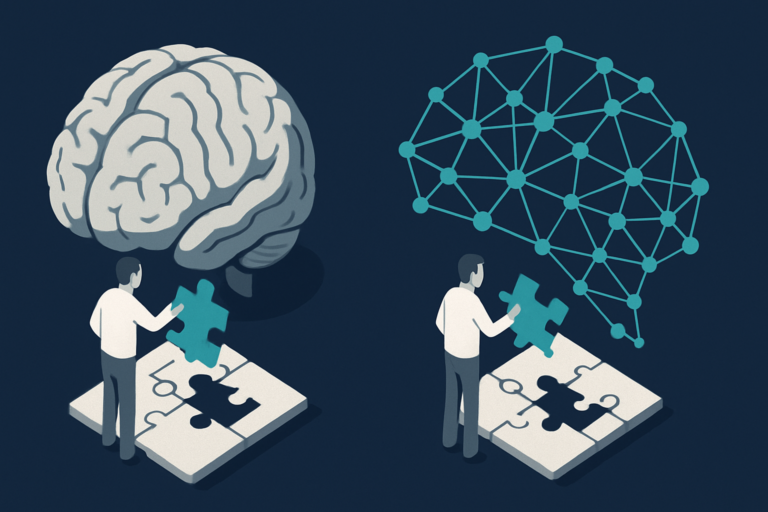
AI Mirrors Human Decision-Making: What This Reveals About Our Cognition
What’s happening: Recent research from Harvard reveals that both humans and AI, specifically the SF&GPI algorithm, share similar decision-making processes. Using neuroimaging, scientists found that people often rely on familiar solutions, mirroring the AI’s tendency to recycle past strategies to tackle new challenges, especially in tasks like video games designed for the study.
Why it matters: This alignment between human cognition and AI behavior raises concerns about cognitive rigidity in an AI-influenced world. As AI systems become more prevalent, the inclination to stick with known solutions could stifle creativity and innovative problem-solving. If human decision-making increasingly mirrors algorithmic patterns, it risks constraining the range of strategies people consider, potentially leading to suboptimal outcomes in various contexts.
Our take: The findings highlight a critical need for AI systems to be designed in ways that encourage exploration and creativity rather than simply optimizing past data. Policymakers and developers must prioritize AI development that promotes diverse thinking, ensuring that reliance on AI does not limit human ingenuity.
That’s the digest for August 23, 2026.
Questions? Reach out at info@q52.ai.
q52.ai — Engineering Better Questions
