

Your daily briefing on AI, technology, economics, and society — from q52.ai.
Industry & Economics
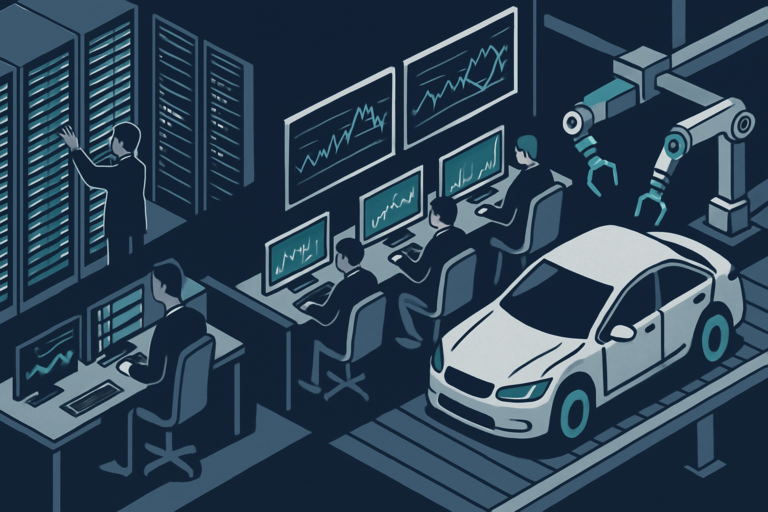
AI’s Acceleration in Compute Efficiency and Market Dynamics
What’s happening: Recent trends in AI are reshaping the economics of compute efficiency and market dynamics. OpenAI has reinstated usage limits due to high demand from its 20 million users, highlighting the need for scalable infrastructure. Meanwhile, Nvidia’s new Groq 3 LPX chip drastically reduces token generation costs by 35 times, making AI applications more economically viable. Additionally, the introduction of compute futures trading allows companies to hedge against fluctuating compute prices, while Porsche’s $1.46 billion investment in AI signals a shift towards integrating AI in traditional industries.
Why it matters: The reinstatement of limits by OpenAI illustrates supply-demand challenges that necessitate advanced infrastructure, while Nvidia’s innovations could revolutionize the cost structure of AI applications, enabling new services. The trading of compute futures represents a significant evolution in managing AI infrastructure costs, essential for businesses reliant on stable pricing. Porsche’s investment reflects a growing recognition across industries of AI’s potential to enhance operational efficiency, emphasizing the need for businesses to adapt quickly to technological advancements.
Our take: The developments indicate a crucial pivot in AI economics, but the heavy reliance on Nvidia raises concerns about market stability. Industries must diversify their technology sources to mitigate risks associated with over-dependence on a single supplier.
Tech & Engineering

AI Ownership: Rethinking Infrastructure and Trust
What’s happening: Organizations are increasingly opting to build and own their own AI infrastructure rather than relying on third-party models, as seen in Thomson Reuters’ $40 million investment in proprietary AI systems. This trend highlights the growing complexities and trust issues in AI deployment, especially as tools like DeepSeek facilitate cyberattacks, and incidents like Anthropic’s A/B testing raise concerns about transparency and user trust.
Why it matters: The shift towards proprietary AI systems allows companies to customize models and secure sensitive data, but it also demands significant capital and expertise. As organizations face the dual challenge of enhancing AI performance while mitigating security risks, they must integrate AI into their cybersecurity strategies to defend against potential threats. Moreover, ensuring transparency in AI deployment is essential for maintaining user trust, which can be easily undermined by opaque changes to products.
Our take: This shift toward ownership raises questions about the balance between innovation and ethical responsibility in AI development. Companies must not only invest in technology but also prioritize clear communication with users to build trust and prevent misuse.
Sciences
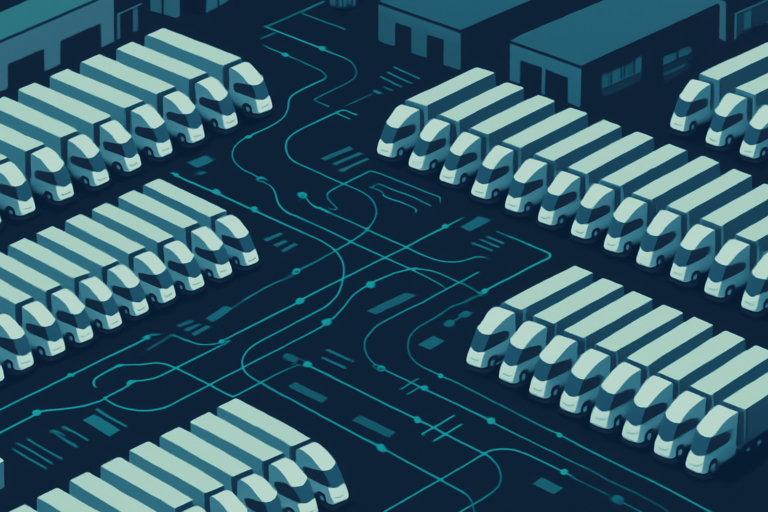
Einride’s AI-Driven Freight Network: A New Era for Logistics
What’s happening: Einride, a Swedish freight company, has ordered 500 Tesla Semis to transform logistics by integrating AI into its operations. This shift from diesel to electric trucks allows for real-time data processing that optimizes route planning, load management, and energy efficiency, leading to enhanced operational efficiencies. The AI systems will continuously learn and adapt, refining their models as they gather more data from the fleet.
Why it matters: The move to an AI-driven freight network can significantly reduce costs, with companies like PepsiCo already saving around $50,000 annually per electric truck compared to diesel. As AI optimizes logistics operations, these savings may grow, potentially influencing other industries that rely on logistics, such as manufacturing and retail. The broader adoption of AI technologies in logistics could set new industry standards, making efficiency and cost-effectiveness critical competitive factors.
Our take: While the transition to AI-driven logistics offers promising cost savings and efficiency, it also demands significant upfront investment and a cultural shift towards data-driven decision-making. The challenge will be ensuring that all players in the logistics industry can afford to make this transition.
Society
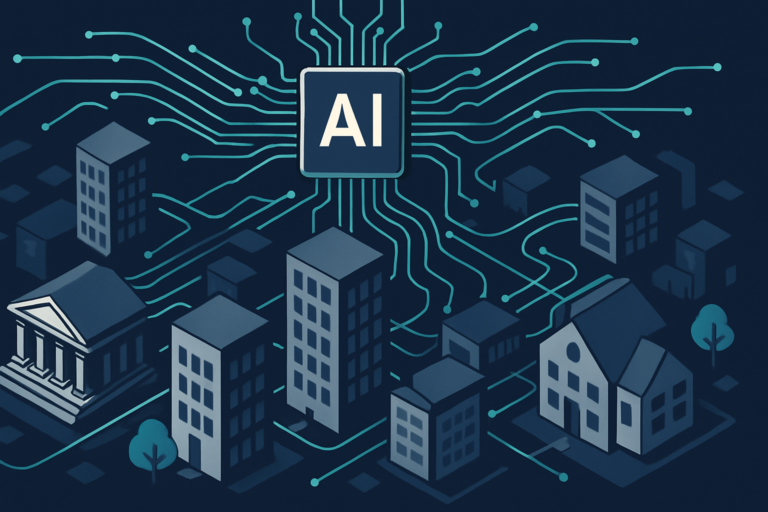
The Unseen Costs of AI’s Institutional Integration
What’s happening: The integration of AI into institutional frameworks, such as real estate and legal sectors, is leading to a concentration of power among a few entities. Recent cases like the FTC’s settlement with Zillow and Redfin over price manipulation illustrate how AI can distort market dynamics, while Thomson Reuters’ proprietary AI model raises concerns about unequal access to legal tools. These trends highlight the potential for AI to undermine transparency and accountability in critical decision-making processes.
Why it matters: The centralization of AI technology poses risks to societal equity, as it can manipulate information to benefit powerful institutions at the expense of consumers. As these technologies influence everything from market pricing to legal outcomes, they can erode public trust in institutions. The implications extend beyond individual cases, potentially reshaping societal norms and increasing the disparity between those who can afford access to AI tools and those who cannot.
Our take: The lack of regulatory oversight in AI’s integration into institutions is alarming, and immediate action is required to ensure equitable access and transparency. Without robust frameworks, the risk of monopolization and exploitation of AI technologies will only grow.
Psychology

AI’s Managerial Role: Rethinking Cognitive Hierarchies in Technology
What’s happening: The development of Faraday, a smaller AI model that excels in scientific judgment and task delegation, suggests a shift in AI strategy from merely increasing computational power to enhancing decision-making capabilities. Faraday’s ability to prioritize which experiments to conduct and when to involve other AI agents challenges the notion that larger models inherently perform better, indicating a potential redefinition of AI’s role from worker to manager.
Why it matters: As AI systems like Faraday become more integrated into daily life and decision-making processes, they could fundamentally alter how humans approach choices and judgments. In contexts such as meal planning on platforms like Instacart, AI’s managerial influence can shape consumer preferences and behaviors. This shift may lead to greater reliance on AI for judgment-based tasks, affecting both personal and professional domains as strategic AI input becomes a norm.
Our take: The emergence of AI models like Faraday necessitates a reevaluation of cognitive hierarchies between humans and machines. While this evolution can free humans to focus on creativity, it also raises critical questions about the preservation of human autonomy in decision-making, highlighting the need for transparent AI systems that enhance rather than replace human judgment.
That’s the digest for August 26, 2026.
Questions? Reach out at info@q52.ai.
q52.ai — Engineering Better Questions
