
Your daily briefing on AI, technology, economics, and society — from q52.ai.
Industry & Economics

AI’s Economic Divide: The Rise of Industry Clouds and Labor Market Implications
What’s happening: Organizations are rapidly adopting AI-enabled industry clouds, which integrate specialized AI tools tailored to specific sectors, such as healthcare and logistics. This transition is expected to escalate from 15% adoption in 2023 to 70% by 2027, potentially generating up to $3 trillion in revenue by 2030. The shift represents a fundamental change in how businesses operate, leading to new demands in the labor market.
Key points:
- The adoption of AI-enabled industry clouds is projected to rise significantly, with a forecast from 15% in 2023 to 70% by 2027.
- These platforms are expected to generate up to $3 trillion in revenue by 2030, reshaping business models across various sectors.
- As companies integrate AI into their core operations, there will be a growing demand for high-skilled workers who are proficient in AI technologies and industry-specific knowledge.
- The shift toward AI industry clouds may lead to increased economic divides, favoring larger firms that can invest in technology over smaller competitors.
- Without proper training and education initiatives, low-skilled workers may face displacement as businesses prioritize high-skilled positions.
Why it matters: The rise of AI-enabled industry clouds is reshaping the competitive landscape, creating a critical need for specialized skills within the workforce. As larger firms adopt these technologies to streamline operations and improve efficiency, smaller companies may struggle to keep pace, risking their market relevance. This trend highlights the importance of addressing economic disparities and ensuring that the workforce is equipped with the necessary skills to thrive in an AI-driven economy.
Our take: The transition to AI industry clouds is not merely a technological upgrade; it signifies a potential widening of the economic divide that could leave many workers behind. It’s essential for businesses and policymakers to proactively invest in education and training programs that prepare the workforce for this new reality, ensuring that opportunities are accessible to all, not just the technologically adept.
Tech & Engineering
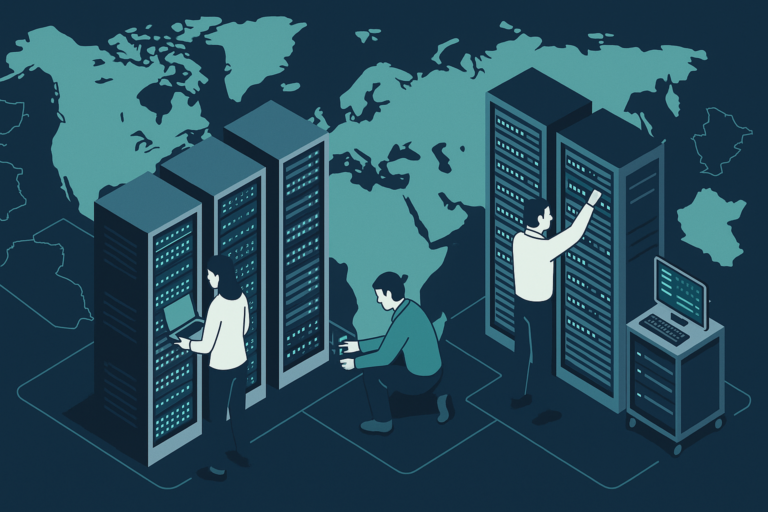
Navigating the New Sovereign AI Landscape: Engineering Implications
What’s happening: The landscape of artificial intelligence (AI) is changing significantly due to geopolitical tensions and national priorities, leading to the rise of “sovereign AI.” This concept involves creating AI systems that operate within specific national frameworks, focusing on data residency and compliance with local laws, which has profound implications for software engineers and technical teams.
Key points:
- Sovereign AI refers to AI systems designed to comply with national laws, ensuring data resides within specific jurisdictions that align with security protocols.
- Countries like the U.S. and EU members are investing heavily in sovereign AI, with the U.S. committing $500 billion to enhance its AI supply chain through initiatives like Stargate.
- Software engineers will face new challenges, including the need to adapt to complex data residency requirements that may differ from global cloud services.
- There is a risk of vendor lock-in as organizations become dependent on specific providers for compliant infrastructure, potentially hindering innovation.
- Operational security becomes paramount, as vulnerabilities in locally trained AI models could impact national security and data integrity.
Why it matters: The shift towards sovereign AI has significant implications for businesses operating in the tech industry. Organizations must navigate complex compliance landscapes, which could lead to increased operational costs and challenges in system design. Additionally, understanding local regulations and adapting to new security requirements will be critical for maintaining competitiveness in a rapidly evolving market.
Our take: The rise of sovereign AI presents a double-edged sword for software engineers; while it may enhance compliance and security, it also risks stifling innovation and flexibility. The challenge will be finding a balance between local sovereignty and the efficiencies offered by global cloud services, which could shape the future of AI deployment strategies.
Sciences

OpenDDE: A New Frontier in AI-Driven Drug Discovery
What’s happening: Aureka has introduced Open Drug Discovery Engine (OpenDDE), an open-source platform aimed at revolutionizing the drug discovery process. This innovative platform uses a biomolecular foundation model to model complex interactions among proteins, nucleic acids, and small-molecule ligands, significantly speeding up the development of new therapeutics.
Key points:
- OpenDDE employs biomolecular co-folding and advanced structural reasoning techniques to enhance the modeling of intricate biological interactions.
- The platform achieved a 51.0% success rate on the PXMeter-AB benchmark and 70.0% on the FoldBench-AB benchmark for antibody-antigen co-folding.
- OpenDDE supports various drug discovery tasks, including de novo molecular design and affinity estimation, using atomic latent reasoning.
- By democratizing access to advanced drug discovery technologies, OpenDDE allows smaller labs to engage in state-of-the-art research previously limited to larger pharmaceutical companies.
- The platform is expected to accelerate drug development timelines and reduce early-stage discovery costs, leading to faster patient access to new therapies.
Why it matters: The launch of OpenDDE marks a critical advancement in the integration of AI within drug discovery, promising to enhance both the speed and efficiency of developing new therapies. By providing an open-source tool, Aureka is enabling a broader range of researchers to participate in drug development, which could foster innovation and lead to breakthroughs in addressing unmet medical needs. The potential for reduced costs and quicker access to treatments could significantly improve patient outcomes in the near future.
Our take: OpenDDE’s open-source nature could disrupt traditional pharmaceutical development models, allowing for greater collaboration and innovation across the industry. However, it remains to be seen how well smaller labs can leverage this technology without the extensive resources available to larger entities.
Society

The Human Cost of AI Governance: Who Gets to Decide?
What’s happening: As global conversations around AI governance evolve, India is advocating for a human-centric and inclusive approach. This shift highlights the need to include diverse voices, particularly from marginalized communities, in decision-making processes that shape AI’s impact on society.
Key points:
- India’s call for a human-centric approach emphasizes the importance of incorporating human rights into AI governance discussions.
- Existing frameworks often reflect a top-down approach, leaving out marginalized voices and perpetuating social inequalities.
- New coalitions focusing on children’s rights in AI signify progress, yet they also reveal significant gaps in representation.
- Decisions made today regarding AI governance will have long-term effects, shaping experiences for future generations.
- There is a pressing need for participatory governance frameworks that genuinely involve affected communities in AI decision-making.
Why it matters: The governance of AI has profound implications for how technology intersects with human rights and societal equity. As AI systems become integral to decision-making in various sectors, the risk of bias and exclusion grows. Ensuring that diverse perspectives are included in governance frameworks is critical to prevent the perpetuation of existing inequalities and to create a future where technology serves all segments of society fairly.
Our take: The current trend towards a centralized and institutional approach to AI governance risks sidelining the very communities that technology impacts the most. A shift towards genuine inclusivity and accountability is essential, not just for ethical governance but for the legitimacy of AI systems themselves.
Psychology

Procrastination in the Age of AI: A New Frontier in Self-Regulation
What’s happening: Recent research from Cambridge University reveals that procrastination is more than just poor time management; it stems from a conflict between our desire for immediate pleasure and the need to prioritize tasks with immediate consequences. In an era dominated by AI tools that can both enhance productivity and create distractions, understanding the nine types of procrastinators is crucial for improving self-regulation and engagement with tasks.
Key points:
- Procrastination is categorized into nine distinct types, highlighting its complexity beyond simple time management issues.
- The hedonic principle (seeking immediate pleasure) often clashes with the immediacy principle (prioritizing tasks with immediate outcomes), leading to chronic procrastination.
- AI tools designed to boost productivity may inadvertently contribute to procrastination by introducing constant digital distractions.
- Concerns about academic cheating using AI may distract from the deeper issue of student engagement and procrastination in learning environments.
- The relationship between AI and loneliness is complex; while AI chatbots can connect people, they may also serve as a means of distraction from responsibilities.
Why it matters: As AI continues to automate routine tasks, the ability to self-regulate becomes essential for individuals to effectively utilize these technologies. If people struggle with procrastination, it can undermine their productivity and engagement, particularly in educational settings. Understanding these dynamics is vital for educators and developers to create environments and AI tools that foster accountability and enhance learning rather than contribute to avoidance behaviors.
Our take: The research underscores the need for a paradigm shift in how we design AI technologies. Instead of solely focusing on productivity gains, we should prioritize features that support users in overcoming procrastination and enhancing engagement with their tasks, ensuring that AI serves as a tool for empowerment rather than distraction.
That’s the digest for July 12, 2026.
Questions? Reach out at info@q52.ai.
q52.ai — Engineering Better Questions
