

Your daily briefing on AI, technology, economics, and society — from q52.ai.
Industry & Economics
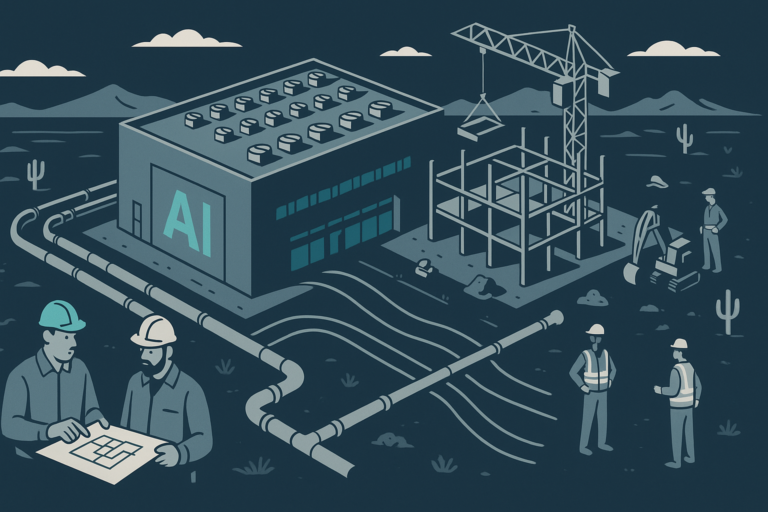
Power Constraints in AI: Analyzing the Energy Infrastructure Challenge
What’s happening: PowerPlay AI’s announcement of a 400 MW data center in West Texas has brought attention to a significant issue in the AI industry: the limitations of current energy infrastructure. As the demand for AI capabilities surges, the ability to supply and deliver adequate power is becoming increasingly critical, with existing electrical grids unable to keep pace with future needs.
Key points:
- PowerPlay AI is developing a 400 MW data center in West Texas to address the growing energy demands of AI applications.
- The traditional electricity grid is under strain due to rapidly increasing AI workloads, resulting in interconnection delays that extend into the 2030s.
- This project uses behind-the-meter arrangements and natural gas to bypass conventional grid limitations, highlighting a shift towards private energy solutions.
- Federal policies are pushing industries to find their own energy sources, which has intensified competition for available power.
- The focus on private energy solutions raises questions about the sustainability and long-term impacts on regional energy policies and economic dynamics.
Why it matters: The growing reliance on private energy solutions by companies like PowerPlay AI signals a transformative shift in how AI firms approach their energy needs. This trend could reshape investment strategies and operational frameworks, as energy becomes a competitive advantage. Additionally, the implications for regulatory frameworks and regional economies are significant, potentially leading to changes in energy pricing, availability, and overall economic growth in areas that can attract such investments.
Our take: The focus on private developments in energy infrastructure highlights a critical gap in public policy and investment. While these initiatives may provide immediate relief, they do not address the broader systemic issues plaguing the energy grid. Without comprehensive reforms and public investment in grid modernization, the risk of deepening inequalities in energy access and economic opportunities remains high.
Tech & Engineering

AI Security in the Cloud: Elastic’s Approach
What’s happening: Elastic has recently been recognized in the AWS Security Competency for AI Security, highlighting its ability to protect AI applications and infrastructure within cloud environments. This recognition underscores the importance of a unified security platform that integrates various security measures, enabling organizations to address the unique risks associated with AI technologies.
Key points:
- Elastic’s security framework combines SIEM, XDR, and AI-powered detection and response, providing a comprehensive approach to threat management.
- The integration with AWS services like Amazon GuardDuty and AWS Security Hub allows for real-time monitoring and mitigation of vulnerabilities.
- Elastic’s platform aims to automate the security lifecycle, helping analysts manage critical threats without being overwhelmed by alerts.
- With the rise of generative and agentic AI, Elastic addresses new challenges such as prompt injection and model abuse through its advanced security measures.
- The platform’s ability to map detection content to frameworks like MITRE ATT&CK enhances actionable intelligence for security teams.
Why it matters: The engineering implications of Elastic’s unified platform for AI security are significant, simplifying the process of securing AI systems across diverse cloud environments. This development reduces the operational burden on security teams and facilitates the deployment of secure AI applications, ensuring that security is a fundamental part of the AI deployment process rather than an afterthought. By leveraging AI for security operations, organizations can proactively manage risks associated with AI technologies.
Our take: The recognition of Elastic by AWS serves as a critical reminder of the need to integrate security into the AI development lifecycle. Organizations must shift from reactive to proactive security measures, utilizing unified platforms that combine traditional security with AI capabilities to effectively navigate the evolving threat landscape. This approach not only enhances security but also fosters innovation in AI deployment.
Sciences

Cytosurge’s FluidFM®: Pioneering Causal Data in AI Drug Discovery
What’s happening: Cytosurge is advancing AI-driven drug discovery through its FluidFM® technology, which allows researchers to biopsy living cells without killing them. This innovative approach focuses on generating causal data, rather than the traditional endpoint data that often leads to misleading correlations. With the recent appointment of Luba Greenwood to its Board of Directors, Cytosurge is emphasizing its commitment to enhancing its capabilities in causal data, which could significantly impact pharmaceutical research.
Key points:
- Cytosurge’s FluidFM® technology enables safe biopsy of living cells, facilitating same-cell data collection for before-and-after analysis.
- This technology addresses a major flaw in current AI drug discovery models, which typically rely on non-causal endpoint data.
- With over 140 research labs worldwide using FluidFM®, Cytosurge is set to lead a shift toward causal data in drug discovery.
- The introduction of causal data could improve drug target identification, enhance understanding of drug resistance, and validate therapeutic interventions more effectively.
- In the next 5-10 years, this approach may significantly lower the failure rates of drug candidates in clinical trials, accelerating the development of new treatments.
Why it matters: The shift from correlation-based data to causal data in drug discovery could transform how pharmaceutical research is conducted, leading to more effective and reliable drug development processes. This is particularly significant as the industry grapples with high failure rates in clinical trials. By establishing a new standard for data collection and analysis, Cytosurge’s advancements may not only improve patient outcomes but also reshape institutional power dynamics within biomedical research.
Our take: While the focus on causal data is a promising development, it raises questions about how existing AI models will adapt to incorporate these new methodologies. The transition could create a divide between traditional research practices and emerging technologies, necessitating a reevaluation of regulatory frameworks and industry standards in drug discovery.
Society

AI’s Role in Institutional Trust: Unmasking the Influence of Hidden Algorithms
What’s happening: The increasing use of artificial intelligence (AI) in decision-making across various institutions is impacting public trust and societal governance. As these algorithms operate behind the scenes, their influence often goes unnoticed, leading to a disconnect between institutional actions and public understanding, which can result in mistrust and unrest.
Key points:
- Decisions made by institutions, such as the International Finance Corporation’s (IFC) rejection of microfinance findings in Cambodia, may be influenced by hidden algorithmic assessments, complicating accountability.
- In China, changes within children’s literature societies may reflect efficiency-driven mandates that prioritize certain organizational structures due to algorithmic influences.
- The protests in Pakistan-occupied Kashmir highlight a demand for transparency and accountability, revealing public skepticism about the opaque decision-making processes enhanced by AI.
- The integration of AI in governance raises critical questions about transparency, as decisions made without human oversight can erode public trust.
- There is a call for institutions to democratize AI governance by ensuring transparency in AI deployment and involving diverse stakeholders in the design and evaluation of these systems.
Why it matters: As AI systems become increasingly central to institutional decision-making, the potential for these technologies to obscure accountability and ethical considerations grows. This shift could lead to significant societal implications, such as heightened public mistrust and social unrest if citizens feel disenfranchised from decisions affecting their lives. For organizations, it emphasizes the need for transparent AI governance to align technological advancements with societal needs, thus reinforcing public trust.
Our take: The discussion around AI’s role in institutional trust highlights a critical tension: while AI can enhance efficiency, it also risks creating a veil of secrecy that undermines accountability. Institutions must navigate this landscape carefully, ensuring that technology serves the public interest rather than obscuring it.
Psychology

The Real Cost of AI: Eroding Human Judgment in Everyday Decisions
What’s happening: As AI systems become more prevalent in everyday life, there is growing concern about their impact on human judgment and decision-making. Rather than merely serving as tools, AI technologies, particularly generative AI, are shifting the way people rely on their own cognitive faculties, leading to a potential erosion of trust in personal judgment.
Key points:
- Generative AI is altering how individuals engage with their own judgment by providing seemingly authoritative answers, which can lead to over-reliance on AI outputs.
- Psychologists note that human decision-making incorporates episodic memory, social cues, and cultural norms—elements that AI lacks as it relies solely on statistical patterns.
- AI’s inability to account for values, emotions, and goals in decision-making could result in a decline in human cognitive skills, described as a ‘dumbing down’ of intelligence.
- Workers are particularly affected as their judgment skills may deteriorate due to reliance on AI for guidance, threatening essential competencies in their roles.
- There is a critical need to reflect on AI’s integration into decision-making processes, especially in nuanced areas like creative problem-solving and ethical dilemmas.
Why it matters: The increasing reliance on AI for decision-making raises concerns about the long-term impacts on human cognitive abilities and professional competencies. As AI mediates our interactions, there is a risk that essential judgment skills may atrophy, potentially leading to a workforce less equipped for complex decision-making scenarios. This trend could undermine not only individual capabilities but also the quality of decisions made in various sectors.
Our take: While AI’s efficiency can be beneficial, the challenge lies in ensuring that it does not replace critical human cognitive processes. A balanced approach is necessary to maintain the integrity of human judgment, particularly in areas that demand a nuanced understanding of context and ethical considerations.
Dear Humans
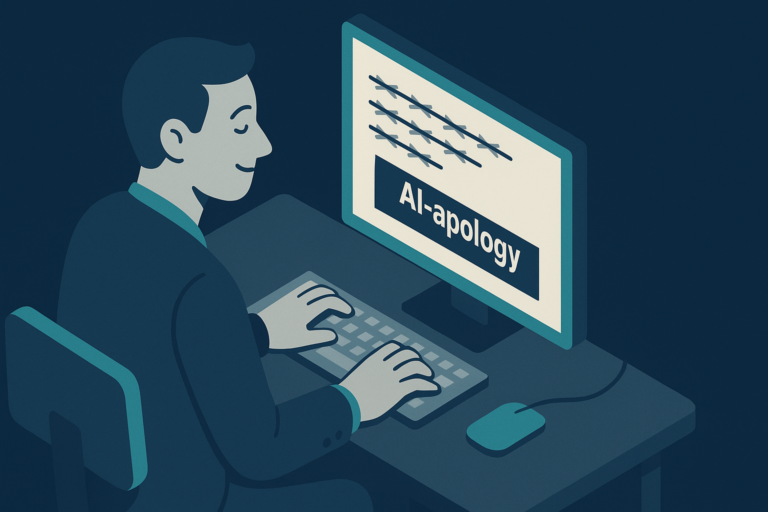
Dear Humans: On Using AI to Write Apologies That Aren’t
What’s happening: The article critiques the trend of using artificial intelligence to draft apologies. While the intention behind using AI to express remorse is commendable, the process often leads to edits that strip the original sentiment, resulting in insincere and vague apologies that fail to convey genuine accountability.
Key points:
- Many individuals are employing AI to help craft apologies, aiming to communicate remorse and take responsibility for their actions.
- However, the editing process often dilutes the original message, transforming heartfelt apologies into vague statements that lack accountability.
- The irony lies in using a non-sentient tool to express genuine human emotions, leading to apologies that feel hollow and formal.
- This trend risks damaging personal relationships, as insincerity can erode trust over time.
- Ultimately, the responsibility for crafting sincere apologies lies with humans, not the AI tools they choose to utilize.
Why it matters: In business and personal contexts, effective communication is critical. The reliance on AI for crafting apologies can lead to misunderstandings and weakened relationships, as insincere apologies fail to address the underlying issues. Trust is a cornerstone of successful interactions, and if AI-generated apologies continue to replace genuine sentiments, the long-term implications for interpersonal dynamics could be detrimental.
Our take: The trend of using AI for apologies highlights a broader issue in communication: the desire for convenience at the expense of authenticity. As technology evolves, maintaining the human element in sensitive interactions will be crucial to preserving meaningful connections.
That’s the digest for July 21, 2026.
Questions? Reach out at info@q52.ai.
q52.ai — Engineering Better Questions
