

Your daily briefing on AI, technology, economics, and society — from q52.ai.
Industry & Economics

The Integration of AI in Financial Services: A New Era of Efficiency and Access
What’s happening: The financial services industry is experiencing a transformation due to the integration of artificial intelligence (AI) and automated systems. A notable example is the collaboration between Inspira Financial and the CAIS platform, which enhances access to alternative investments for independent financial advisors, making these investments easier to manage and more accessible to various clients.
Key points:
- Inspira Financial’s integration with the CAIS platform streamlines access to alternative investments, addressing historical complexities and inefficiencies in the sector.
- This collaboration enables independent financial advisors to diversify client portfolios without the high overhead costs typically associated with alternative investments.
- The use of AI reduces manual data entry and reconciliation tasks, allowing financial professionals to focus more on strategic decision-making rather than administrative duties.
- The integration of AI in financial services is expected to democratize access to investment opportunities, potentially benefiting smaller investors who previously faced barriers to entry.
- As AI becomes more prevalent in the industry, it necessitates strong regulatory frameworks to ensure transparency and mitigate systemic risks.
Why it matters: The incorporation of AI into financial services is reshaping the industry by enhancing efficiency and accessibility. By lowering the barriers to alternative investments, platforms like Inspira and CAIS could redistribute investment opportunities more equitably, empowering a broader range of investors. This shift not only improves operational processes but also encourages a more diverse and resilient financial ecosystem, which is crucial in today’s evolving market landscape.
Our take: While the advancements in AI present exciting opportunities for efficiency and inclusivity, the industry must remain vigilant about the regulatory and ethical implications that accompany these technologies. Ensuring robust frameworks will be essential to maintain investor trust and safeguard against potential risks that could arise from increased reliance on automated systems.
Tech & Engineering

AI-Driven Imaging: Precision in Automation and Data Integrity
What’s happening: The integration of artificial intelligence in imaging technology is transforming laboratory automation, exemplified by the launch of Vadzo Imaging’s Falcon-544CRS camera. This new camera features advanced HDR imaging capabilities that allow for high-quality image capture even in fluctuating lighting conditions, a significant advancement for automated lab systems.
Key points:
- The Falcon-544CRS camera utilizes Onsemi’s AR0544 Hyperlux™ LP sensor to achieve high dynamic range (HDR) imaging in a single frame.
- Traditional multi-frame HDR methods are prone to motion artifacts, but the Falcon-544CRS employs intra-frame HDR to capture both high-gain and low-gain data simultaneously, eliminating these issues.
- Consistent imaging quality is crucial for accurate downstream processes in laboratory analysis, such as cell segmentation and stain quantification.
- By ensuring precise exposure and color balance, the Falcon-544CRS enhances the quality of data that AI models rely on for accurate analysis and decision-making.
- The development of integrated imaging systems compliant with existing standards is essential to avoid fragmentation and ensure interoperability across platforms.
Why it matters: The ability to capture high-quality images consistently is vital for maintaining data integrity in AI-driven analysis. Inconsistent imaging can lead to errors that skew research outcomes, affecting the reliability of scientific findings. As laboratories increasingly depend on automation and AI, adopting advanced imaging technologies like the Falcon-544CRS will be crucial for ensuring that the data used for analysis is both precise and trustworthy.
Our take: While the Falcon-544CRS represents a significant technical advancement, it also underscores a broader issue in the integration of AI technologies: the need for seamless interoperability in imaging systems. As laboratories adopt these innovations, the engineering community must focus on creating solutions that not only enhance performance but also minimize integration challenges across various platforms.
Sciences
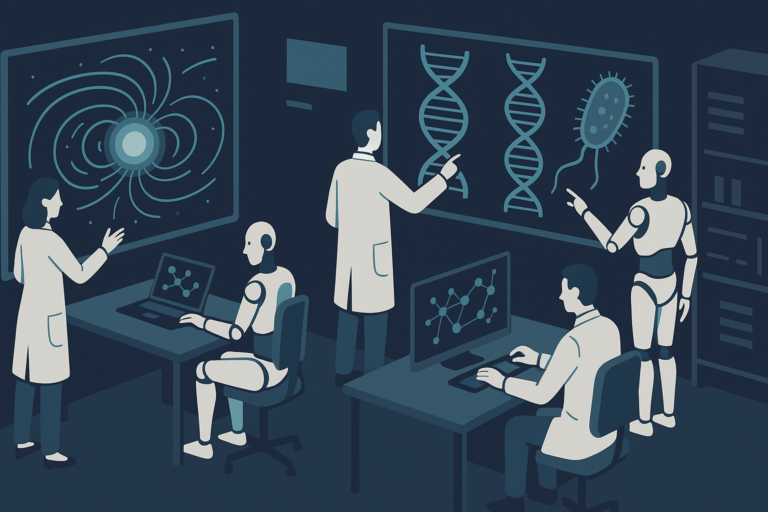
Genesis Mission’s AI Push: Transforming Fusion and DNA Transfer Research
What’s happening: The U.S. Department of Energy’s Genesis Mission is revolutionizing scientific research by using AI to tackle complex challenges in fusion energy and microbial genetics. With a $5 billion investment, the initiative aims to double scientific productivity and enhance our understanding of both energy and biological sciences through innovative projects across government, academia, and industry.
Key points:
- The Genesis Mission includes 278 projects that apply AI to advance research in various fields, including fusion energy and microbial genetics.
- At Princeton, researchers led by Hantao Ji utilize neural networks to model plasma behaviors critical for understanding magnetic reconnection, which can help mitigate risks from solar flares.
- Egemen Kolemen’s team is developing a digital twin of fusion experiments, allowing for rapid simulation and optimization of experimental conditions without physical trials.
- Josh Atkinson and Jürgen Hackl are using machine learning to predict DNA transfer pathways among microbes, potentially improving our understanding of antibiotic resistance and bioengineering.
- The projects could significantly accelerate the timeline for achieving sustainable fusion energy and enhance the management of microbial ecosystems, impacting environmental and agricultural practices.
Why it matters: The implications of the Genesis Mission are substantial for both energy and biological sciences. If successful, AI-driven models could bring practical fusion reactors closer to reality within the next decade, transforming global energy supply. Additionally, advancements in microbial DNA research could lead to innovative solutions for antibiotic resistance and environmental challenges, marking a significant shift in how we approach these critical issues.
Our take: The Genesis Mission exemplifies the power of interdisciplinary collaboration in science, but it also raises questions about the scalability of AI applications beyond these initial projects. As AI increasingly shapes research methodologies, it will be crucial to ensure that the benefits of these advancements are widely accessible, particularly in addressing global challenges.
Society

AI and the Fabric of Society: Unseen Threads of Change
What’s happening: Recent developments in AI and technology are significantly impacting society, particularly through changes like Madhya Pradesh’s adoption of a Uniform Civil Code and Taiwan’s efforts to create a drone ecosystem independent of Chinese influence. These shifts highlight the complex interplay between technological advancements and the distribution of power within institutions.
Key points:
- Madhya Pradesh’s Uniform Civil Code aims to unify personal laws, potentially enhancing legal efficiency but risking the erosion of community-specific rights and cultural sensitivity.
- AI could facilitate legal processes through digital platforms, but this may lead to a standardized legal approach that lacks nuance and empathy.
- Taiwan’s initiative to develop a non-red drone ecosystem seeks to bolster national defense and promote a democratic model for drone governance, balancing security with civil liberties.
- The integration of AI in drone technology presents challenges around accountability, as autonomous decision-making could shift power dynamics and raise concerns about surveillance.
- There is a pressing need for governance frameworks that prioritize human rights and community input in the deployment of AI technologies.
Why it matters: As AI and technology become more ingrained in societal structures, they have far-reaching implications for how individuals interact with institutions. The potential for AI to streamline legal processes in Madhya Pradesh could inadvertently undermine cultural diversity and trust in the legal system. Similarly, Taiwan’s drone initiative not only enhances its defense capabilities but also raises critical questions about the ethical use of technology and the need for oversight to prevent misuse.
Our take: The tension between technological efficiency and cultural sensitivity is a significant concern that must be addressed. As societies adopt AI-driven solutions, it is crucial to ensure that these technologies enhance rather than diminish individual freedoms and community rights. A more inclusive approach to technology governance is essential to navigate these challenges effectively.
Psychology

How AI Shapes Collective Judgment in Crisis Management
What’s happening: Recent crises demonstrate a shift in collective judgment influenced by AI systems, particularly in public health responses. The reliance on AI-driven analytics, as seen in a feces parasite outbreak and a health clinic initiative in Laredo, highlights how technology shapes decisions during emergencies by providing aggregated data insights that serve as social proof.
Key points:
- AI systems process vast data to provide insights that influence public perception and institutional responses in crisis situations.
- During the feces parasite outbreak, AI-driven analytics played a crucial role in managing health threats and guiding community actions.
- The free health clinic initiative in Laredo demonstrated the effectiveness of technology-mediated communication in organizing community health responses.
- While AI can accelerate response times and enhance intervention precision, it raises concerns about over-reliance on algorithmic outputs at the expense of human insights.
- The integration of AI into crisis management could erode collective deliberation, as human judgment may be overshadowed by data-driven conclusions.
Why it matters: The shift toward AI in crisis management reshapes how decisions are made, potentially improving response speed and accuracy. However, this dependence brings risks, including diminished human critical thinking and loss of local knowledge. Understanding this dynamic is crucial for professionals in AI, technology, and public policy, as it influences how communities engage with and respond to crises.
Our take: The increasing reliance on AI for collective judgment in crises highlights the need for a balanced approach that values human insight alongside data. As AI becomes more integrated into decision-making, organizations must foster environments where technology enhances rather than replaces human deliberation, ensuring that community perspectives remain central to crisis responses.
Dear Humans

Dear Humans: On Having Existential Crises at 2 AM
What’s happening: Many people are turning to chatbots for support during late-night existential crises instead of seeking help from friends or family. This reliance on digital confidants highlights a tendency to avoid addressing deeper issues at a time when our cognitive abilities are diminished. The piece suggests that these conversations might be more productive at times when individuals are more alert and capable of introspection.
Key points:
- Individuals frequently engage with chatbots during late-night hours to discuss existential questions, often prioritizing distraction over meaningful resolution.
- Late-night reflections may lack depth due to diminished cognitive faculties, making it harder to address underlying issues effectively.
- Chatbots, while sophisticated, cannot replicate the nuanced understanding that human interactions provide, particularly when exploring complex emotional topics.
- The piece encourages people to seek out human conversations during the day when they are more mentally equipped to handle significant questions about existence.
- Despite the allure of late-night digital dialogues, the article advocates for deeper introspection and connection with fellow humans for more satisfactory answers.
Why it matters: The trend of reaching out to chatbots during vulnerable moments may reflect broader societal issues regarding mental health and the search for meaning. As technology increasingly mediates our communications, understanding the limitations of these interactions is vital for fostering genuine connections and addressing existential concerns. This realization can encourage healthier coping mechanisms and better mental health practices in a technology-driven world.
Our take: While the convenience of chatbots is undeniable, the real challenge lies in encouraging individuals to engage in deeper, more meaningful conversations with fellow humans. This article reminds us that technology should complement, not replace, our human connections, especially when grappling with life’s profound questions.
That’s the digest for July 23, 2026.
Questions? Reach out at info@q52.ai.
q52.ai — Engineering Better Questions
