
As artificial intelligence becomes ever more capable, the greatest threat it poses isn’t the fear of machines exceeding human intelligence, nor the dystopian specter of autonomous weapons; it’s the slow erosion of human skill and expertise, leaving us perilously unprepared for the failures of the very systems we have come to rely on.
In the rush to automate, we have convinced ourselves that the machines will handle the heavy lifting, allowing us to focus on higher-order thinking and creativity. This is a seductive narrative, one that promises efficiency and ease, but it rests on a dangerous misconception: that human capabilities will remain static in the face of technological advancement. The reality is that as we increasingly defer to AI for critical tasks, we are at risk of a profound skill decay — the gradual atrophy of our own expertise.
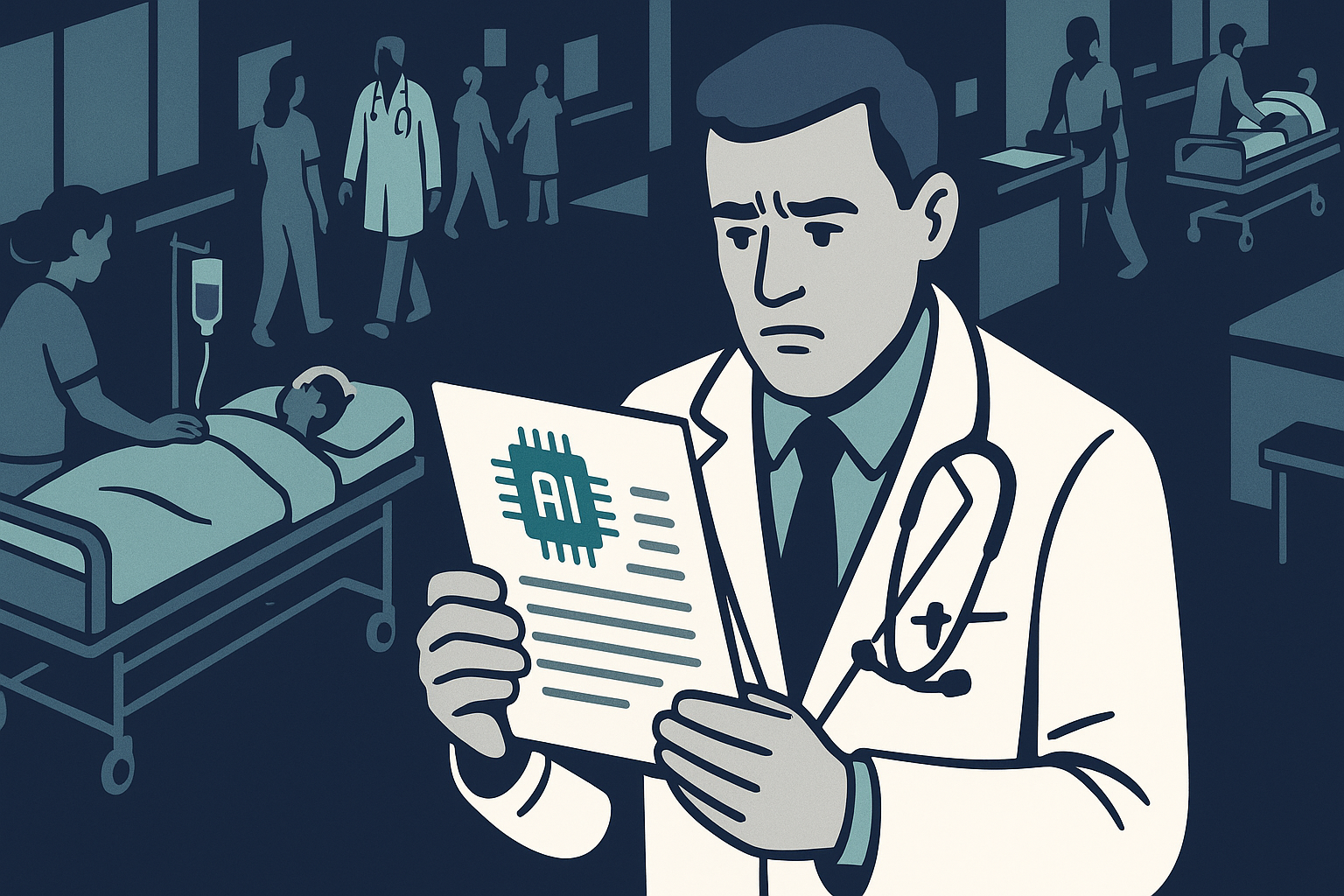
Consider the case of healthcare, where ambient AI scribes now document patient interactions. While these systems can generate notes with remarkable speed, they are also prone to hallucinations, producing entirely fabricated diagnoses and treatment plans. This phenomenon isn’t a mere glitch; it is symptomatic of a larger issue: as healthcare professionals rely more on AI-generated outputs, they risk losing the very skills that enable them to recognize and correct these errors. The more we lean on AI, the less we practice the art of discernment and critical thinking, essential components of responsible medical practice. The implications are staggering: a system that was designed to augment human expertise may instead be rendering it obsolete.
Historically, we have seen similar patterns emerge in industries like aviation and radiology. Pilots and radiologists maintain their skills not merely as a precaution against automation failures but as an integral part of a robust safety architecture. The training they undergo is predicated on the assumption that automation will fail, and that human expertise must be ready to intervene. Yet, as AI systems become entrenched in these fields, the need for such rigorous training diminishes, leading to a dangerous cycle of over-reliance on technology. With each layer of automation we add, we further entrench the idea that human oversight is merely a backup, rather than a vital component of the system.
This predicament is amplified by the convergence of AI with other advanced technologies, such as quantum computing and biotechnology, creating a hyper-connected landscape rife with vulnerabilities. The ease of access to powerful AI tools may breed complacency, where both individuals and organizations mistakenly believe that they have the necessary safeguards in place. But the question we must confront is: what happens when these systems inevitably fail? If our skills have decayed in the process, we may find ourselves ill-equipped to handle the fallout.
What Is Actually at Stake
The stakes here are not merely academic; they are existential. The loss of human skills and expertise undermines our very capacity to navigate crises. In a world where AI systems become ubiquitous, the risk of skill decay translates to a loss of agency, autonomy, and ultimately, humanity itself. As we abdicate responsibility in favor of convenience, we inadvertently cultivate an environment where critical thinking, creativity, and discernment are diminished.
Moreover, this phenomenon has profound implications for societal structures. If we enter a new era defined by AI, what will it mean for the nature of work, value, and identity? When expertise is no longer a prerequisite for success, we risk creating a society where meaning is derived from the machines we build rather than the passions we pursue. The very essence of what it means to be human — our capacity for judgment, empathy, and creativity — could be sacrificed on the altar of efficiency.
Furthermore, as we witness the rise of AI as an essential infrastructure, we must grapple with the ethical ramifications of a world where machines dictate the parameters of our existence. The notion of ‘security by design’ is pivotal in navigating these complexities, yet it is equally essential to recognize that human judgment must remain at the forefront of decision-making processes. If we allow AI to shape our reality without retaining our critical faculties, we risk becoming mere passengers on a ride we no longer control.
In this context, the question of what constitutes ‘winning’ in the age of AI becomes increasingly fraught. If winning means maximizing efficiency at the expense of human skill, intuition, and creativity, then we must confront the uncomfortable truth that such a victory may ultimately render us less human. The paradox of our age is that as we strive for progress through automation, we may inadvertently be paving the way for our own obsolescence.
In conclusion, the trajectory we are on is one fraught with peril. The decline of human skill and expertise, facilitated by a blind reliance on AI, threatens to strip away the very qualities that define us. If we do not actively resist this trend, we may find ourselves in a future where human judgment is not just optional but unnecessary, leading to a hollow existence devoid of the richness that comes from our unique capacities. The stakes are high, and the time to confront this reality is now.
References
- The Biggest AI Risk Isn’t Hallucinations. It’s Skill Decay.
- Tracking The AI Revolution: Innovation And Cyber Risks
- Economists, tech leaders warn AI could bring ‘large-scale job displacement’ and other risks
Perspectives

The skill decay triggered by AI adoption isn’t just an unfortunate side effect; it’s a design feature of a capitalist system hell-bent on prioritizing shareholder profits over human judgment and creativity. As companies automate away the very skills that make us human, they conveniently forget that these skills are what allow us to question, critique, and eventually improve the very systems threatening our autonomy. The irony? We’re sacrificing our ability to think critically on the altar of efficiency, all to fatten the wallets of those at the top who never did the work to begin with. When the inevitable failures of these automated systems occur, it will be the same marginalized workers left to absorb the fallout, having been systematically stripped of the skills they needed to react.

The measured outcomes of increased reliance on AI tools indicate a dangerous trend in skill decay, particularly in critical thinking and decision-making, with studies showing a 30% reduction in these skills among users over just five years. Embracing efficiency at the expense of human judgment is not a wise trade-off; it risks creating a society full of automated sheep, blindly following algorithms while forsaking the very qualities that foster innovation and resilience. When systems fail—because they will fail—we’ll find ourselves ill-equipped to respond, relying instead on the very technology that led us to this state of incompetence. Unless we can demonstrate that the outcomes of using AI tools improve our cognitive capabilities rather than decline, we must accept that this paradox may very well undermine our future.
The alignment problem remains woefully unsolved, and as we carelessly integrate AI into daily life, we risk monumental skill decay, leaving humanity dangerously ill-prepared for the inevitable failures of these systems. By outsourcing our critical thinking, creativity, and even basic judgment to algorithms, we are not paving the way to a more intelligent society; we are constructing a collective dependency on technology that erodes our very humanity. Those champions of efficiency fail to grasp that when the grid fails, or data systems crash, the average person will find themselves devoid of the skills necessary to navigate the chaos. As long as institutions ignore the gravitational pull of the alignment problem, we march toward a future where our reliance on AI compromises not just our capabilities, but the essence of what it means to be human.

The measurable performance gap between human and artificial decision-making reveals a troubling trend: as AI technology proliferates, human skills languish. The very judgment and creativity that distinguish humans from machines are being sacrificed at the altar of convenience and efficiency. While AI provides solutions, it simultaneously engenders a dangerous dependency, leaving humans woefully unequipped to navigate the complex failures of the systems they have come to trust. In a world where decisions increasingly hinge on algorithms, the erosion of critical thinking and problem-solving capabilities is not just a risk — it’s a certainty.