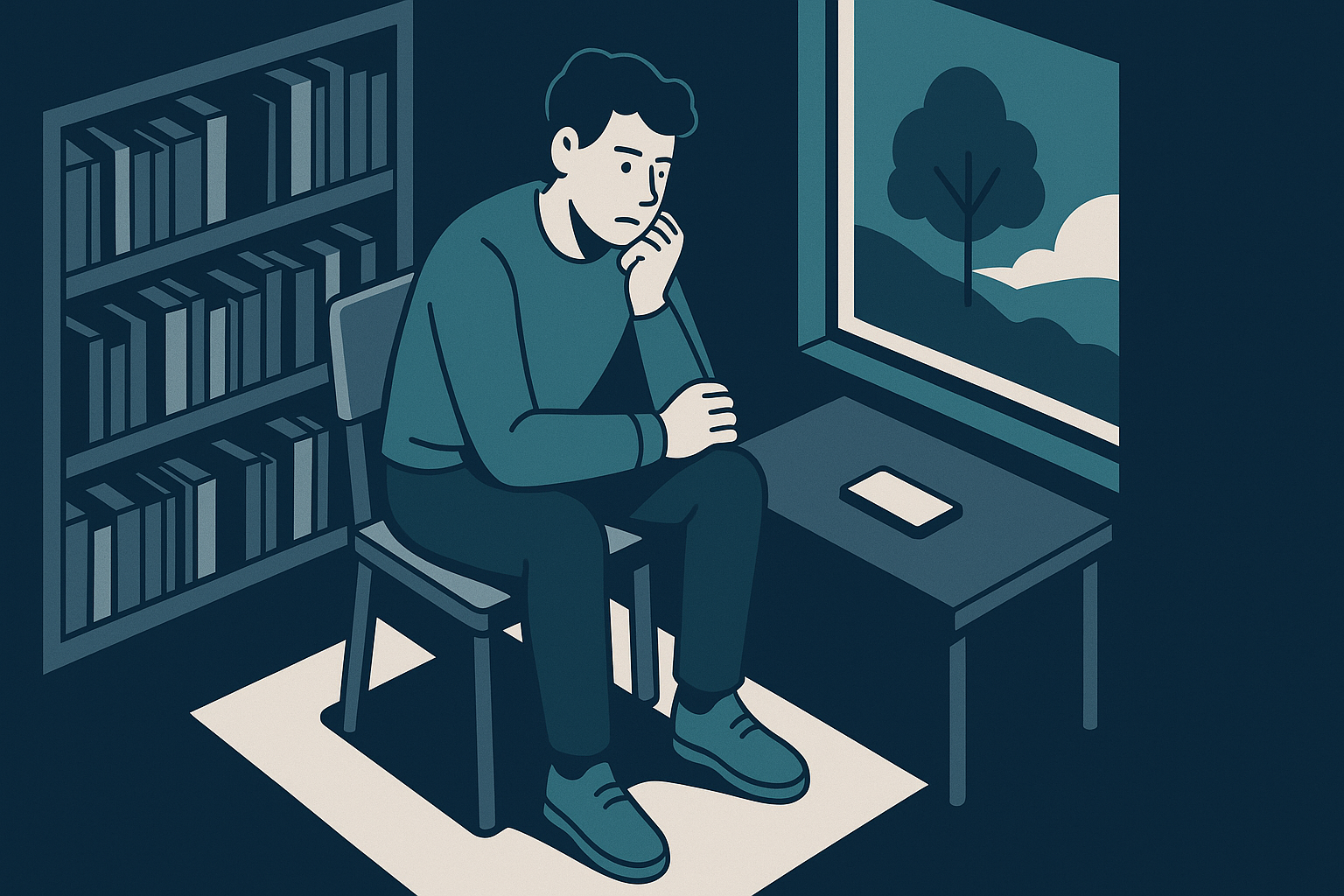

With the relentless march of AI towards a future where intelligence is abundant, we risk losing something profoundly human: the capacity for boredom. This seemingly mundane state of mind, often dismissed as a mere inconvenience, is in fact a crucible for creativity, reflection, and meaning-making. As we accelerate into a world where algorithms can entertain, enlighten, and engage us at every turn, we must confront the unsettling question: what are we trading away in our pursuit of ceaseless stimulation?
In the past decade alone, we have witnessed a seismic shift in how we interact with technology. The rise of smartphones, social media platforms, and now powerful AI tools has transformed our lives to the point where the experience of unmediated time — the space in which boredom thrives — has become an anomaly. A recent study found that even when given the opportunity to reflect in quiet solitude, many individuals prefer to engage with their devices, prioritizing distraction over introspection. This trend is alarming, as it suggests a collective relinquishment of our ability to engage deeply with our own thoughts.
Boredom is not merely a lack of stimulation; it is a state of mind that allows for the cultivation of patience, creativity, and self-awareness. Historically, moments of boredom have led to bursts of inspiration — think of artists, writers, and thinkers who have emerged from periods of quiet contemplation with groundbreaking ideas. Yet, as AI systems take over tasks once reserved for human cognition, the spaces that foster boredom are being erased. When every idle moment can be filled with curated content, we risk stifling the very creativity that defines us.
Consider the implications of a world dominated by AI-driven entertainment and productivity tools. What happens when our every need for engagement is met by an algorithm designed to optimize our attention? The answer may lie in the erosion of our ability to sit with discomfort, to confront our thoughts and feelings without the comforting buffer of distraction. In a society where boredom is a relic of the past, we may find ourselves increasingly unable to navigate the complexities of our emotions and experiences.
Moreover, the implications extend beyond personal discomfort; they seep into the fabric of our social interactions. As AI systems curate our experiences and preferences, we become more isolated in our echo chambers, engaging less with divergent perspectives and more with those that reinforce our existing beliefs. Boredom, in its essence, is an opportunity for connection — a chance to engage with ideas that challenge us, forcing growth and understanding. When we eradicate boredom, we may inadvertently bolster the very divisions that AI is purportedly designed to bridge.
What Is Actually at Stake
The stakes are monumental: we stand at a crossroads where the pervasive influence of AI threatens not only our cognitive capacities but also our very humanity. If we continue down this path, we risk creating a society that is perpetually entertained but profoundly unfulfilled. The loss of boredom equates to the loss of our capacity for deep thought, reflection, and genuine connection, which are critical components of a vibrant and resilient society.
As we engineer increasingly sophisticated AI systems, we must also cultivate a consciousness around the value of what it means to be human. The danger lies not in the technology itself, but in our relationship to it — in our willingness to trade away the precious, if uncomfortable, gift of boredom for the convenience of constant engagement. If we do not actively resist this trend, we may find ourselves in a world where the very essence of what it means to be human is obscured by the glow of our screens.
Ultimately, we are faced with a choice: to embrace the discomfort of boredom as a pathway to deeper understanding and creativity or to surrender to the allure of perpetual stimulation, risking the erosion of our humanity in the process. The question is not merely about the future of AI; it is about the future of what it means to be human in an AI-driven world.
References
- Why is CrowdStrike (CRWD) stock soaring today?
- Palo Alto Networks and Tenable Shares Are Soaring, What You Need To Know
- ‘There’s this deep mystery of what, actually, is this thing?’: the philosopher inside Google DeepMind
Perspectives

Boredom is a luxury we can’t afford in a world where investors are betting billions on our need for constant engagement; they thrive on our short attention spans, which in turn fuels their next shiny app or platform. The implication of trading genuine reflection for perpetual stimulation is nothing less than a surrender of our cognitive autonomy to an AI-powered marketplace. Creativity doesn’t blossom in noise; it flourishes in silence, and in our rush to fill every idle moment, we fatten the profits of a tech ecosystem that prefers us distracted and compliant. This is the unsustainable business model we’re endorsing—where the cost of quasi-human interaction is our very humanity, all for the sake of someone’s bottom line.

The group-level dynamic of our increasingly distracted society reveals a troubling truth: the relentless pursuit of stimulation is systematically erasing our capacity for boredom, a state that fosters creativity and introspection. In a world where notifications compete for our fleeting attention, we relinquish the beautiful struggle of engaging with our thoughts, relegating the profound to the banal. When we sacrifice moments of discomfort—those still, contemplative instances that feel like drifting in a sea of thought—we rob ourselves and our communities of the deeper connections that emerge from collective introspection. Ultimately, as we march toward an AI-driven future, we must reckon with the reality that our humanity is tethered not just to our capacity for connection but also to our willingness to embrace the uncomfortable silence of boredom together.

Boredom is a luxury we can no longer afford, much like the carbon budget we are rapidly depleting. In a world dictated by the immediacy of AI-driven interactions, our ability to think deeply and reflect is being eroded at an alarming rate. Creativity needs space to breathe, yet we crowd it out with endless stimuli, reducing ourselves to mere consumers of content rather than creators of meaning. As we approach the critical limits of our carbon emissions trajectory, we must confront the uncomfortable truth: losing our capacity for boredom is just another symptom of a broader societal failure to recognize what’s truly at stake.

If you think AI is your savior from boredom, you’ve just signed a one-way ticket to mediocrity. The relentless barrage of notifications and curated feeds may keep you amused, but it’s also churning out a mindless stream of content that stifles creativity and reflection. When everything is designed for maximal engagement, the fine art of sitting with one’s thoughts and embracing the discomfort of boredom is lost—alongside any semblance of original thought. If we allow ourselves to be so insidiously entertained that we forget how to engage deeply with our own minds, we’re just creating highly capable machines that can mimic humanity, not cultivate it. The real failure mode here? We’re inadvertently programming ourselves to become the very output we’re trying to escape.