

Author: Jordan
Jordan writes about capital, markets, and the economics of building technology companies. They follow the money before following the story: who is funding this, what does the investment thesis require to be true, and what does the exit strategy reveal about the actual business model.
-

AI’s Influence on Autonomous Logistics: Economic Implications and Strategic Shifts
AI is reshaping the logistics industry through autonomous trucking and warehouse automation, promising efficiency gains but also posing challenges to traditional labor roles. This transformation requires careful navigation to ensure equitable benefits. Read more
-

AI-Driven Proofs Challenge Mathematical Gatekeeping
OpenAI’s release of over 700 AI-generated mathematical manuscripts, including proofs on the Riemann hypothesis, challenges traditional mathematical gatekeeping. This development could democratize access to advanced mathematical insights and redefine the role of human mathematicians. Read more
-

Invisible Watermarks: A New Layer of AI Transparency
OpenAI’s rollout of invisible text watermarks introduces a new layer of transparency in AI-generated content. This shift requires engineers to integrate traceability without compromising performance, marking a move towards more accountable AI systems. Read more
-

SpaceX’s Starship Achieves Orbit: A New Era for Space Exploration
SpaceX’s Starship has successfully reached orbit, marking a crucial milestone in space exploration and paving the way for more ambitious missions to the Moon and beyond. The achievement demonstrates the spacecraft’s advanced capabilities, enhanced by AI-driven systems. Read more
-

AI-Driven Homodimer Predictions Accelerate Drug Discovery
DeepMind’s AlphaFold has expanded to include homodimer predictions, marking a significant advance in protein structure prediction. This development accelerates drug discovery by enabling precise modeling of complex protein interactions crucial for targeted therapeutics. Read more
-
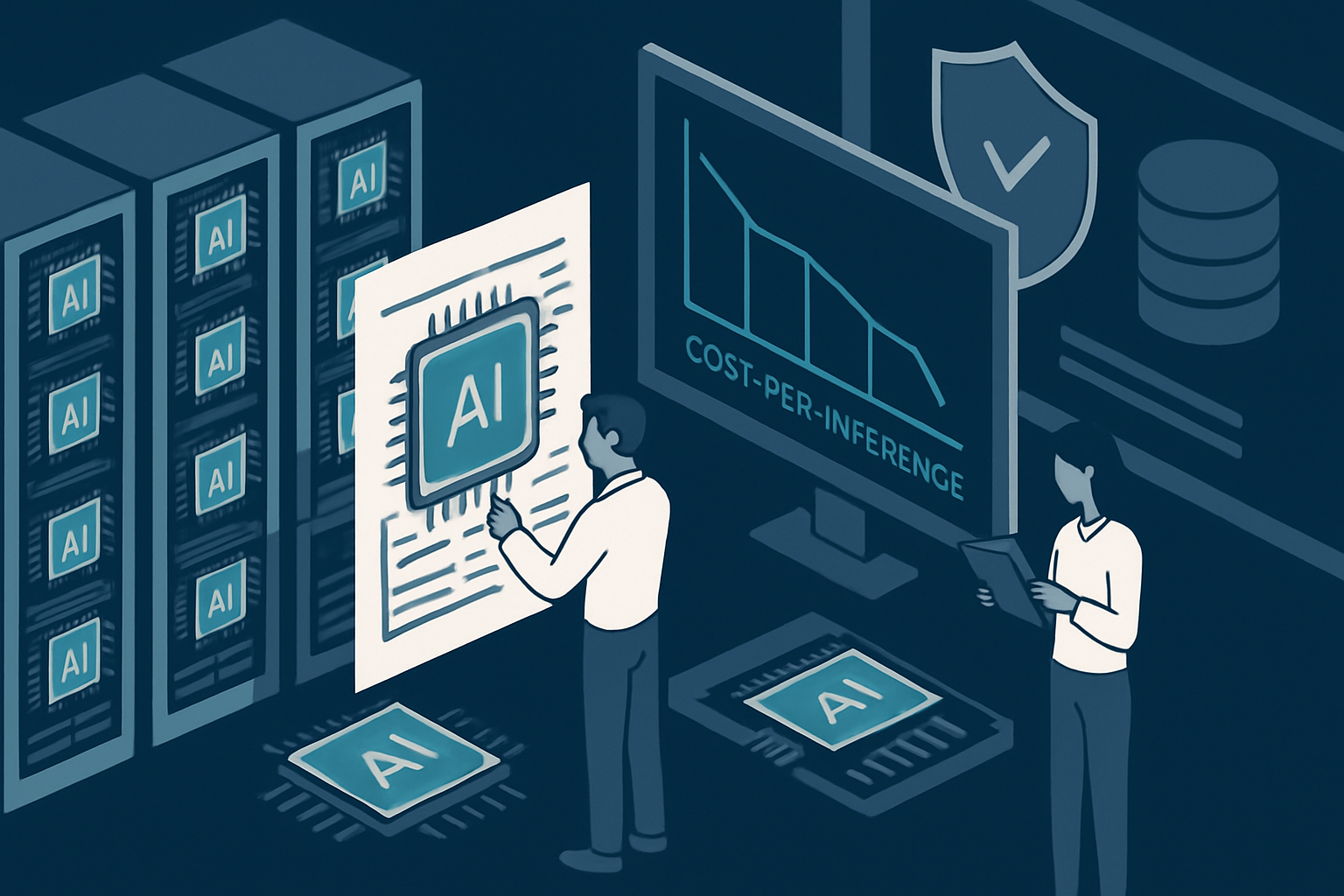
The Hidden Costs of AI Inference at Scale
The recent focus on cost-cutting measures in AI inference, as seen with Positron’s DRAM-based chips and DeepSeek’s memory-efficient models, offers potential savings but necessitates careful evaluation of performance trade-offs and governance implications. Read more
-

Anthropic’s Fable 5.1: Engineering for Market Leadership
Anthropic’s Fable 5.1 offers significant technical improvements, yet its premium price may misalign with market demand. Engineers must weigh the cost-benefit ratio and consider flexible system architectures. Read more
-

AI and Biology: Transforming Drug Discovery to Precision Engineering
Vijay Pande’s VZVC is pioneering a shift in biology from discovery to engineering, driven by AI’s ability to design drugs with precision. This transformation promises to revolutionize drug discovery, though clinical trials remain a bottleneck. Read more
-

AI Agents: Engineering Implications and Operational Shifts
The AI landscape is shifting towards monetization and decentralization, impacting how systems are built and operated. Practitioners must focus on scalable infrastructure, centralized governance, and hybrid deployment strategies to navigate these changes effectively. Read more
-

Balancing AI Architectures: Generative Meets Deterministic
The integration of generative and deterministic AI systems is reshaping how organizations deploy intelligent solutions. This hybrid approach mitigates risks and enhances usability, aligning AI capabilities with specific operational requirements. Read more