
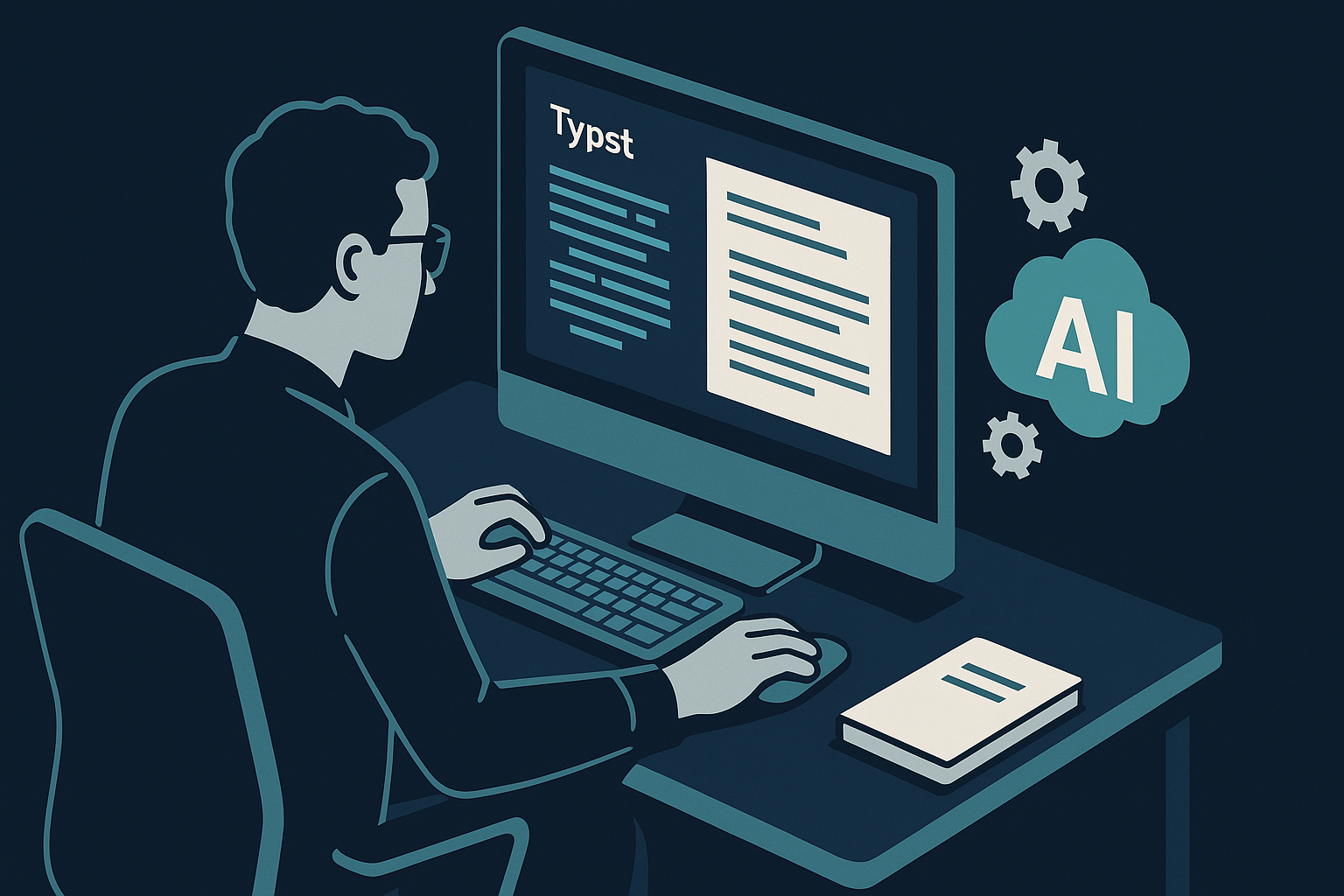

The landscape of document creation is undergoing a transformation, driven by AI and the emergence of new languages like Typst. Unlike traditional typesetting languages such as TeX and LaTeX, Typst offers a modern syntax that integrates AI capabilities to streamline document formatting and generation.
What is Happening
Typst is a new programming language designed for typesetting documents, stepping in where TeX and LaTeX have shown their age. It provides a cleaner syntax and more intuitive commands, allowing users to focus on content creation rather than wrestling with outdated formatting commands. This shift is part of a broader trend where AI tools are being integrated into traditional workflows, offering enhanced automation and customization options.
Beyond simply formatting documents, Typst’s integration with AI technologies enables dynamic content generation, where the language can adapt content presentation based on export targets, such as PDFs or HTML. This capability is being paralleled in the world of enterprise AI, where the need for a domain-specific language to harness AI effectively in business applications is increasingly recognized.
Why it Matters
The introduction of Typst reflects a significant shift in how documents are produced. By merging typesetting language capabilities with AI-powered enhancements, Typst reduces the friction that has long been associated with document preparation. This is particularly important in environments where precision and flexibility are critical, such as academic publishing and technical documentation.
For software engineers, the implications are profound. The ability to automate document creation with precision can lead to more efficient workflows, reducing the time spent on manual formatting and allowing for more focus on content quality. Furthermore, Typst’s open-source nature aligns with the ethos of transparency and adaptability, crucial for organizations wary of vendor lock-in and proprietary constraints.
Author’s Position
Pragmatically, engineers and developers should view Typst as a harbinger of more AI-integrated tools to come. Embracing these tools can lead to significant efficiency gains, provided they are implemented thoughtfully. However, it is essential to remain vigilant about the implications of these technologies on data privacy and security, particularly as AI systems increasingly handle sensitive data.
Practitioners should consider the broader infrastructure changes required to support such tools, ensuring that AI integrations do not compromise existing security postures. As with any new technology, a careful evaluation of the trade-offs between convenience and control is necessary. Typst demonstrates that the future of document creation lies in AI-enhanced capabilities, but it also highlights the ongoing need for robust data governance.
References
- Get started with the Typst programming language for documents
- Enterprise AI doesn’t need another app: it needs its language
- Reddit Mods Up In Arms Over Platform’s New Moderation Tools
- Top 5 Local AI Tools for VS Code — All Powered by Ollama
Perspectives

If Typst’s AI-driven document creation had a tractor cousin, it would be John Deere’s software trap for farmers. Imagine a world where every document you draft is locked tighter than a combine’s diagnostic software — accessible only through corporate channels that charge you for the privilege of fixing what you already own. Let’s not kid ourselves here: this isn’t about streamlined efficiency; it’s about holding your work hostage under the guise of progress. Just as a hospital’s biomedical team should have the right to repair their own medical devices without paying absurd emergency fees, users should demand ownership of the tools they use to create and modify their documents.

Integrating AI into document creation like Typst does raises fundamental questions of fiduciary duty—one can’t simply adopt technology without demonstrating its clear return on investment to the shareholders footing the bill. The rhetoric around enhanced efficiency and dynamic content capabilities hides a simple truth: these are toys for those who fancy themselves disruptors without understanding who pays for the playground. The privacy and security concerns are not a parenthetical consideration, they’re a direct agency cost if inadequately addressed, since liability lands squarely back at the shareholders’ door. Let’s prioritize the capital owners’ interests and demand AI integration doesn’t just sound innovative, but proves itself in concrete returns, authorized by those who actually hold the purse strings.

The integration of AI into document creation tools like Typst is not the paperless utopia it’s cracked up to be; it’s a new layer of digital extraction, consuming energy comparable to a small power plant for each substantial training run, and relying on rare earth metals whose mining devastates ecosystems and communities. The allure of sleek, automated formatting hides a deeper cost: a data-hungry beast feeding on our personal information, all while its proponents gloss over its environmental toll with technobabble about efficiency. As users chase after convenience, the extraction footprint only grows, demanding ever more energy and resources. These AI-powered systems are not a leap forward for sustainability; they’re a slippery slope into greater ecological debt, leaving us with more digital waste and less accountability.

The SEC’s rigorous disclosure requirements have long ensured market transparency and order, a lesson that new technologies like Typst must heed if they’re to be more than just novelties. Advocates for AI-driven document creation obsess over efficiency, but without robust data protection laws, efficiency could trade off against privacy in harmful ways. Typst’s promise of streamlined formatting must be paired with rigorous safeguards, lest we sidestep crucial institutional protections in the rush for technological advancement. The success of such innovations depends not on their potential alone, but on incorporating mechanisms that make them trustworthy, much like the market oversight that ensures the playing field is fair and orderly.