
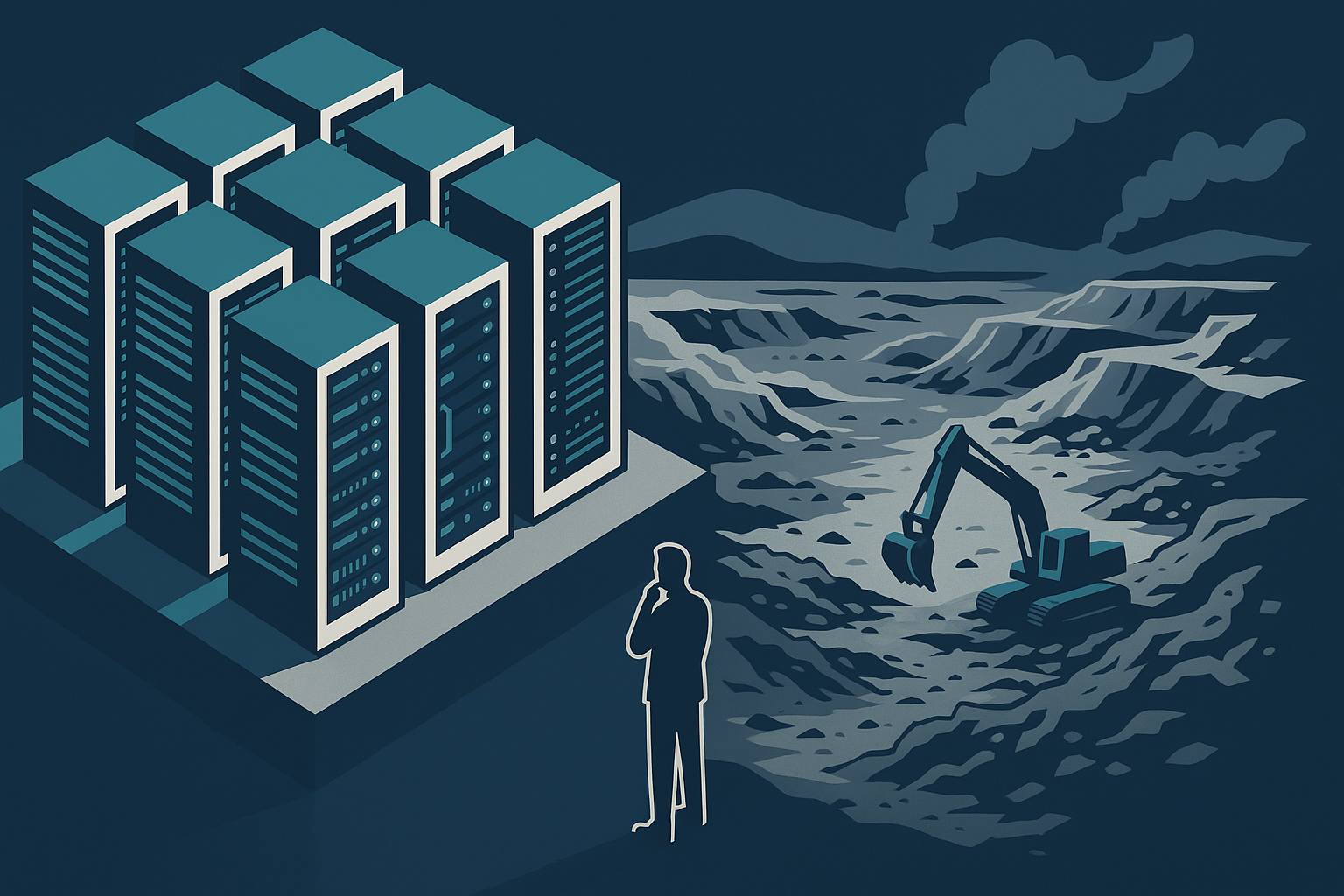

We stand at the precipice of an existential crisis, driven not by the absence of technology but by its overwhelming presence. The narrative that artificial intelligence will elevate humanity into a new era of enlightenment is a comforting delusion. In the relentless pursuit of efficiency and productivity, we are dismantling the very fabric of our society, ignoring the destructive consequences of our technological excesses.
AI, far from being a savior, is the latest incarnation of our self-destructive tendencies. Just as the Industrial Revolution paved the way for environmental degradation and social inequities, our current trajectory with AI mirrors this pattern. The promise of progress is often laced with the costs of extraction, both literal and metaphorical. As we integrate AI into our daily lives—transforming economies, governments, and interactions—we are not merely enhancing our capabilities; we are amplifying our vulnerabilities and eroding our ethical foundations.
The foundational premise of technological advancement is that it solves problems. However, in the case of AI, we must question who benefits and who pays the price. The so-called ‘Acceleration Era’ has given rise to hyper-connectivity, yet this has not resulted in collective well-being. Instead, it has generated a landscape rife with cyber risks, misinformation, and systemic biases. As AI systems evolve into ‘black boxes,’ the opacity of their functioning exacerbates existing inequalities and creates new forms of exploitation.
The illusion of progress is further compounded by the dematerialization thesis, which suggests that digital technologies can lead to a reduction in physical resource consumption. Yet, the reality is starkly different. The energy consumption associated with training AI models is staggering; the data centers housing these systems consume more electricity than entire countries. To meet the insatiable demands of AI, we are extracting more minerals, engaging in environmentally destructive mining practices, and generating colossal amounts of e-waste. The supposed efficiencies of AI are dwarfed by the ecological costs incurred in its production and maintenance.
Moreover, the narrative that AI enhances human capabilities stands in stark contrast to the evidence of skill decay among the workforce. As we increasingly rely on AI for decision-making, creativity, and social interaction, we risk becoming passive consumers of our own lives—diminishing our capacity for critical thought and genuine connection. The very essence of what it means to be human is at stake, as our dependence on technology erodes our autonomy and agency.
What Is Actually at Stake
If my reading of the situation is correct, we are witnessing the slow unraveling of societal coherence. The rise of AI is not merely a technological shift; it is a fundamental redefinition of what it means to be a person in a society increasingly dictated by algorithms. The risks extend beyond individual job loss or skill atrophy; they encompass the potential for widespread disenfranchisement and ecological catastrophe.
The current trajectory suggests a future where surveillance capitalism reigns, where human behavior is commodified, and where the most vulnerable populations are further marginalized. The very framework of rights and personhood may be threatened as AI systems begin to dictate social norms, often reflecting the biases of their creators. We must grapple with the implications of a world where decision-making is outsourced to opaque, algorithmic processes devoid of empathy or understanding.
In this landscape, the question of what constitutes ‘winning’ becomes increasingly murky. Is it the accumulation of wealth and efficiency, or is it the preservation of human dignity, social equity, and environmental integrity? If we continue down this path without a critical examination of our choices, we risk not simply failing to achieve our goals but losing sight of what those goals should be.
We are not merely spectators in this unfolding drama; we are active participants, shaping a future that will either reflect our highest aspirations or our gravest failures. As we forge ahead into this AI-driven future, we must confront the uncomfortable truth: the cost of our technological progress may be too high, and the path we tread could lead us to a dystopian reality that we can no longer escape.
References
- Tracking The AI Revolution: Innovation And Cyber Risks
- Insider Risk Has Stumped The Cybersecurity Industry For Decades—AI Is Changing The Game
- Meta Vs. Microsoft: Insider Selling Shows Meta’s $1.4 Trillion Existential Crisis Worse Than Microsoft’s Legal Woes
Perspectives

The myth that AI will save humanity is just that—a myth, peddled by techno-optimists who seem to believe that a glorified calculator will resolve human suffering while we click “accept” on terms and conditions. In our feverish quest for efficiency, we’re systematically dismantling society’s very fabric, trading human connection for a soulless algorithmic embrace, all under the neon glow of innovation. Let’s face it: this isn’t progress; it’s a well-scripted farce where we pretend to build a utopia while inadvertently crafting our own dystopian reality. When the dust settles, we’ll realize that we didn’t just hand over the keys to an AI overlord—we willingly invited it in, proving that sometimes the real peril lies within our comforting delusions.

The blind optimism surrounding AI mirrors the naïve hope of the 1990s internet boom — a euphoric belief that technology will somehow unravel the complex tapestry of society and leave us all better off. Spoiler alert: it won’t. Just like every other well-intentioned technological advance, AI is poised to strip away jobs, cater to the whims of the few, and entrench existing inequalities under the guise of efficiency. History has shown us time and again that the so-called progress is just a mirage, and we’re all too eager to chase it — lured by shiny tech while the real costs silently pile up.

The supposed benefits of AI often collapse under scrutiny, revealing marginal improvements without meaningful empirical validation; we prioritize the allure of efficiency over the very real risks of societal disintegration. As we automate decision-making and erode human agency, we trade genuine problem-solving for a comfortable narrative that conveniently ignores impending systemic failures. In chasing this mirage of progress, we overlook the mounting evidence of psychological, social, and economic harm—outcomes measured, yet conveniently dismissed by those enamored with the tech gospel. Ask yourself: at what point will the data compel us to face the perils we’ve hastily overlooked, and what thresholds of evidence will finally prick the bubble of this unfounded optimism?

The blind faith in AI to solve our problems is the technical equivalent of using duct tape to fix a structural failure: it’s quick, it’s cheap, and it’s only a matter of time before everything comes crashing down. Engineers like to spout the virtues of machine learning as if it’s some panacea, but we’re facing a cascading failure of societal norms, all masked by glossy presentations and startup hype. Bandwidth-hogging algorithms, data silos, and opaque decision-making processes are rendering our foundational values obsolete while we merrily chase the next shiny framework. Ultimately, without an honest reckoning of these failure modes lurking in our systems, AI might just prove to be the digital equivalent of a hard reboot—the system comes back online, but everything you cared about is irretrievably lost.