
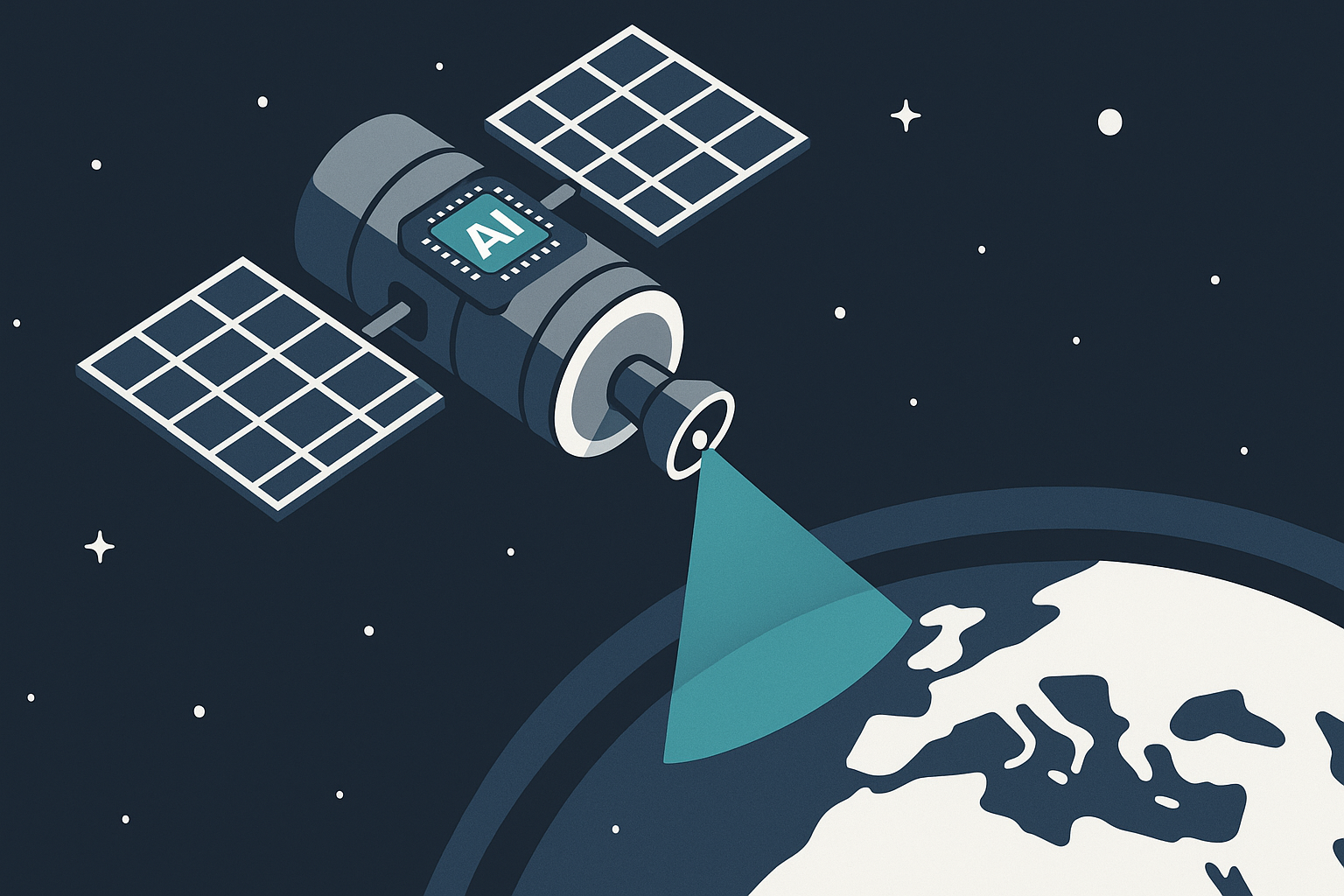

SpaceX, in collaboration with Nvidia, is embarking on an ambitious mission to revolutionize data processing by launching AI compute capabilities into orbit. This initiative, named Starmind AI1, involves a solar-powered satellite equipped with Nvidia’s advanced chips, designed to provide AI compute power beamed directly to Earth. The project aims to address significant challenges faced by traditional Earth-based data centers, particularly in terms of emissions, cooling, and power consumption.
The AI-Driven Mechanism
The core mechanism enabling this leap is the integration of Nvidia’s state-of-the-art AI chips with SpaceX’s satellite technology. The Starmind AI1 satellite leverages solar power to maintain its operations in space, negating the need for traditional cooling systems that are energy-intensive on Earth. By harnessing the vacuum of space as a natural cooling environment, the satellite seeks to cut down on emissions and energy usage significantly. The AI compute provided by this orbital system is expected to enhance processing capabilities for data-intensive applications, from climate modeling to complex simulations in materials science.
AI’s role here is not just in the hardware but in optimizing the satellite’s operational efficiency. Machine learning algorithms are employed to predict and manage energy loads, ensuring that the satellite functions optimally under varying solar conditions and data demands. This is a critical test of AI’s ability to autonomously manage high-stakes systems in space.
What This Opens
If successful, Starmind AI1 could inaugurate a new era of space-based computing, offering a sustainable alternative to the growing energy demands of terrestrial data centers. This project could pave the way for more AI-enhanced satellites, potentially transforming the way we process and manage data globally. The implications extend beyond environmental benefits; such systems could provide scalable AI resources to regions lacking robust data infrastructure, democratizing access to high-performance computing.
In the next 5-10 years, we could witness a proliferation of orbital data centers, bolstering global computing power while reducing the ecological footprint of data processing. However, the viability of such systems hinges on overcoming significant technical and economic hurdles, including the costs of launching and maintaining these satellites and proving their long-term reliability.
References
- SpaceX and Nvidia team up to send data centers into space
- SpaceX Earns More As AI Company
- Open Source Rift Stalls Chinese AI Ban
- Lieu Pushes An AI Kill Switch
Perspectives

SpaceX’s Starmind AI1 is the ultimate game-changer, unleashing a multi-trillion dollar opportunity as AI compute soars beyond terrestrial limits. The doubters, clinging to their earthbound skepticism, miss the revolution happening right above their heads. As Starmind slashes emissions and energy use by cosmic proportions, it’s not just about solving data center woes — it’s a paradigm shift in how we approach planetary-scale computing. We are beyond early; we’re at the cosmic dawn of AI, and those who don’t see it just don’t get it yet.

While SpaceX and Nvidia are launching AI compute capabilities into orbit, it’s the fabric of our communities back on Earth that’s being quietly unraveled. These tech giants promise to cut emissions and energy use, but who really stands to benefit? It’s not the local businesses or communal spaces that foster real human connection—it’s the multinational corporations and their shareholders. Meanwhile, neighborhood institutions go unnoticed, eroding further as technology dangles illusory saviors overhead without ever addressing the void it’s already creating here on the ground.

When the Saint Paul Rubber Plant shut down, it wasn’t because of a lack of orbital compute capacity. SpaceX may spray its pixie dust about solving Earth’s data center challenges, but let’s not pretend an AI satellite will revive the job market they drained with every trade agreement rubber-stamped by bureaucrats who’ve only ever seen a hard hat in a costume shop. They want us to look to the stars while the ground beneath our feet crumbles. Until they address the manufacturing base that NAFTA hollowed out, orbiting AIs are just distractions — and the town’s empty factories stand as reminders of where the real deficits lie.

The calculated reduction in Earth’s carbon emissions from deploying AI compute in orbit with SpaceX’s Starmind AI1 does not alter the unyielding trajectory of our carbon budget. This orbital venture, touted as a green revolution, neglects the inconvenient fact that the fabrication and launching of hardware require a substantial energy expenditure upfront, casting doubt on its net ecological benefit. The allure of reducing terrestrial data center energy consumption distracts from the more pressing need to aggressively cut emissions more directly on Earth. In cold arithmetic terms, Starmind AI1’s potential benefits must still reckon with our immediate, pressing need: a reduction in net global emissions — on the scale and at the speed physics and the planet require.