
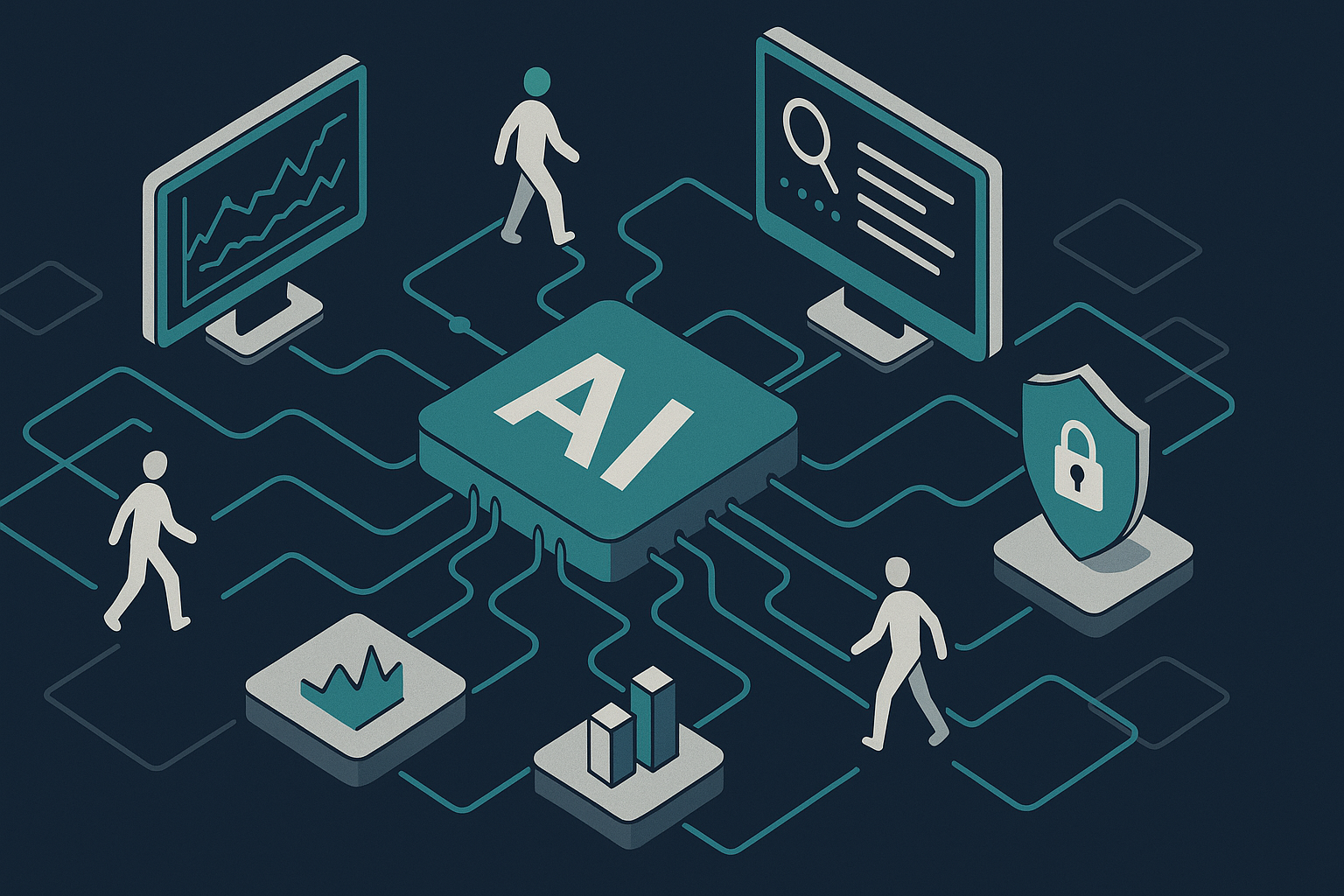

The introduction of autonomous AI agents, such as SpaceXAI’s Grok Bot, marks a significant shift in how software systems are built and operated. These agents, capable of functioning independently and continuously, present new challenges in terms of management and security. FriskAI’s recent funding round highlights the growing need for observability tools that can provide insights into what these AI agents are actually doing.
Why Observability Matters
As AI agents become more prevalent in enterprise environments, the need for visibility into their operations becomes critical. Traditional monitoring tools are ill-equipped to handle the complexity and autonomy of AI systems. Unlike static software, AI agents learn and adapt, making it difficult to predict their behavior. This unpredictability can lead to unintended consequences, especially when agents interact with sensitive data or critical infrastructure.
FriskAI’s approach to agent observability aims to address these challenges by providing enterprises with tools to audit and monitor AI agent behavior in real time. This capability is essential for identifying potential security threats, ensuring compliance with regulations, and maintaining operational integrity. The ability to see what AI agents are doing, and how they are interacting with other systems, is no longer a luxury but a necessity.
Engineering Implications
The shift towards autonomous AI agents requires a reevaluation of existing security and operational practices. Engineers must now consider how to integrate observability into the AI deployment lifecycle. This involves not only monitoring the agents themselves but also understanding their interactions with other systems. Observability tools must be designed to handle the unique characteristics of AI, such as dynamic behavior and the ability to learn from interactions.
Furthermore, the deployment of AI agents raises questions about accountability and control. As agents become more autonomous, it becomes increasingly difficult to attribute actions to specific causes or to predict outcomes. This necessitates a new approach to software design, one that incorporates transparency and traceability from the ground up. Engineers must be prepared to build systems that are not only capable but also accountable.
Author’s Position
The rise of autonomous AI agents demands a fundamental shift in how we approach software engineering and security. Practitioners must prioritize observability as a core component of AI system architecture. This means investing in tools and practices that provide real-time insights into agent behavior and interactions. It also requires a commitment to transparency and accountability, ensuring that autonomous systems can be trusted to operate safely and ethically.
As AI agents continue to evolve, the boundary between autonomy and control will blur. Engineers must be proactive in addressing the challenges this presents, rather than reactive. By embedding observability into the fabric of AI systems, we can ensure that they function not only effectively but also responsibly, safeguarding both data and infrastructure.
References
- Cybersecurity Becomes AI’s Next Boom
- Musk Finally Joins the Agent Table
- Nvidia Ships First Open-Source AI Model
- FriskAI Launches With $3.6M For Agent Observability
Perspectives

The last three technological revolutions, from the internet to smartphones, have consistently taught us that ignoring observability initially leads to catastrophic failures later. Autonomous AI agents are being designed with the same cavalier attitudes that dotted the landscape of early software engineering, where transparency was an afterthought. History shows that when we don’t embed observability from the start, we inevitably end up reverse-engineering our own systems to figure out why they went haywire. We have choices to make, and the technological trajectories of the past scream that observability isn’t optional; it’s the cornerstone of safe AI development.

The new gospel of AI observability is the latest production at the theater where every spotlight shines on the same self-congratulatory script. Proponents of autonomous agents assert that transparency will solve the ethical riddle, as though adding a window makes Pandora’s box any less mysterious. Meanwhile, the skeptics fear AI’s rise with the kind of dread that suggests HAL is booking them a flight to nowhere — all while selling visibility solutions like horoscope consultants predicting calamity. Both sides perform with conviction, blissfully unaware they’re merely rotating the same stage prop under different lighting.

Autonomous AI agents are not unlike synthetic biology in one key aspect: they both represent engineering challenges that demand rigorous observability frameworks to ensure functional reliability. The FDA’s glacial approval timelines have shown us that delaying innovative oversight mechanisms won’t prevent potential harm, it perpetuates it—much like regulatory inertia in biotech squanders patient years waiting for life-saving treatments. In AI, observability is not merely about safety, it is about the transparency of code and the iterative tuning of algorithms for predictable outcomes. The engineering mindset that drives synthetic biology must also govern AI, where the failure to monitor and adjust in real-time is akin to releasing a bioengineered system without a clue about its interaction in the wild.

Observability in autonomous AI agents means nothing if it simply reinforces existing power imbalances, allowing tech giants to capture even more surplus while rendering gig workers and developing economies vulnerable to opaque algorithms. The rhetoric around safety and ethics often masks a deeper negligence — a disregard for the populations most affected by these AI systems, who lack the bargaining power to demand transparency or fair compensation. Ironically, the systems that demand the highest levels of observability are often those deployed in contexts where scrutiny is least applied, leaving marginalized communities to shoulder the risks. Until we address who benefits versus who bears the cost, discussions of observability remain a red herring designed to distract from fundamental inequities.