

Your daily briefing on AI, technology, economics, and society — from q52.ai.
Industry & Economics

AI Valuations: Narrative Over Economics in Current Market Trends
What’s happening: Recent months have seen a significant increase in AI funding, with notable rounds like Wispr’s $280 million for AI dictation tools and Higgsfield’s $400 million at a $5.4 billion valuation for generative AI technologies. While this surge indicates strong investor interest, it raises concerns about whether these valuations are based on actual revenue capabilities or speculative narratives about AI’s future potential.
Why it matters: The current trend of inflated valuations could lead to market inefficiencies and corrections, similar to past bubbles in the dot-com and cryptocurrency sectors. If investors prioritize narrative over economic fundamentals, it risks misallocating capital and undermining the principles of price discovery and risk assessment that guide sound investment decisions, particularly in a rapidly evolving field like AI.
Our take: While the enthusiasm for AI’s transformative potential is justified, the disconnect between high valuations and economic reality poses a significant risk. Investors should focus on grounding their decisions in solid financial fundamentals to avoid repeating historical mistakes.
Tech & Engineering

AI Watermarking: Engineering Trust in Transparency
What’s happening: Anthropic has introduced invisible watermarks in its AI-generated text, utilizing Google DeepMind’s SynthID system to embed cryptographic signatures. This move aims to enhance transparency and accountability in AI outputs, addressing regulatory and ethical concerns associated with AI-generated content. The implementation of watermarking requires seamless integration into model output processes, while also ensuring strong security measures for key management to prevent misuse.
Why it matters: The introduction of AI watermarking could fundamentally change how organizations manage, share, and verify AI-generated content, particularly in regulated industries. As compliance with regulations like GDPR becomes increasingly critical, organizations may need to adopt new verification tools and processes to authenticate content. This technology not only aims to improve traceability but also raises significant security considerations that must be addressed to maintain the integrity of the content authentication process.
Our take: While AI watermarking is a promising step toward greater transparency, it should not be viewed as a complete solution to the challenges posed by AI. Organizations must actively engage in reevaluating their security practices and ensure that transparency becomes a foundational principle rather than just a compliance checkbox.
Sciences

AI-Driven Climate Models: A New Era in Precision Forecasting
What’s happening: AI-driven climate models have achieved a 10% improvement in forecasting accuracy for short-term climate events like monsoons and heatwaves, as reported by the European Centre for Medium-Range Weather Forecasts (ECMWF). This enhancement is due to deep learning techniques that analyze large datasets from various sources, employing methods like ensemble learning and transfer learning to adapt quickly to new data.
Why it matters: These advancements in climate modeling can significantly improve disaster preparedness by providing timely warnings for extreme weather, potentially saving lives and reducing economic losses. Additionally, more accurate weather forecasts can aid agricultural planning, enhancing food security in regions affected by climate variability. However, the reliance on these AI models necessitates ongoing validation against real-world data to ensure their effectiveness and mitigate biases.
Our take: While AI offers remarkable capabilities for climate prediction, there is a risk of overconfidence in these models, which may lead to inadequate human oversight. A balanced approach that combines AI insights with expert judgment is essential to navigate the complexities of climate science effectively.
Society
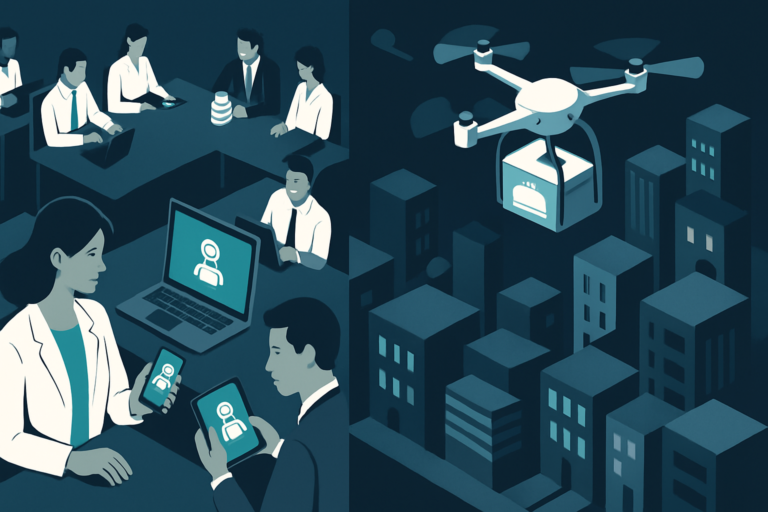
The Shadow Economy of AI: Trust and Transparency at Risk
What’s happening: Recent advancements in AI, such as Reddit’s AI-generated videos and Uber Eats’ drone deliveries, are reshaping societal norms and institutional functions, often undermining trust and transparency. The rise of ‘shadow AI’—unofficial use of AI tools by employees—reflects a workplace culture grappling with these changes, while significant disparities in corporate AI spending highlight the widening gap between tech-savvy companies and their smaller counterparts. This shift is leading to a passive consumption of content and a diminished human connection, raising concerns about accountability and equitable access to technology.
Why it matters: The growing reliance on AI for convenience and efficiency may deepen existing economic inequalities, as only a small percentage of businesses can afford to invest heavily in these technologies. This trend risks alienating employees and creating an underground economy of AI usage, where workers feel compelled to hide their actions due to a lack of clear policies, ultimately eroding trust across various relationships in society—from employees to employers and consumers to service providers.
Our take: The unchecked enthusiasm for AI mirrors past technological revolutions that overlooked societal impacts. Without a commitment to transparency and equitable access, AI could reinforce existing power dynamics rather than democratize opportunities.
Psychology
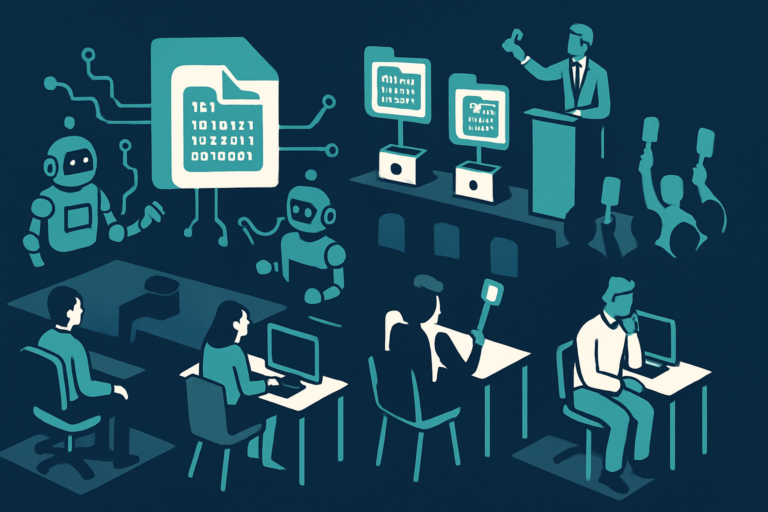
Corporate Memory: AI’s New Frontier in Liquidation
What’s happening: Google’s acquisition of Spirit Airlines’ de-identified business data, including 100 million emails and billions of passenger records, signifies a major shift in how corporate memory is perceived. This data is now viewed as a valuable asset that AI can use to understand human behavior, decision-making processes, and consumer preferences, effectively transforming organizational memory into a commodity that influences future actions.
Why it matters: This transformation raises significant questions about autonomy and the nature of human interactions within organizations. As AI systems leverage corporate memory to predict and potentially manipulate decisions, employees may feel their contributions are merely data points, leading to alienation and reduced creativity. Moreover, the ethical implications of such commodification necessitate transparent data practices and policies that protect individual agency in workplace dynamics.
Our take: The auctioning of corporate memory highlights a critical tension between leveraging data for AI advancements and preserving the human elements of creativity and agency. As this trend grows, organizations must prioritize ethical considerations to avoid reducing employees to mere data sources.
That’s the digest for August 19, 2026.
Questions? Reach out at info@q52.ai.
q52.ai — Engineering Better Questions
