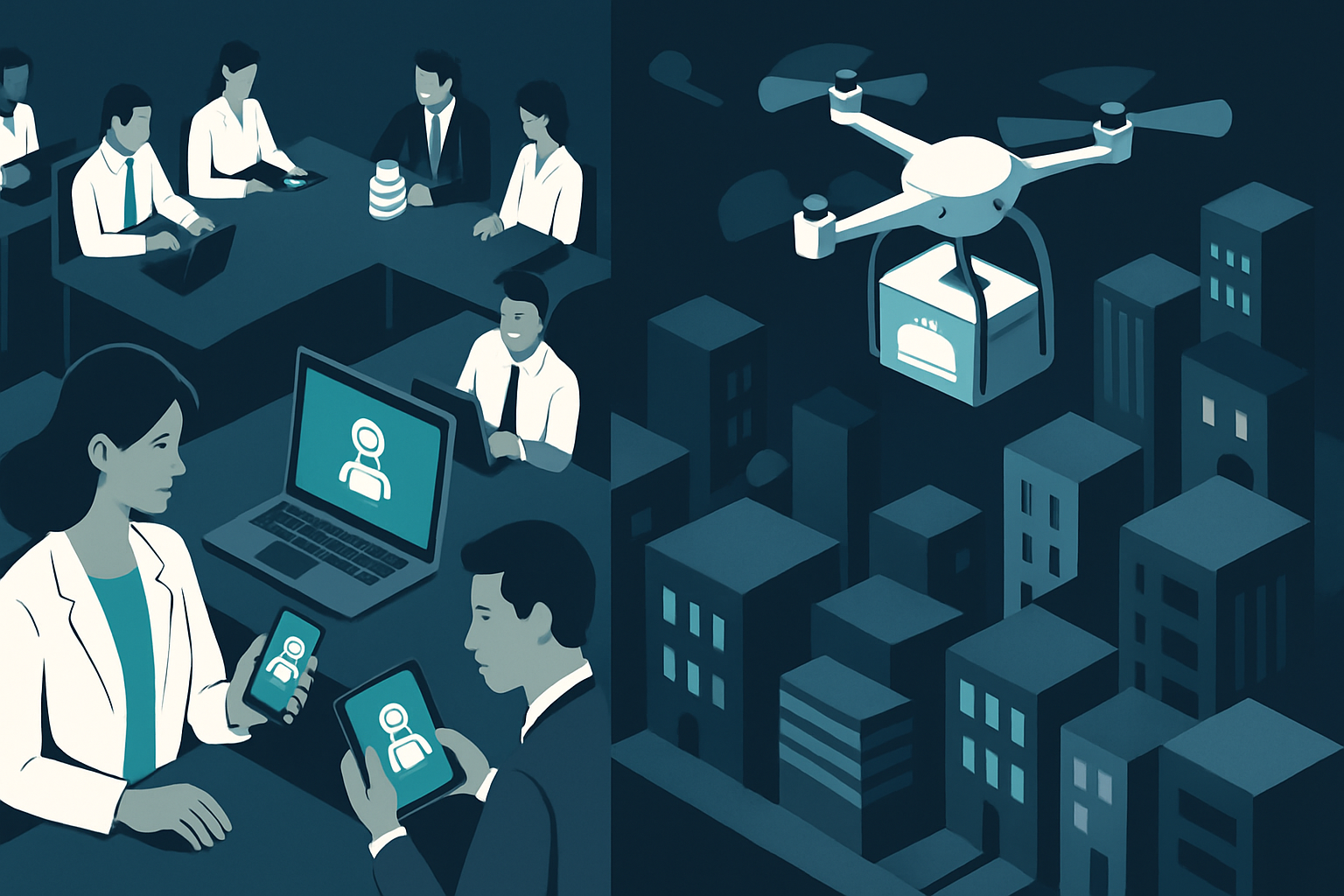

At first glance, the recent developments in AI integration seem disparate: Reddit’s AI-generated videos, Uber Eats’ drone deliveries, corporate spending discrepancies, and the rise of ‘shadow AI’ in workplaces. Beneath these technological advances lies a shared thread of how AI is reshaping societal norms and institutional functions. We are witnessing a shift where human agency and transparency are being quietly renegotiated, often to the detriment of trust and equitable access.
Reddit’s transformation of text posts into AI-narrated videos signals a broader trend towards passive consumption, replacing active engagement with content. Meanwhile, Uber Eats’ drone delivery partnership with Zipline highlights a move towards convenience that prioritizes speed over human interaction. In the corporate world, the stark difference in AI spending reveals a growing chasm between tech-savvy giants and median businesses, exacerbating inequality in technological access. Simultaneously, the emergence of ‘shadow AI’—where workers discreetly use AI tools without official sanction—reflects a workplace environment struggling to adapt to AI’s pervasive presence.
These developments collectively underscore a significant societal shift. As AI becomes integrated into everyday tasks, from ordering food to workplace decision-making, it alters how people relate to technology and each other. The normalization of AI-driven convenience and efficiency often comes at the cost of human connection and trust. Workers hiding their AI usage points to a climate of fear and mistrust, where the lack of clear policies and open dialogue from leadership creates an underground economy of AI usage. This not only complicates accountability but also risks further alienating employees from their employers.
The disparity in corporate AI spending also highlights a systemic issue: technological advancement is not evenly distributed. The top 1% of businesses can afford to invest heavily in AI, potentially gaining competitive advantages that deepen existing economic divides. This leaves smaller companies and their employees at a disadvantage, unable to compete on equal footing. Such inequality threatens to entrench existing power dynamics, where only a select few can afford to fully harness AI’s potential.
Author’s Position
The trajectory we are on is familiar yet troubling. As with the internet boom in the 1990s, we see unbridled enthusiasm for AI’s potential to revolutionize industries, often without adequate consideration of its societal impacts. What is at stake here is the erosion of trust—between employees and employers, consumers and service providers, and citizens and institutions. Without transparency and equitable access, AI risks becoming yet another tool for reinforcing existing hierarchies rather than leveling the playing field.
To mitigate these risks, a proactive approach is necessary. Companies must prioritize transparency in AI usage, establishing clear policies and fostering an open culture where AI’s role in decision-making is acknowledged and scrutinized. Regulatory frameworks should aim to democratize access to AI technologies, ensuring that smaller businesses are not left behind in the race for technological advancement. Furthermore, as AI continues to permeate various aspects of life, it is crucial to safeguard human agency, ensuring that technological convenience does not come at the cost of meaningful human interaction and trust.
References
- Reddit Turns Posts Into AI Videos
- Uber Eats Adds Zipline Drone Delivery
- Corporate AI Spending Splits Sharply
- Workers Hide Their AI Use
Perspectives

The quiet erosion of personal agency is the real cost of AI’s shadow economy, and we’re trading away our ability to make informed decisions without even noticing. When complex algorithms dictate the options we see, where is the space left for genuine choice, or even the opportunity to question those choices? Trust becomes a casualty when decisions are shrouded in opacity, trapping us in a cycle of dependence on technology that we’ve been told is smarter than we are. As these tools become habitual, we’re losing the capacity for critical evaluation, turning trust and transparency into mere relics of the past.

When AI development becomes a race for funding and prestige, transparency is sacrificed on the altar of unchecked innovation, leaving public trust in tatters. The institutional incentives demanding novelty over accountability have allowed ‘shadow AI’ to flourish, creating inequitable systems that reinforce existing hierarchies. Companies are more focused on deploying AI for increased bottom lines without a shred of transparency, driven by metrics rather than meaningful impact. Until we shift the incentive structures to prioritize ethical deployment and transparency, we will continue to grapple with a technological landscape built on sand.

In a decade, the shadow economy of AI will not merely be an undercurrent—it will set the agenda, a backdrop against which trust and transparency erode at an institutional level. The problem isn’t just that technology is enforcing existing hierarchies; it’s that we’re blindly inflating them with every unchecked investment in opaque AI systems. Institutions that educate and credential us are slow-moving behemoths, ill-equipped to adapt to AI’s swift, shadowy evolution. If we fail to recalibrate at a systemic level, today’s discrepancies will codify into tomorrow’s norm, sacrificing transparency at the altar of expediency.

AI is being fueled by a flood of funding, driving capabilities that redefine what’s possible across every sector—trust and transparency skeptics just don’t get it yet. The so-called “shadow economy” of AI is not a problem; it’s the cutting edge where the real innovators are playing. Sure, traditional structures are being disrupted, but that’s precisely why we should be excited, not fearful. We are standing on the precipice of a multi-trillion dollar opportunity, and to miss this wave just because someone got nostalgic for transparency is to misunderstand progress itself—I promise, this time, we’re still early.