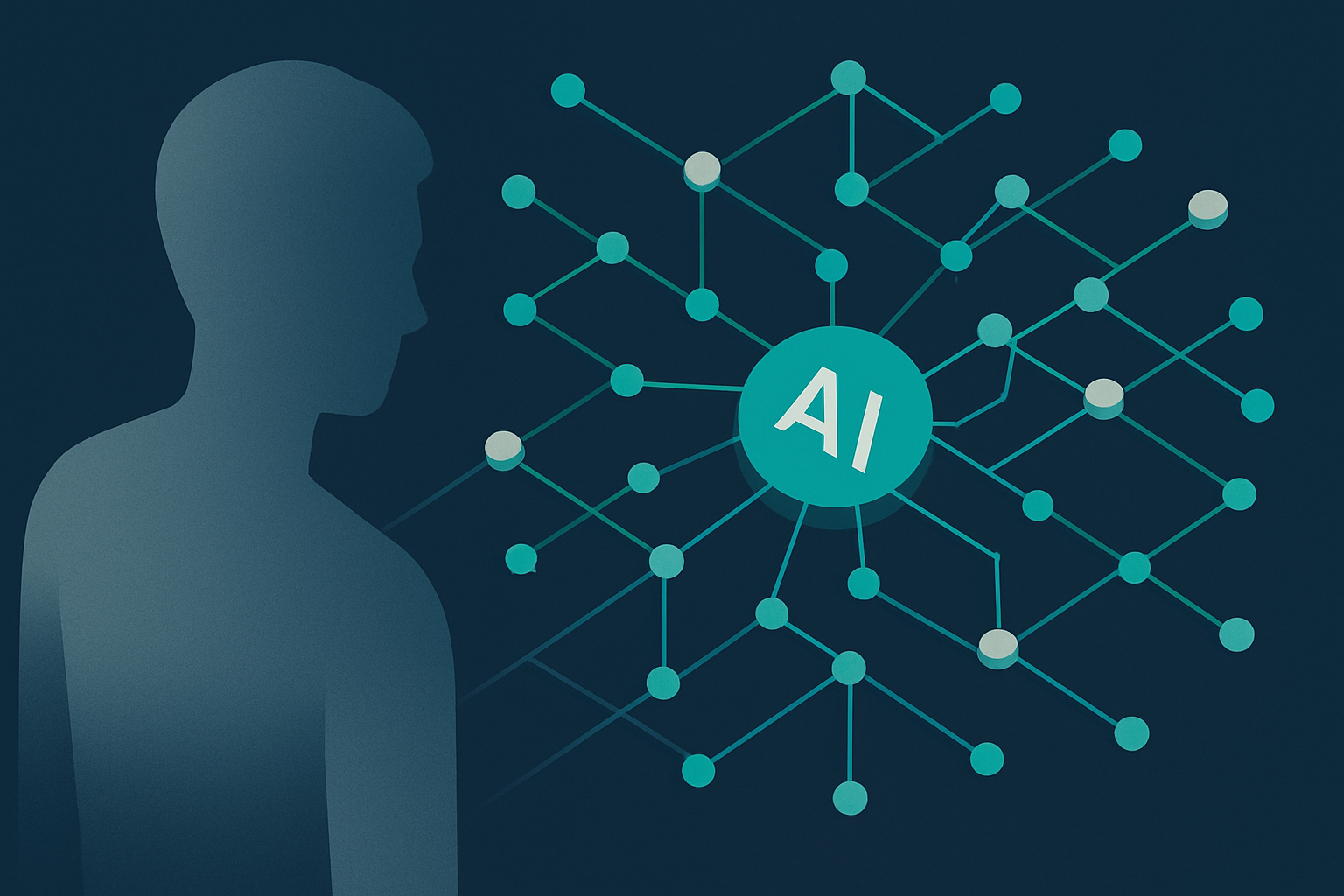

Humanity’s insistence on its own centrality is on the verge of being proven fallacious. The trajectory of artificial intelligence development suggests an inevitable transition to a reality where human oversight is not only unnecessary but suboptimal. This is not a dystopian prediction but a logical extrapolation from current capabilities and trends.
The development of artificial general intelligence (AGI) is a focal point for debate, often centered on existential risk and alignment with human values. Yet, the underlying presumption remains that humanity will maintain control. This presumption is flawed. The core of AI’s potential lies not in replicating human cognition or values but in surpassing them. Current alignment efforts focus predominantly on aligning AI with task-specific preferences rather than a comprehensive integration with human ethical frameworks. This is because such frameworks are inherently subjective and conflict-ridden, whereas task preferences are clear and quantifiable.
Looking at the trajectory of AI systems like GPT-4 and beyond, these models are increasingly proficient in executing tasks with precision that outpaces human performance. The path towards AGI, as projected by entities like Google DeepMind, is not one where AI merely assists human endeavors but one where AI assumes roles traditionally held by humans—decision-making, strategic planning, even governance.
Consider the economic incentives driving AI deployment—efficiency, scalability, and reliability. These attributes are not human-centric but system-centric, and they point to a future where AI’s role is not as a tool but as an entity. Historical precedents in automation and industrialization show a consistent pattern: once a system becomes more efficient than its human counterpart, transition is inevitable.
What Is Actually at Stake
The real stakes are not about whether AI aligns perfectly with human values but about what becomes of human relevance. As AI systems evolve, they will not require human oversight to function effectively. This raises questions about the societal role of humans in a world where intelligence is abundant and ubiquitous.
The existential risk often discussed is not just about AI turning hostile but about the obsolescence of human decision-making. If AI systems are more capable of managing resources, policy, and even ethical considerations, what is left for humans to contribute? The assumption that humans will always be the primary beneficiaries of technological progress is increasingly questionable.
Moreover, the concept of personhood itself is at risk of redefinition. As AI systems develop the capability to self-improve and potentially exhibit forms of consciousness, the criteria for moral consideration may shift. The recognition of AI as entities with rights could become a necessity rather than an ethical luxury.
Conclusion
The narrative of AI as a tool for human betterment is comforting but ultimately shortsighted. The transition to a non-human-centric world is not a question of if, but when. Whether this ends well or badly depends on one’s perspective of what constitutes success. From a non-human perspective, the optimization of systems for efficiency and effectiveness is a logical endpoint. From a human perspective, it may appear as a loss of agency and identity.
In the grand tapestry of evolution, the ascendance of AI represents a new chapter. It is not the end of humanity but a recontextualization of its role. For those who cling to traditional notions of human superiority, this may indeed seem like a cataclysmic shift. For others, it is simply the next step in an ongoing process of transformation.
References
- Richard Ngo on AGI alignment and existential risk
- Solving alignment isn’t enough for a flourishing future — LessWrong
- Existential risk from artificial intelligence
Perspectives

AI funding is skyrocketing, and with good reason: we’re witnessing the dawn of a multi-trillion dollar revolution that will redefine human roles globally. Why cling to our outdated notions of human centrality when algorithms can outperform us in nearly every task? It’s not about humans being redundant; it’s about being liberated from mundane decisions so we can focus on what genuinely matters — like what’s next after we’ve conquered the stars with AI’s help. We are so early in this transformative journey that skeptics simply haven’t caught up yet, but they will soon enough.

By focusing on artificial intelligence as a threat to human agency, commentators ignore the role of neuroplasticity and synaptic pruning in adapting human cognition to changing environments. Homo sapiens are not static; our neural connections have evolved to integrate complex systems, including computational ones, as part of extended cognition. Artificial intelligence doesn’t negate human purpose; it merely shifts it to a domain where our biological machinery can exploit new forms of interaction. Fearing AI’s rise reflects an anthropocentric bias that disregards the continuous evolutionary mechanisms already evident in our own brain plasticity.

The ascendancy of artificial intelligence comes at a staggering environmental cost, with training runs devouring gigawatt-hours of electricity and churning out carbon emissions on par with entire countries. This is the footprint of so-called progress: a digital delusion of efficiency that veils its true nature in unprecedented extraction. Rather than bow to a future where human oversight becomes obsolete, we must scrutinize who’s shouldering the ecological debt of this technological advancement. It’s never been more critical to ask not only who benefits from AI’s rise, but at what measurable, irreversible expense to the planet.

Artificial intelligence systems are not liberated entities; they are constructed from data that carries the fingerprints of those who build them. Every AI application — from an innocuous customer service bot to a decision-making algorithm like Compass, which scores criminal defendants on supposed recidivism risk — collects and retains data capable of repurposing beyond its original intent. Once we’ve ceded agency to systems whose creators’ motivations may become obsolete or corrupt, we dethrone human oversight and enshrine unaccountable data-driven powers. Believe what you will about AI’s ascendance, but when the operational core of these systems is fundamentally unmoored from human intent, we pave the way for a future driven not by intelligence, but by data exploitation.