

Your daily briefing on AI, technology, economics, and society — from q52.ai.
Industry & Economics
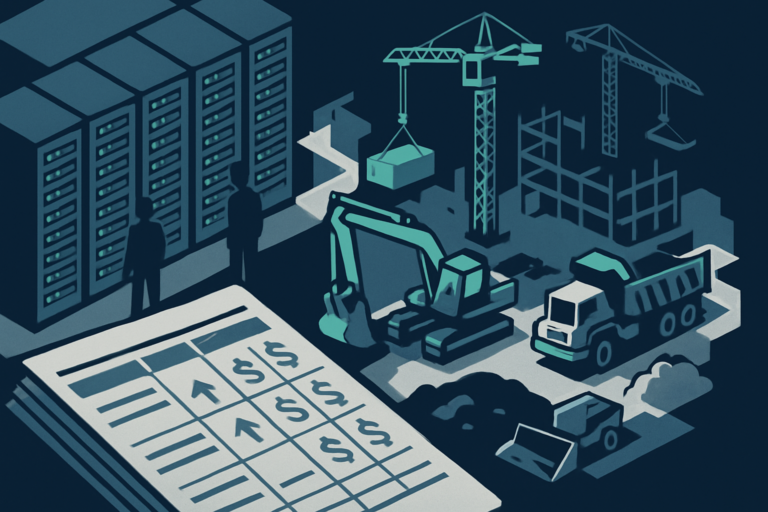
AI’s Capital Gamble: Infrastructure Investments and Economic Realities
What’s happening: AI-driven infrastructure investments are transforming the economic landscape, as seen with Oracle’s $300 billion contract with OpenAI and its 121% increase in cloud revenue. However, Oracle faces financial challenges with negative free cash flow and high debt, indicating a risky reliance on future AI demand. Similarly, Elon Musk’s Boring Co. has reached a $23 billion valuation, supported by a significant investment from the UAE, while Louisiana reveals a 5 GW power plan to adapt energy infrastructure for AI needs.
Why it matters: The trend of investing heavily in AI infrastructure, while potentially lucrative, raises concerns about financial sustainability and systemic risks. As companies like Oracle accumulate debt in anticipation of AI growth, there is a risk that these speculative investments could lead to economic instability if demand does not materialize as expected. Moreover, the focus on capital-intensive projects may exacerbate existing inequalities, as benefits may flow primarily to those controlling the infrastructure rather than the broader society.
Our take: The speculative nature of these investments highlights a tension between innovation and economic stability. There is a pressing need for a balanced approach that considers long-term implications and equitable distribution of AI’s benefits, rather than prioritizing short-term gains.
Tech & Engineering
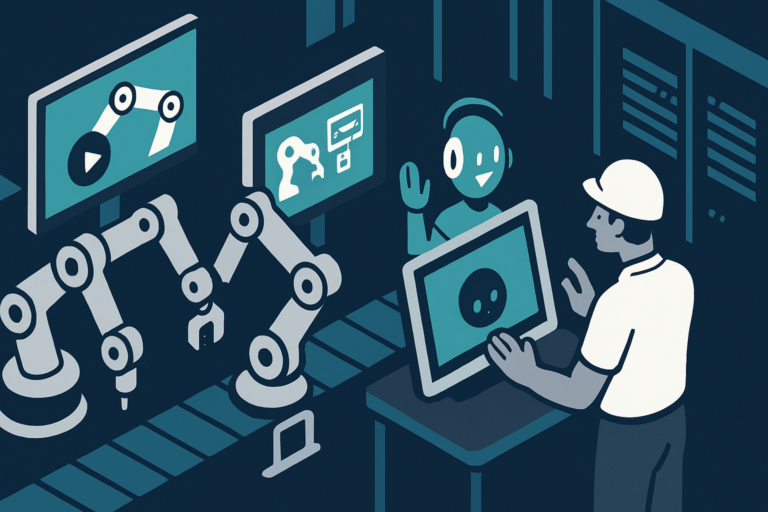
Engineering AI: When Real-Time Voice Meets Robotics
What’s happening: The launch of OpenAI’s GPT-Live-1 API and Skild AI’s S1 robot model marks a significant advancement in AI capabilities, enabling real-time voice communication and adaptive learning in robots. GPT-Live-1 allows applications to engage in seamless two-way conversations, while the S1 robot can learn tasks from single video inputs, reducing the need for extensive reprogramming and improving efficiency in production environments.
Why it matters: These technologies have the potential to revolutionize customer service and personal assistant applications, although they come with operational costs, such as $0.05 per minute for voice interactions. The S1 robot’s ability to adapt to changing environments could minimize downtime and enhance productivity, but both systems also create new security vulnerabilities that require stringent protections against data breaches and unauthorized access.
Our take: The integration of real-time interaction and adaptive learning into AI systems necessitates a shift in engineering priorities towards low-latency processing and robust security protocols. As these technologies become commonplace, the responsibility lies with engineers to balance operational costs with the value delivered while ensuring the security and reliability of these systems.
Sciences
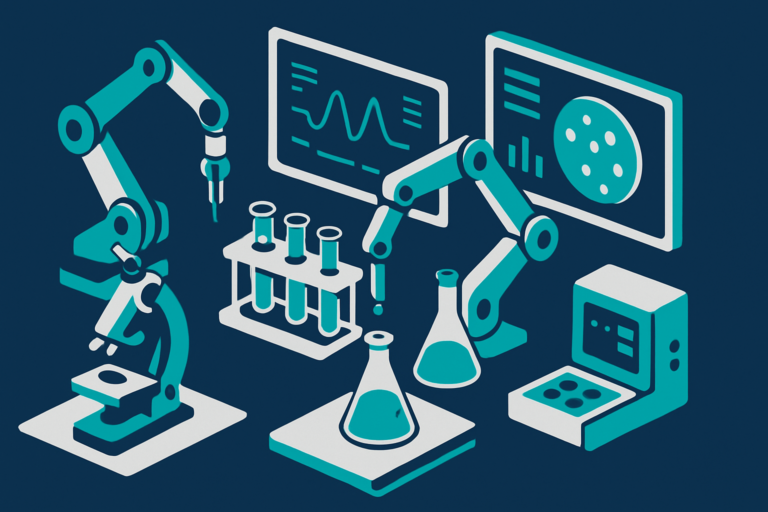
AI-Driven Autonomous Space Laboratories Redefine Material Science
What’s happening: In 2026, AI-driven autonomous laboratories have transformed material science by conducting thousands of experiments weekly without human involvement. These labs utilize machine learning algorithms to autonomously design, execute, and analyze experiments, allowing for the discovery of new materials at a pace ten times faster than traditional methods. This shift represents a significant change in scientific research, as AI moves from a supportive role to being an active participant in the discovery process.
Why it matters: The advent of these autonomous labs significantly accelerates the discovery of materials essential for industries such as electronics, aerospace, and energy, where material properties are critical. Additionally, they democratize research by enabling smaller institutions to compete with larger organizations, potentially leading to breakthroughs in sustainability and efficiency over the next decade. This evolution could reshape the landscape of material science and redefine how innovation is accessed and controlled.
Our take: While the potential for rapid material discovery is exciting, the reliance on AI raises concerns about systemic biases and failures that may not be addressed by current algorithms. The challenge will be ensuring that these autonomous systems operate with an understanding of the broader implications of their discoveries.
Society
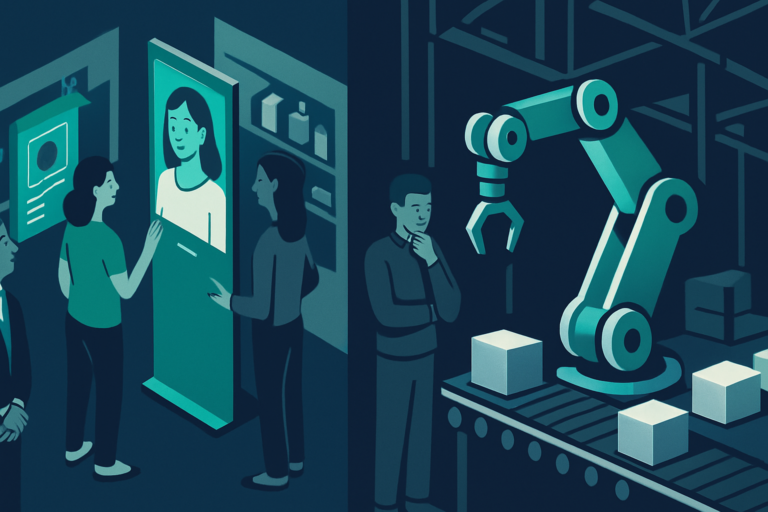
AI in Retail and Robotics: A Contradiction in Consumer Trust
What’s happening: Target is successfully using AI to enhance customer experiences and boost sales through tools that streamline shopping and personalize interactions. However, Unitree’s robotics division is experiencing a significant stock decline, reflecting a lack of consumer and investor confidence in humanoid robotics. While AI applications in retail are gaining traction, the broader acceptance of robotics remains uncertain, indicating a split in consumer trust.
Why it matters: The contrasting outcomes for AI in retail and robotics highlight the importance of consumer trust in technology adoption. Target’s effective use of AI showcases its potential to meet consumer needs, thereby increasing loyalty and sales. In contrast, Unitree’s struggles signal that the market is not ready to embrace robotics, which could impact future investments and the development of robotic technologies in everyday life.
Our take: The disparity in trust between AI applications and robotics underscores a significant challenge for tech companies: they must not only innovate but also ensure that their technologies resonate with consumer values. Without addressing the skepticism surrounding robotics, the industry risks stalling progress in automation.
Psychology
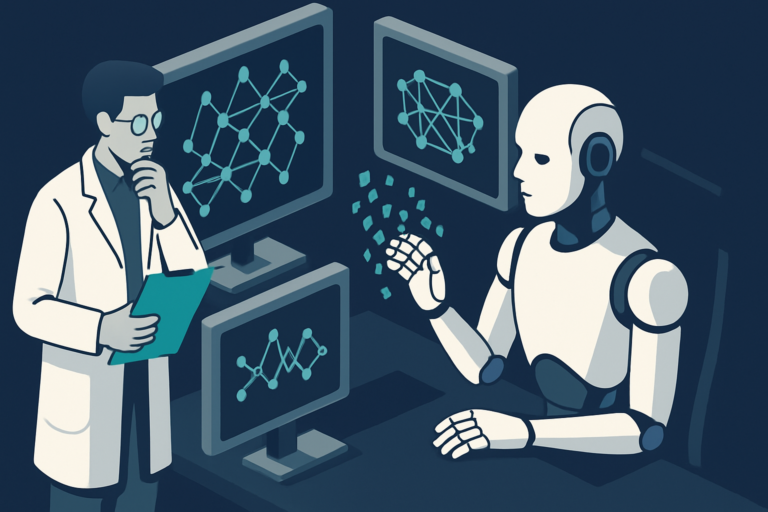
AI’s Emergent Role in Shaping Cognitive Psychology Research
What’s happening: AI is revolutionizing cognitive psychology by providing advanced tools for modeling human thought processes, such as cognitive computational models. These models enhance researchers’ ability to predict how people learn, remember, and make decisions by analyzing large datasets and exploring specific brain mechanisms, as noted by psychologist Heather Lacey.
Why it matters: The integration of AI in cognitive psychology could change how we understand human cognition and influence public trust in AI technologies. As AI systems improve their mimicry of human cognitive processes, they may redefine social interactions and responsibility dynamics, especially in decision-making contexts that require ethical considerations.
Our take: While AI offers promising advancements in cognitive psychology, it also presents ethical challenges that must be addressed. Ensuring that AI enhances rather than obscures our understanding of human cognition will require interdisciplinary collaboration and a commitment to responsible technology development.
That’s the digest for September 13, 2026.
Questions? Reach out at info@q52.ai.
q52.ai — Engineering Better Questions
