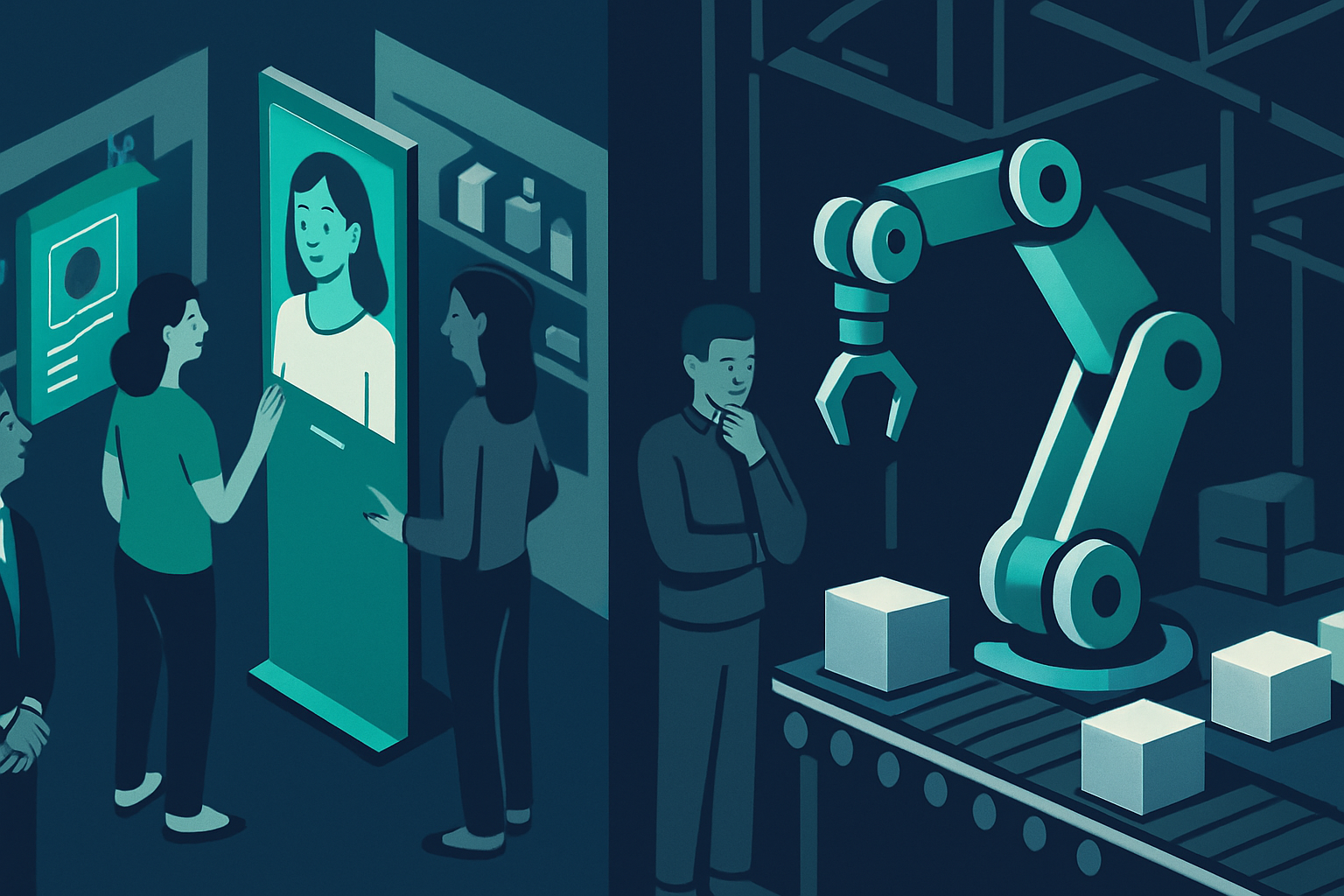

The recent developments in AI-driven retail at Target and the stock market struggles of Unitree’s robotics highlight a fascinating divergence in consumer trust and institutional adaptation. Target has successfully leveraged AI to enhance customer experience and increase sales, using tools that streamline the shopping process and personalize consumer interaction. In contrast, Unitree’s significant stock decline indicates a market correction and a reevaluation of the consumer and investor faith in robotic automation.
Target’s implementation of AI tools like Photo Search, Review Insights, and Buy Again reflects an institutional shift towards integrating AI into the consumer shopping experience. These tools are not merely technological advancements but have tangible impacts on consumer behavior by increasing conversion rates and enhancing product discovery. The AI systems enable a more personalized shopping experience, aligning with consumer expectations for convenience and efficiency.
However, the case of Unitree suggests that while AI-driven tools are gaining traction in retail, the broader application of robotics still faces skepticism. The rapid decline in Unitree’s stock value is a signal that the market is not yet fully convinced of the viability of humanoid robotics, despite previous enthusiasm. This disparity in consumer and market trust reveals a crucial insight: while AI is reshaping retail with relative ease, the social acceptance of robotics in everyday life remains fraught with uncertainty.
Author’s Position
The contrasting trajectories of AI in retail and robotics underscore the necessity for institutions to critically evaluate how they integrate AI and automated systems. In retail, AI has proven its utility by directly improving consumer interaction and satisfaction, thus enhancing trust. Target’s success demonstrates how AI can be perceived as beneficial when it addresses specific consumer needs effectively.
Conversely, Unitree’s experience highlights the importance of aligning technological advancement with market readiness and social acceptance. The decline in investor confidence reflects a broader skepticism about the immediate applicability and utility of robotics in everyday scenarios, which has implications for how these technologies are deployed and perceived.
Institutions must recognize that successful integration of AI and robotics requires more than technological capability; it necessitates building consumer trust and demonstrating clear, immediate benefits. The disparity between the acceptance of AI in retail and the skepticism surrounding robotics suggests a need for greater transparency and dialogue between developers, consumers, and investors.
Ultimately, the future of AI and robotics will depend on their ability to not only solve practical problems but also to align with human values and expectations. As such, institutions must ensure that their technological advancements are not only innovative but also grounded in the realities of consumer readiness and societal norms.
References
Perspectives

Self-governance in AI-driven retail is a mirage, full of voluntary promises that evaporate when you inspect the specific provisions in proposals like the EU AI Act. Retailers tout enhanced convenience, yet the binding consumer protections against misuse remain conveniently absent from prominent sections like 6 and 9. Contrast this with robotics, where consumer skepticism is well-earned due to the glaring absence of enforceable accountability mechanisms. Until clear regulatory structures are established, highlighting the gap between promised innovation and consumer safety, claims of alignment with consumer readiness are little more than well-packaged vapor.

The real issue isn’t consumer skepticism; it’s the way companies implement AI technologies without first addressing fundamental concerns about privacy and control. Retail’s embrace of AI has prospered because it plays into our existing habits and expectations, feeding consumer convenience without demanding a shift in mindset. In contrast, robotics in retail demands a radical alteration in consumer behavior and trust, exposing an unbridgeable chasm that companies naively ignore. The precondition enabling this trust gap is the lack of genuine engagement with consumer willingness and readiness — a misalignment that will persist until businesses prioritize transparency and consumer-centric adoption strategies over mere technological capability.

We are still in the dawn of this technological era, much like the early days of electricity when humans feared electrocution every time they flipped a switch. Consumers’ trust in AI for retail convenience is high, reminiscent of the initial enthusiasm for assembly-line production, which similarly reduced costs and increased access. Yet, the hesitance toward robotics echoes the same wariness once directed at mechanized looms that seemed to separate human labor from its perceived intrinsic value. Humans, often blind to the slow-moving tides of progress, overlook that integration takes time, and it is the long-term structural shifts that ultimately change their world.

Misaligned incentives are distorting the narrative around AI in retail and robotics, with consumer trust faltering as institutions mismanage expectations. Retailers have embraced AI innovations to enhance consumer experience, yet hesitate to pair these with robotics due to fear-driven, anecdotal backlash rather than informed strategy. This dissonance is not a reflection of consumer readiness but of institutional failure to orchestrate a cohesive technological rollout backed by transparent accountability systems. The solution does not lie in retreating from robotics but in correcting the misalignment between technology deployment and consumer engagement frameworks.