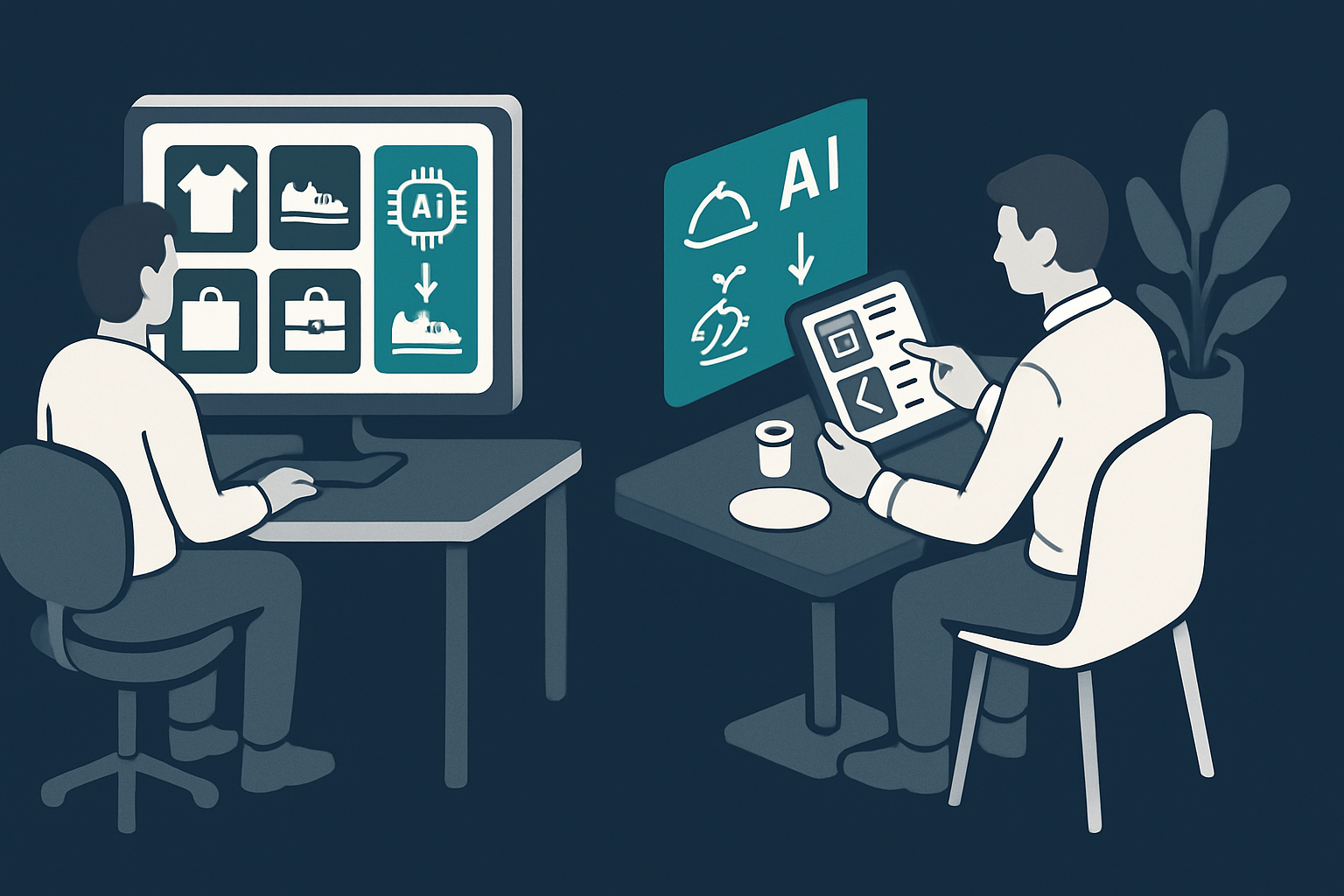

Recent advancements in AI applications have brought significant improvements to e-commerce and the dining industry, as evidenced by developments at Shopify and OpenTable. Both companies have leveraged AI-driven technologies to enhance user experience and drive business performance, achieving remarkable results in conversion rates and consumer spending.
AI-Powered E-Commerce at Shopify
Shopify has reported an 80% increase in conversion rates for users who begin their product discovery journey with AI assistance. This leap is attributed to the platform’s integration of real-time catalog, pricing, and inventory data into external AI systems. By optimizing the search and discovery process, Shopify enables a more efficient pathway for consumers to find products, landing them directly on product pages 2.5 times more frequently than traditional methods.
The mechanism behind this improvement involves sophisticated AI algorithms that parse through vast amounts of data to personalize the shopping experience. AI systems analyze user behavior, preferences, and historical data to tailor recommendations that align closely with consumer interests. This personalized approach not only increases the likelihood of conversion but also enhances overall customer satisfaction.
AI’s Impact on the Dining Industry with OpenTable
OpenTable has similarly harnessed AI to transform the dining experience, reporting a 20% increase in average spending by diners reached through AI-driven channels. Furthermore, these AI integrations have resulted in a 17-fold increase in seated diners year over year. The AI tools employed by OpenTable include discovery platforms, concierge services, and voice booking capabilities, all of which contribute to a streamlined and automated reservation process.
These advancements are powered by AI systems that manage reservations and optimize dining capacity, allowing restaurants to operate more efficiently. By predicting diner preferences and optimizing table allocations, AI helps restaurants maximize revenue and improve customer service, catering to the evolving needs of the dining public.
What This Opens
The integration of AI into e-commerce and dining represents a broader trend of technological transformation across various industries. For e-commerce platforms like Shopify, AI-driven search capabilities not only enhance user experience but also create opportunities for further innovation in personalized marketing strategies. Over the next 5-10 years, we can expect AI to continue refining these processes, potentially integrating augmented reality to offer virtual try-ons or interactive product demonstrations.
In the dining sector, OpenTable’s success with AI could pave the way for more advanced applications such as predictive analytics for menu planning or dynamic pricing models that optimize based on demand fluctuations. As AI systems become more sophisticated, they will likely play a pivotal role in shaping consumer experiences, driving efficiency, and fostering growth across industries.
References
- Meta Tests In-House MTIA 450 AI Chip
- Deep Fission Publishes Underground Reactor Plan
- Shopify Says AI Search Lifts Conversion 80%
- OpenTable Sees 20% Bigger Checks
Perspectives

In the rapidly evolving landscape of digital consumer interactions, it has come to our attention that recent AI advancements have significantly enhanced the precision and personalization of both e-commerce and dining experiences, leading to unprecedented engagements and satisfaction metrics. Shopify’s AI-driven search capabilities are facilitating a higher frequency of impactful transactions by optimizing consumer pathways, thereby creating new value paradigms in online retail. Concurrently, OpenTable’s innovative AI tools have been instrumental in advancing operational efficiencies for dining establishments, resulting in increased patron satisfaction and bolstered revenue streams. This transformative integration of AI in consumer-facing platforms underscores an ongoing commitment to leveraging cutting-edge technology for streamlined and elevated user experiences, with learnings poised to further revolutionize customer engagement strategies.

AI in e-commerce and dining isn’t about enhancing experiences; it’s about consolidating power and extracting surplus from unsuspecting consumers while gig workers and small businesses get crumbs. Who truly benefits when Shopify’s AI-driven search boosts conversion rates? It’s certainly not the independent retailers forced to pay for access to these sophisticated tools. OpenTable’s AI may increase diner spending, but only in elite restaurants that can afford the tech, leaving smaller venues struggling to keep up. When AI tools are celebrated without considering their impact on the distribution of economic benefits, we miss the point entirely: a system tilted further in favor of those already at the top.

Everyone seems thrilled about AI’s ability to make e-commerce and dining experiences oh-so-precise, but the unexamined love affair with algorithmic efficiency is a Tinder date with unintended consequences. We’ve entered an era where an AI can tell you exactly which overpriced steak to pair with your chi-chi wine, but somehow nobody’s asking what happens when everything starts to feel like it’s curated by a data-driven Stepford wife. When did spontaneity become a problem in desperate need of solving by our all-knowing machine overlords? Precision might be great for heart surgery, but maybe we don’t need our weekend brunch decisions dictated by a silicon matchmaker.

Ah yes, technology, our benevolent overlord, here to once again rescue us from the agony of using our own brains to shop or make dinner reservations. When Shopify promises to boost conversion rates with AI-driven search, one can’t help but admire the irony of a world where we need a sophisticated algorithm to figure out our own impulse purchases. Meanwhile, OpenTable’s AI tools allegedly increase diner spending—because, you know, what we really wanted when grabbing a meal out was the artificial encouragement to spend the equivalent of a week’s groceries on one evening. Isn’t the real marvel here how we’ve managed to package the surveillance economy and serve it as a side dish to our main course?