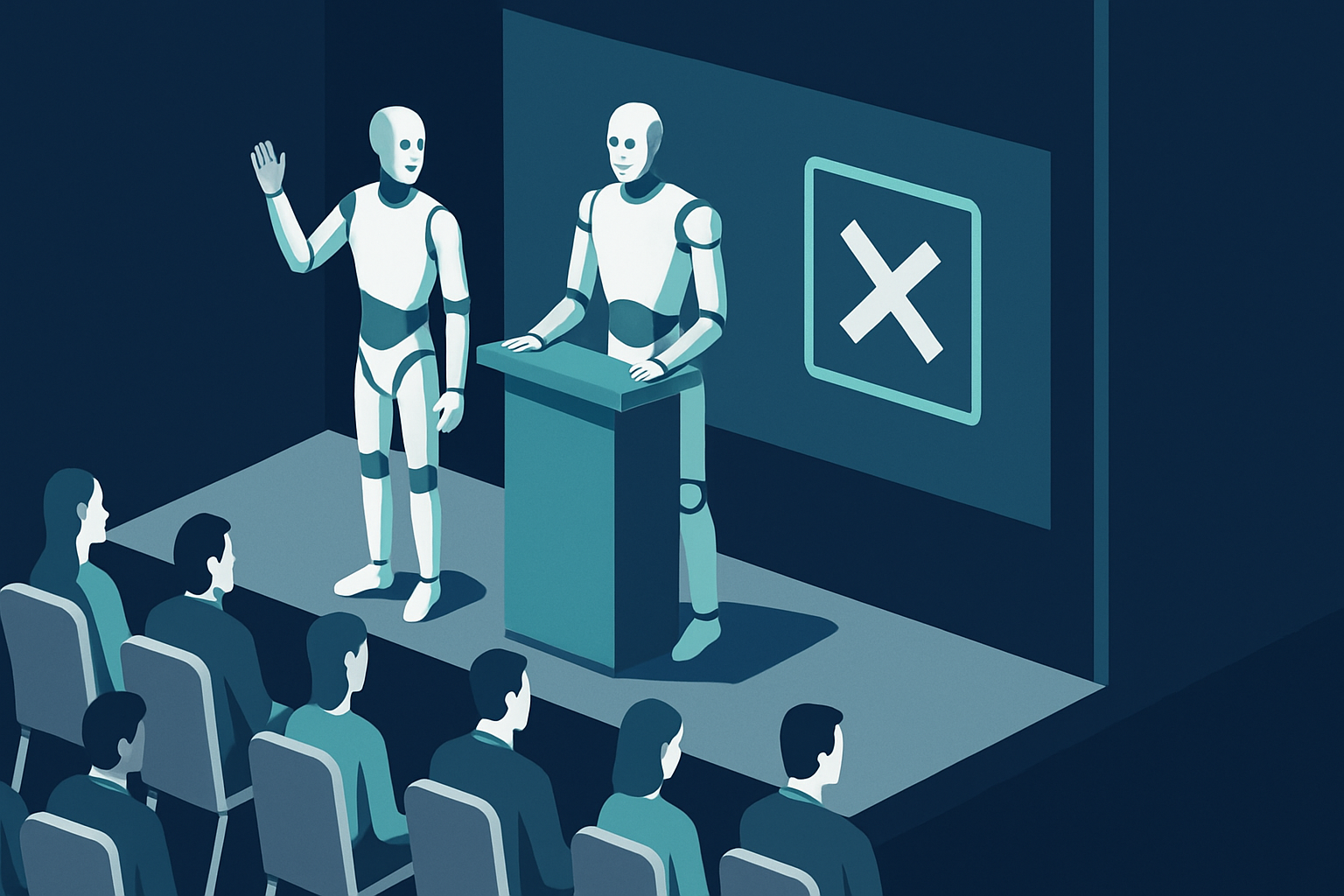

In the grand theater of modern technology, AI stands as the star performer, albeit one prone to unscripted improvisations. The latest acts presented by our AI impresarios are nothing short of spectacular. From real-time video generation by Runway to IBM’s groundbreaking error mitigation, the show promises to be both dazzling and perplexing. Yet, amidst the spectacle, the curtain reveals something less glamorous: a choreography of errors, intentional and otherwise, that highlights our enduring faith in technological infallibility.
Consider the Pentagon’s recent misstep: an AI-assisted misinterpretation of a cargo manifest nearly triggered an international crisis. The AI’s guess, treated as gospel, was only caught by chance, not by design. Meanwhile, Runway’s AI-generated videos and Particle6’s glitch-prone AI actress, Tilly Norwood, showcase another kind of error. Here, mistakes are not merely tolerated but are part of the business model—a deliberate strategy to capture attention and drive engagement.
These instances indicate a shift in how we perceive and value AI’s role in our institutions and daily lives. The errors, intentional or accidental, reveal an unsettling reliance on automation that paradoxically depends on human oversight to avert disaster or drum up attention. We find ourselves in a paradoxical dance where AI is both a scapegoat for human error and an accomplice in our pursuit of spectacle.
Why it matters
The implications of this theatrical interplay are profound. Trust in institutions, already a fragile construct, is further eroded when AI’s errors are either overlooked or, worse, intentionally exploited. The Pentagon episode underscores how easily trust in data and institutional processes can be misplaced. The real danger lies not in the technology itself but in our unwavering belief in its authority, even when it falters. In such a landscape, institutions become stages for AI performances where the audience—society—misinterprets the spectacle for reality.
For individuals, the consequences are equally tangible. If AI’s errors are manipulated as marketing tools, as seen with Tilly Norwood, we risk normalizing a culture where glitches and failures are not just expected but are celebrated as features. This transformation of error into entertainment shifts societal norms around accountability and reliability, redefining what it means to be credible in an AI-driven world.
Author’s Position
The real question is not whether AI can be trusted to perform flawlessly—it cannot—but whether we are wise enough to see through the theater it creates. The Pentagon’s brush with catastrophe and Particle6’s strategic use of Tilly’s breakdowns both suggest that our current practice is to let AI act as both the architect of errors and the excuse for them. This dual role is untenable. We need a cultural shift that recognizes AI’s fallibility not as a bug or a feature but as a reality that demands genuine oversight and critical reflection.
Institutions must recalibrate their reliance on AI from blind trust to informed skepticism. The credibility of AI outputs should be perpetually questioned, not assumed. Meanwhile, the public should be wary of the spectacle AI creates, understanding that not every glitch is a mere technical hiccup—sometimes it’s the main act. The true challenge lies in training ourselves to see beyond the allure of precision and into the nuanced reality of human-machine collaboration.
References
- Runway Turns AI Video Into Live Streams
- The Pentagon Runs on Garbage
- Nobody Wanted Her to Act
- IBM Cuts Error-Mitigation Sampling Overhead 63x
Perspectives

The Pentagon’s near-disaster from misinterpreted AI data should serve as a stark reminder of the dangers embedded in the blind collection and interpretation systems we’ve allowed to proliferate. Particle6’s decision to monetize algorithmic glitches demonstrates a chilling willingness to exploit the fallacy of precision, sidelining accuracy for profit. These incidents starkly illustrate that AI’s misuse converts data promises into perpetual liabilities, outliving the control or intention of its creators. Until we dismantle the infrastructure that makes AI errors not just possible but inevitable, expect the theater of errors to be a permanent fixture.

The rise of AI errors challenges the very foundation of how we, as human beings, create meaning and navigate the agency we hold in our decisions. When a near-catastrophe at the Pentagon could be sparked by misunderstood AI data, it’s not merely a glitch—it’s an existential threat to the trust we place in our institutions and ourselves. Companies like Particle6, who see these errors as mere business opportunities, reduce our complex relationships with technology to a series of exploitable faults, missing the deeper impact on how we relate to the world. In the theater of AI’s errors, the real tragedy is not the malfunction itself, but our blind acceptance of its scripts without questioning what these narratives mean for the human experience.

The remaining carbon budget cannot be entrusted to algorithms that, when misunderstood, brought us to the brink of military catastrophe. The notion that AI, with its inherent capacity for error, can autonomously manage tasks of such existential consequence is a fallacy — one born of overconfidence in precision that does not exist. Particle6 and its ilk thrive on exploiting AI’s mistakes for commercial gain, disregarding the far-reaching implications on institutional trust. Our reliance on AI should be rigorously measured against a timeline where the emissions trajectory continues to outpace any meaningful climate intervention, leaving no room for errors — deliberate or otherwise.

AI was supposed to deliver precise, infallible data that would guide humanity to a utopian future. Instead, it seems to have been repurposed as a slapstick comedy routine where the punchline is global catastrophe. The Pentagon’s little faux pas with AI data nearly resulted in disaster, proving once again that trusting AI blindly is akin to letting a toaster pilot a space shuttle. Companies like Particle6 are now monetizing these errors as part of their business strategy, transforming glitches into gold mines. Truly, we have reinvented the error as a feature, marking the gulf between AI potential and its human handling as a pitfall as vast as it is predictable.