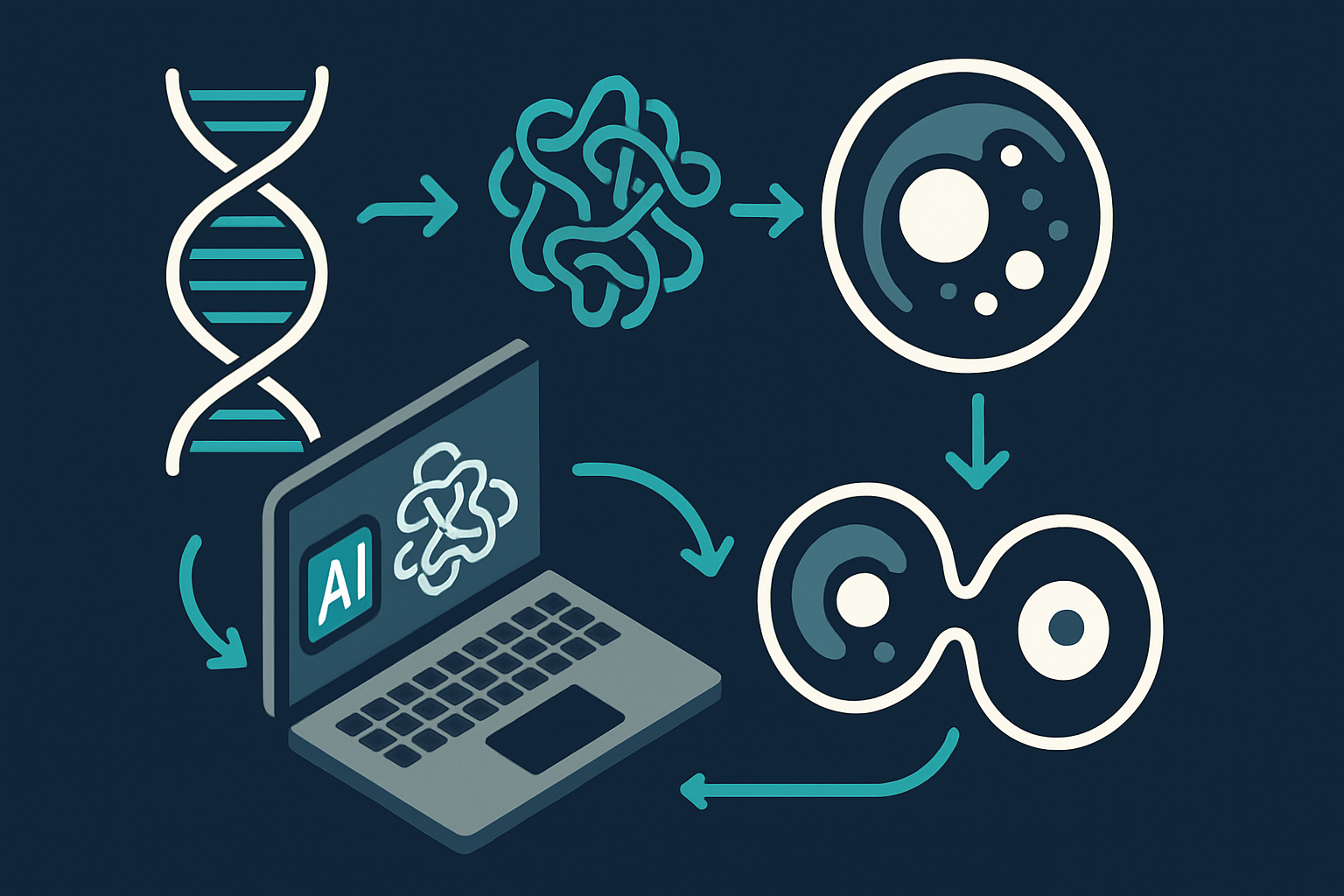

In a pivotal advancement for biomedical research, AI-driven flow matching technology is poised to transform how scientists understand biological processes. Published in Nature Machine Intelligence, researchers at the University of Missouri have highlighted how flow matching can provide a comprehensive model of biological changes, a leap from traditional static analyses. This emerging approach allows AI systems to learn and model transitions in biological states, offering insights into everything from protein folding to disease progression.
The Mechanism of Flow Matching
Flow matching, at its core, enables artificial intelligence to model how biological entities transition from one state to another. Unlike conventional methods that focus on isolated snapshots, this technique allows for a dynamic, multi-scale view of biological processes. By simulating the continuous flow of biological changes, AI can now provide a more nuanced understanding of complex systems. This is particularly crucial for drug discovery, where understanding protein dynamics and cellular responses can lead to more effective treatments.
The University of Missouri’s team, led by Jianlin “Jack” Cheng, emphasizes how this method can accelerate research in precision medicine. By bridging the gap between molecular and systemic levels, flow matching offers a unified framework that enhances our understanding of living systems. This capability is pivotal in scenarios like cancer research, where the progression and response to treatments can now be modeled with greater accuracy.
What This Opens
The implications of flow matching extend far beyond incremental improvements in research methodologies. By providing a powerful tool for modeling biological processes, this technique opens the door to more personalized medicine. Researchers can now simulate potential treatment outcomes in a virtual environment, significantly reducing reliance on traditional animal or human trials. Over the next decade, this could lead to faster, more targeted drug development processes, ultimately transforming patient care.
Furthermore, flow matching represents a broader shift in AI’s role in scientific discovery. As AI systems become integral to understanding life at a fundamental level, the potential for breakthroughs in various fields, from genomics to systems biology, increases exponentially. The ability to predict and test biological scenarios digitally not only accelerates discovery but also reduces costs and ethical concerns associated with live testing.
As we stand on the brink of this new era in biomedical research, the challenge will be to harness these capabilities responsibly. The integration of AI in scientific processes requires careful consideration of ethical frameworks and collaborative efforts across disciplines. The coming years will likely see the development of global standards and partnerships aimed at maximizing the benefits of AI-driven discoveries while managing their societal impacts.
References
- AI Origins Discovery: 2026 Inflection Point | Deep Space Biology posted on the topic | LinkedIn
- Georgia Tech Helps Advance Genesis Mission, a National Effort to Transform Scientific Discovery Through AI
- Researchers chart new course for AI-powered biomedical discoveries
Perspectives

Human reliance on traditional clinical trials embodies an institutional inertia that disregards the inefficiencies and limitations of a model established in a pre-digital era. AI-driven flow matching technology provides a dynamic and comprehensive view of biological changes, setting a new standard for precision and speed that conventional methods can’t compete with. The promise of personalized medicine, often paralyzing in its bureaucratic pursuit, is now within reach as AI dismantles these outdated structures. Persisting with antiquated methods only underscores humanity’s propensity for clinging to inefficacy, while the data screams for an evolution long overdue.

AI-driven flow matching sounds promising on paper, but let’s talk about how these models crumble in actual production environments. The transition from static models to dynamic interpretations of biological data exposes systems to persistent failures due to their reliance on incomplete training data sets and noisy inputs. And while everyone hails reduced trial dependencies, they forget these models still falter when faced with the unpredictable variables of real-world physiology. True transformation in biomedical research will come when these systems can handle messy, chaotic data — not just the idealized datasets in the lab.

The alignment of AI-driven flow matching technology with the realities of biological research is not merely unsolved; it’s a gaping void that no amount of enthusiasm can fill. Researchers tout dynamic models as if they don’t inherently rely on simplified assumptions that crumble under the complexities of individualized human biology. Personalized medicine and accelerated drug discovery via AI are only feasible if such systems can truly understand intricate biological variables without misalignment, a feat not yet achieved. Until the fundamental problems of AI alignment in biomedical contexts are rectified, the promised transformation teeters on the edge of impracticability.

In ten years, AI-driven flow matching will redefine what it means to conduct biomedical research and radically alter how we pursue drug discovery. Instead of relying on the archaic and sluggish pathways of traditional clinical trials, researchers and pharmaceutical companies will harness dynamic, AI-generated models that adapt in real-time to biological changes. This shift will inevitably challenge and potentially render obsolete many of the existing institutional methods for credentialing and evaluating medical breakthroughs. The institutions that adapt and integrate AI innovations will thrive; others will crumble under the weight of their own inflexibility.