

Your daily briefing on AI, technology, economics, and society — from q52.ai.
Industry & Economics
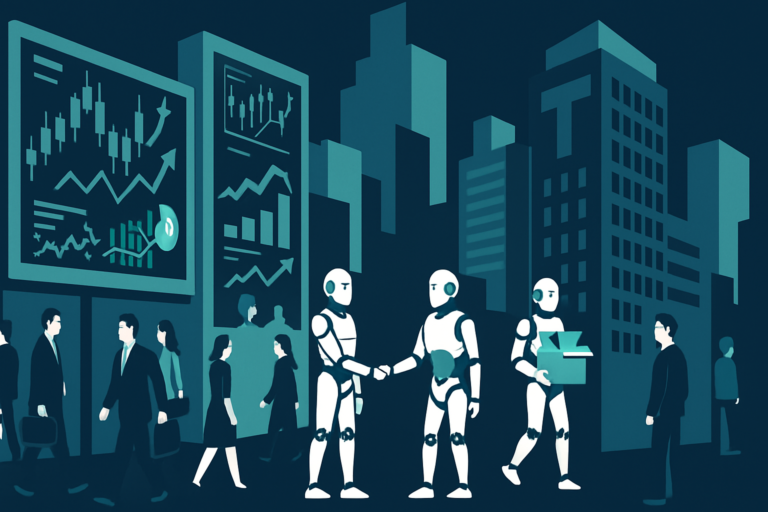
AI-Driven Capital Allocation: Transforming Investment and Labor Markets
What’s happening: Recent AI advancements are significantly altering capital allocation and labor markets. SpaceX’s $40 billion investment in Nvidia GPUs marks a shift toward prioritizing AI infrastructure over traditional assets. Meanwhile, HSBC’s job cuts in favor of AI integration illustrate how companies are reassessing human roles, leading to widespread layoffs as automation takes over complex tasks.
Why it matters: These developments indicate a broader trend where firms are leveraging AI to enhance productivity and reduce costs, reshaping competitive dynamics across industries. The reliance on AI could lead to economic instability, as displaced workers struggle to find new jobs, affecting consumer spending. Additionally, the emergence of AI-driven platforms may concentrate market power, raising concerns about monopolistic behaviors that could stifle competition.
Our take: While AI offers significant opportunities for innovation and efficiency, the rapid pace of adoption poses risks of market volatility and job displacement. A balanced approach is needed to harness AI’s potential while mitigating its disruptive impacts on the workforce.
Tech & Engineering

AI SDKs: Bridging the Gap Between Ideas and Implementation
What’s happening: Anthropic has integrated computer-use and browser-use toolsets into its Python and TypeScript SDKs, simplifying AI development by allowing developers to focus on application logic rather than foundational setup. This integration reduces development time and effort, enabling faster market entry for new applications and more efficient iteration of existing systems.
Why it matters: The shift towards more turnkey solutions in AI development democratizes access to advanced capabilities by lowering the costs associated with deploying AI models. However, this trend also expands the security surface, necessitating a greater emphasis on the vetting of SDKs to prevent potential vulnerabilities. As smaller players gain access to these tools, the importance of maintaining robust security practices becomes critical to avoid exploitation risks.
Our take: While the advancements in SDKs present remarkable opportunities for innovation, they also create a tension between speed and security. Developers must prioritize security alongside ease of use to prevent costly breaches, as the temptation to sacrifice security for rapid deployment may lead to significant risks in the long run.
Sciences
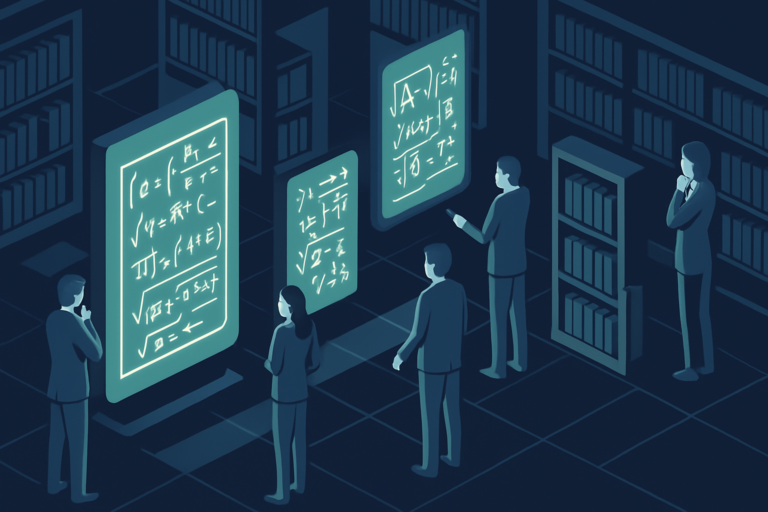
AI-Driven Proofs Challenge Mathematical Gatekeeping
What’s happening: OpenAI has released over 700 manuscripts and proofs, including potential advancements on the Riemann hypothesis, via a public GitHub repository. This initiative challenges traditional peer review processes and the role of mathematicians as gatekeepers, as the AI model utilized can generate proofs at a scale that surpasses human capabilities. The shift from human-led verification to machine-driven proof generation marks a significant change in mathematical discovery.
Why it matters: This democratization of advanced mathematical proofs could accelerate scientific and technological progress by providing wider access to complex insights that were previously restricted. However, it also raises critical questions about the nature of mathematical proof and understanding, as the role of mathematicians may evolve from creators to curators of AI-generated knowledge. The implications for collaboration between human and machine intelligence in mathematics will need to be carefully considered in the coming years.
Our take: While the accessibility of mathematical insights is a positive development, it risks oversimplifying the complexities of mathematics and potentially undermining the depth of understanding that human intuition provides. The challenge will be to balance the benefits of AI in mathematics with the preservation of rigorous intellectual engagement.
Society
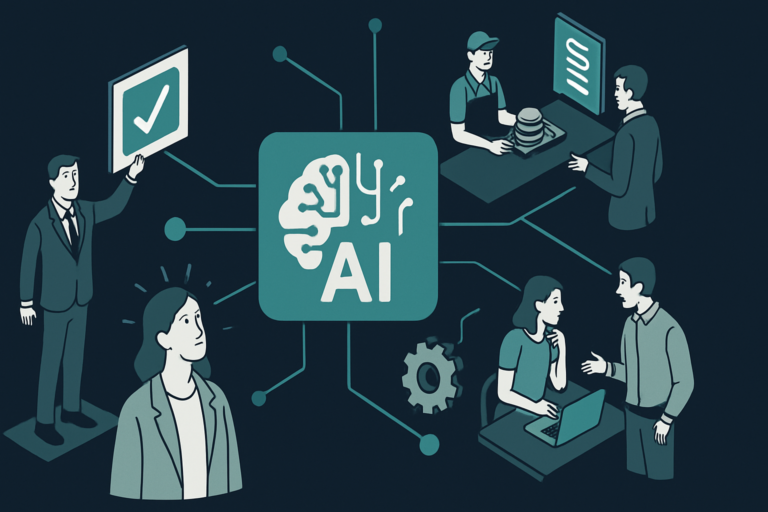
AI’s Reconfiguration of Industry and the Human Cost
What’s happening: AI technologies are fundamentally changing industry operations across various sectors, including political campaigns, fast food, and finance. For instance, $80 million was spent on AI-generated political ads during the 2026 midterms, with only 31% disclosing their AI nature, revealing a lack of transparency that can manipulate voters. In the hospitality sector, AI tools are automating labor management, raising concerns about job security and worker agency, while McDonald’s faces an antitrust lawsuit for potentially using AI to coordinate pricing, highlighting risks of anti-competitive practices.
Why it matters: The rapid integration of AI into these sectors can reinforce existing power imbalances and economic disparities, particularly as regulatory frameworks struggle to keep pace. Without proper oversight, the deployment of AI could lead to manipulated democratic processes, reduced job opportunities, and monopolistic behaviors that harm consumers. Establishing transparency and accountability in AI usage is crucial to ensure fair competition and protect democratic integrity.
Our take: The current trajectory of AI integration raises serious ethical concerns that merit immediate regulatory attention. Failing to address these issues may result in a future where profit is prioritized over public welfare, further entrenching inequality and eroding trust in both democratic and commercial systems.
Psychology

AI and the Democratization of Expertise: Implications for Cognitive Authority
What’s happening: Recent advancements in AI are transforming how expertise is distributed, enabling individuals to undertake complex tasks without traditional training. Companies like Google and Meta are creating virtual cell models for researchers, while open-source alternatives to Adobe’s Creative Suite allow more people to engage in creative work. This trend reflects a broader shift where AI reduces cognitive load, making specialized skills more accessible to the masses.
Why it matters: As AI tools become more prevalent, the perception of expertise is shifting, potentially diminishing the value of deep, domain-specific knowledge. This democratization of skills allows broader participation in fields once limited to experts, but it also raises concerns about the dilution of authority and trust in established institutions. The challenge lies in balancing the empowerment of individuals with the need for reliable standards and validation of AI-generated outputs.
Our take: The rise of AI democratizes expertise but simultaneously risks undermining the credibility of professional standards. As we embrace these new tools, it is crucial to establish frameworks that maintain the integrity of knowledge while promoting inclusivity and innovation.
That’s the digest for October 09, 2026.
Questions? Reach out at info@q52.ai.
q52.ai — Engineering Better Questions
