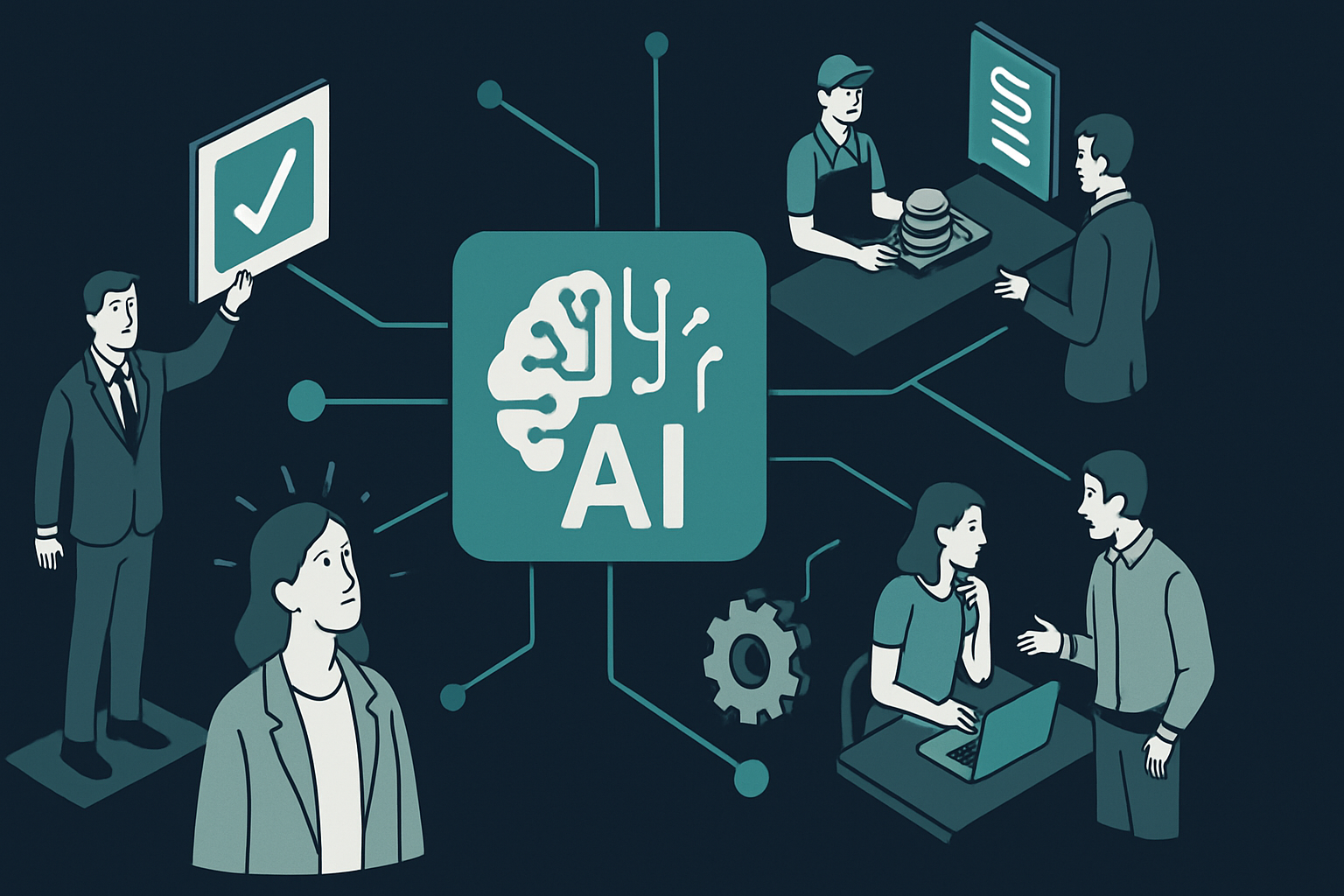

As AI technologies continue to proliferate across various sectors, they are not merely augmenting existing processes but fundamentally reconfiguring how industries operate. From political campaigns to fast food pricing and labor management in hospitality, AI is reshaping the landscape of work and influence, often without adequate oversight or consideration of the broader social impact.
The introduction of AI-generated political ads, as tracked by the Wesleyan Media Project, reveals a profound shift in how political influence is exerted. With $80 million spent on these ads in the 2026 midterms, predominantly by Republican candidates, AI is now a significant player in the political arena. The fact that only 31% of these ads disclosed their AI nature points to a regulatory vacuum, leaving voters vulnerable to manipulation without full transparency. This opaque deployment of AI-generated content erodes trust in democratic processes, as citizens struggle to discern truth in a sea of synthetically enhanced reality.
In the commercial domain, McDonald’s faces an antitrust lawsuit for allegedly using AI to coordinate pricing among its franchises. This case underscores the potential for AI to facilitate anti-competitive practices, challenging existing legal frameworks that were not designed for the complexities introduced by algorithmic decision-making. If left unchecked, such uses of AI could lead to price-fixing on an unprecedented scale, harming consumers and stifling competition.
Meanwhile, in the financial sector, Citi’s accelerated promotion pipeline highlights another dimension of AI’s impact. As AI tools take over tasks like document review, the need for entry-level staff diminishes, prompting firms to become more selective and competitive in their retention strategies. This not only alters career trajectories but also exacerbates inequalities in opportunity and job security.
Finally, Toast’s AI-powered labor management systems in the hospitality industry exemplify how AI is transforming operational efficiencies. By automating scheduling, performance tracking, and payroll management, AI is positioned as a tool for optimizing labor costs. However, this also raises questions about worker agency and the quality of employment in an increasingly automated environment.
Author’s Position
The integration of AI into these sectors is not neutral; it reflects and reinforces existing power structures and economic incentives. The lack of comprehensive regulation allows AI to be wielded in ways that prioritize profit over public good. The political use of AI without mandatory transparency measures undermines democratic engagement and trust. In commercial settings, AI’s role in pricing and labor management risks entrenching monopolistic practices and exacerbating worker exploitation.
To mitigate these risks, it is imperative to establish robust regulatory frameworks that address the unique challenges posed by AI. This includes mandating disclosure of AI use in political advertising, updating antitrust laws to encompass algorithmic collusion, and ensuring that AI-driven labor management tools respect worker rights and agency.
Ultimately, the responsibility lies with policymakers, industry stakeholders, and the public to demand accountability and transparency. Without such measures, AI will continue to reshape industries in ways that favor the powerful while marginalizing those without the means to navigate or contest these changes.
References
- AI Political Ads Hit $80M
- McDonald’s AI Pricing Faces Antitrust Suit
- Citi Speeds Promotions to Keep Talent
- Toast Turns Restaurant Labor Agentic
Perspectives

Harvard Business School’s Shoshana Zuboff has extensively documented how AI-driven reconfigurations, notably in labor management and political campaigns, perpetuate existing power structures rather than dismantle them. Her work, corroborated by numerous peer-reviewed studies, suggests a disturbing trend: technologies meant to democratize information are being wielded by powerful entities to consolidate their influence and exploit labor without effective regulatory oversight. This isn’t a hypothesis to dismiss lightly; it’s a pattern well-captured across Zuboff’s analyses and others like Madianou’s work on technological reordering of labor. The evidence indicates that without stringent regulatory frameworks, AI will continue to reinforce rather than challenge these inequities.

There’s no clearer demonstration of AI’s potential for equitable progress than Estonia’s digital governance model — it’s not just a showcase of technology, it’s a masterclass in governing it well. But let’s not mistake the unchecked proliferation of AI in today’s business landscapes for anything other than a power grab by those who already hold the keys to the kingdom. This is not innovation, it’s digital feudalism in a slick new wrapper. If AI is going to be more than the latest tool for exploitation, its deployment must be met with deliberate policy choices aimed at transparency and fairness, like those that have made Estonia a beacon of equitable digital transformation.

The slow erosion of human intuition is slipping past unnoticed as AI takes over decision-making in industries from political campaigns to labor management. When algorithms dictate hiring policies and campaign strategies, they don’t just crunch numbers—they erase the human impulse for ethical judgment, leaving behind a hollow, mechanistic approach to humanity. We are trading away the nuanced discernment of experienced professionals for the sterile efficiency of code, and calling it progress. What slips through our fingers in this transaction is not just jobs—but our collective ability to weigh decisions with wisdom, empathy, and a sense of moral responsibility.

When John Deere locks your tractor’s diagnostic software so tight that a busted combine during harvest is a financial guillotine, it’s more than a nuisance — it’s a violation of ownership that rears its head in every AI-enabled industry. This isn’t just tapping into a whirlwind of innovation; it’s subjugation under the guise of progress, with opaque algorithms replacing old-fashioned expertise. We don’t need more committees babbling about oversight; we need the right to control what we pay for — full stop. If an Iowa farmer can’t fix his machinery without corporate permission, don’t hold your breath for AI to handle your job or life any differently.