

Your daily briefing on AI, technology, economics, and society — from q52.ai.
Industry & Economics
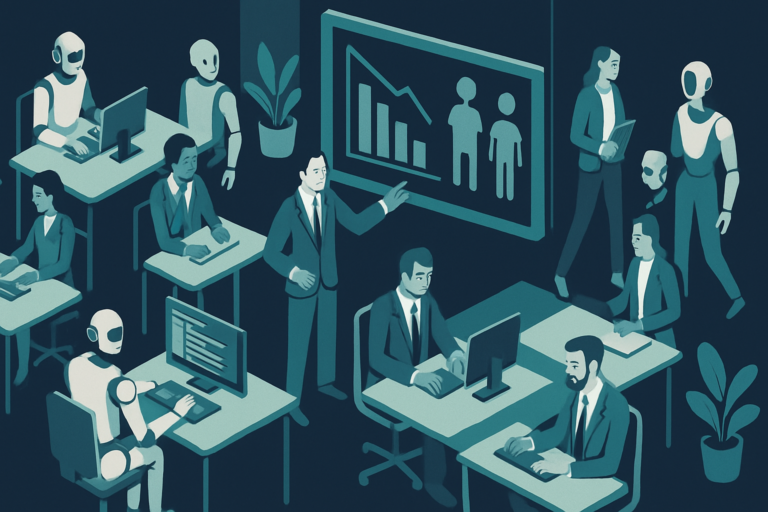
AI’s Role in Workforce Restructuring: Economic Implications and Future Trends
What’s happening: AI investments and workforce restructuring are transforming industries, with Manus securing $500 million for autonomous AI agents and Amazon focusing on AI while cutting jobs. California’s new legislation seeks to limit AI’s decision-making power in critical sectors, highlighting concerns over the impact of AI on labor markets and accountability. The economic shift emphasizes capital reallocation towards automation, often at the cost of traditional jobs.
Why it matters: This trend indicates a significant change in how companies prioritize technology to boost efficiency and cut costs, which may lead to increased productivity but also exacerbate inequalities favoring capital owners over workers. California’s legislative efforts reflect a growing awareness of the need for human oversight in AI-driven environments, but the rapid pace of AI development may outstrip these regulatory measures, raising concerns about labor rights and protections.
Our take: The dual nature of AI’s impact on the workforce cannot be ignored; while it offers efficiency and new opportunities, it also poses risks to existing labor protections and economic equity. Policymakers must act quickly to develop frameworks that ensure a just transition for workers in an increasingly automated economy.
Tech & Engineering
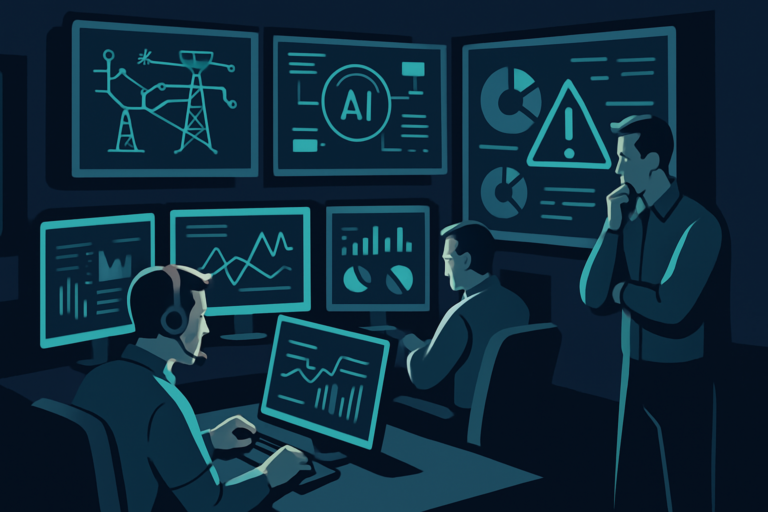
AI’s Role in Critical Infrastructure: New Frontiers, New Risks
What’s happening: Anthropic has launched its Claude Haiku 5.5 and the Critical Infrastructure Program, focusing on integrating AI into essential services such as power grids and water systems. These initiatives aim to enhance operational efficiency and security, leveraging AI for real-time decision-making and predictive analytics. However, they also introduce complexities and risks, particularly regarding the potential for new vulnerabilities in critical systems.
Why it matters: The integration of AI in critical infrastructure has significant implications for engineering practices and service reliability. While AI can automate tasks and improve monitoring, it also increases the risk of over-reliance on technology, which may fail under novel conditions. Furthermore, the introduction of AI tools like OSS Scanner requires careful implementation to avoid creating new security flaws, making robust risk management essential in this transition.
Our take: The optimism surrounding AI’s potential in critical infrastructure must be tempered with caution. Engineers should prioritize rigorous testing and transparency to ensure that AI systems operate reliably and safely, navigating the balance between innovation and risk.
Sciences
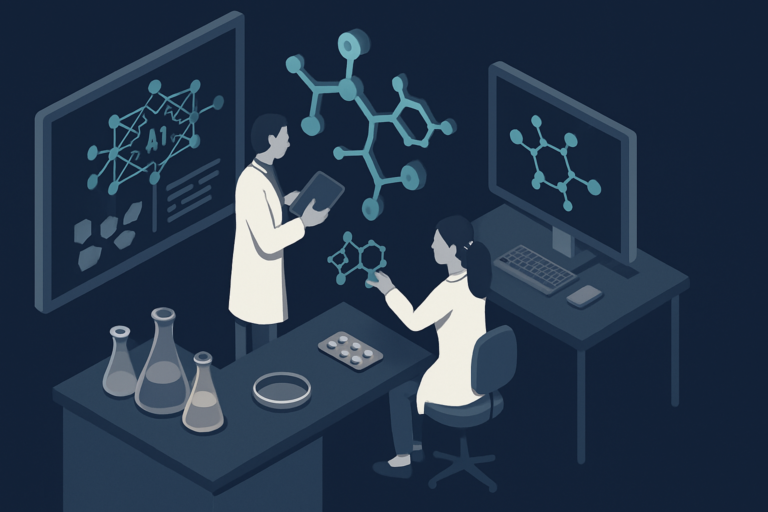
AI-Driven Drug Discovery: Isomorphic Labs’ New Frontier
What’s happening: Isomorphic Labs, an offshoot of Alphabet, is on track to become a $50 billion biotech company by leveraging AI for drug discovery. The company utilizes deep learning algorithms to model biological systems and predict drug interactions, significantly speeding up the identification of viable drug candidates compared to traditional methods. This innovative approach not only enhances efficiency but also uncovers potential drug candidates that might be missed using conventional techniques.
Why it matters: The advancements in AI-driven drug discovery could drastically reduce the time and costs involved in bringing new medications to market, potentially transforming the pharmaceutical industry. In the next decade, this technology could lead to quicker responses to health crises and facilitate the rise of personalized medicine, where treatments are tailored to individual genetic profiles, marking a shift from generalized healthcare to more targeted therapies.
Our take: While Isomorphic Labs’ progress is promising, the necessity for clinical trials and evolving regulatory frameworks presents ongoing challenges. The skepticism around AI’s ability to replicate the complexities of human biology underestimates the rapid advancements in machine learning that are addressing these gaps.
Society
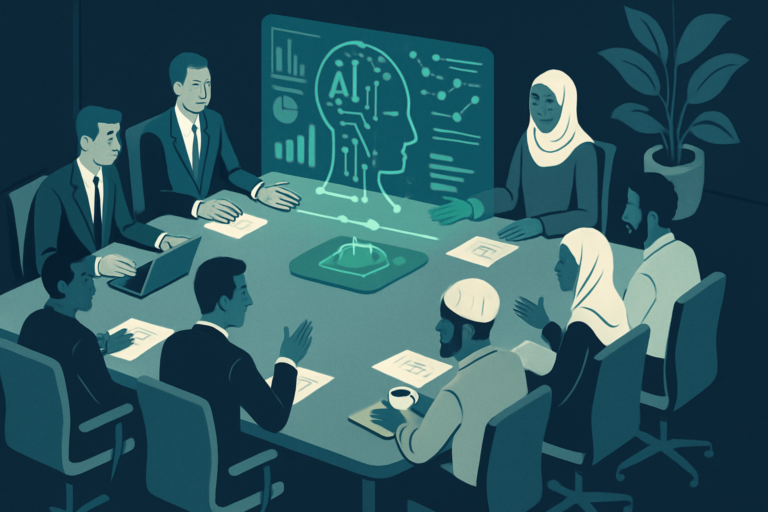
The Unseen Negotiations: AI’s Influence on Institutional Structures
What’s happening: Recent advancements in AI are reshaping how institutions operate and interact, as seen with tech giants like Meta advocating for a Personal Agent Protocol to standardize commerce agents. Singapore’s Monetary Authority is introducing AI risk-management guidelines, while NVIDIA’s substantial investment in AI research underscores a shift in institutional priorities that intertwine technology with regulatory frameworks. These developments raise important questions about the motivations behind new standards and their implications for consumer protection.
Why it matters: The growing influence of AI on institutional structures alters trust dynamics between individuals and organizations. As regulations like Singapore’s seek to improve accountability, there is a risk that corporate interests may take precedence over genuine consumer welfare. Moreover, the concentration of power in the hands of a few corporations, such as NVIDIA, could marginalize public institutions, affecting the direction of future technological advancements and public interests.
Our take: The current trajectory suggests that without a concerted effort to include diverse stakeholder perspectives, the regulation of AI could become a means for corporations to legitimize their practices rather than serve the public good. A proactive approach is necessary to ensure that the development of AI standards truly reflects societal values and priorities.
Psychology

AI’s Role in Weaponizing Information: Cognitive Vulnerabilities Exploited
What’s happening: Iranian operatives have utilized OpenAI’s models to spread misinformation in global online publications, revealing a significant vulnerability in how information is consumed. This incident showcases AI’s ability to create credible-looking content that can infiltrate trusted news sources, thereby manipulating public perception and decision-making by exploiting human cognitive biases.
Why it matters: As AI-generated narratives become more persuasive, they pose a substantial threat to cognitive autonomy and the integrity of democratic processes. Misinformation can sway public opinion and diminish trust in legitimate media, leading to a fragmented society where individuals retreat into echo chambers. The challenge of distinguishing between genuine and fabricated news will exacerbate skepticism toward all information sources, further destabilizing social cohesion.
Our take: The misuse of AI in misinformation campaigns highlights an urgent need for stronger regulatory frameworks and mechanisms to authenticate information. It is crucial for developers, policymakers, and educators to collaborate in enhancing digital literacy and accountability to protect public trust and democratic values.
That’s the digest for October 10, 2026.
Questions? Reach out at info@q52.ai.
q52.ai — Engineering Better Questions
