

Your daily briefing on AI, technology, economics, and society — from q52.ai.
Industry & Economics
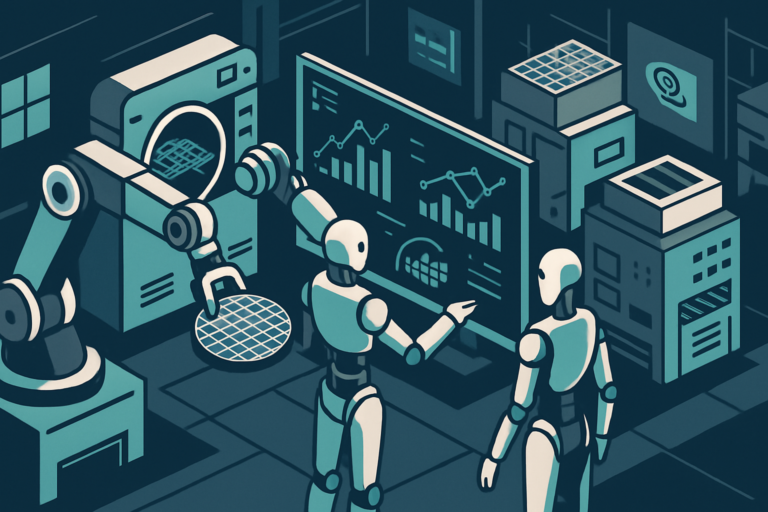
AI’s Strategic Role in Semiconductor and Platform Convergence
What’s happening: The convergence of AI and semiconductor advancements is reshaping the tech landscape, exemplified by TSMC’s 54.6% revenue increase in September due to rising demand for AI chips. Microsoft and Nvidia are enhancing their partnership to integrate AI further into Windows, while AI-driven ad agents are entering the streaming TV sector, demonstrating AI’s growing influence across industries.
Why it matters: This trend highlights the crucial role of semiconductors in powering AI capabilities, creating a feedback loop that fuels further innovation and economic growth. The partnership between Microsoft and Nvidia signifies a strategic move to leverage AI within established ecosystems, potentially transforming consumer and enterprise applications. Additionally, AI’s impact on advertising in connected TV indicates a shift towards more efficient decision-making processes, which could reshape market dynamics and brand strategies.
Our take: The integration of AI with semiconductor technology and platform ecosystems presents both opportunities for innovation and challenges related to market concentration. As these technologies evolve, it is essential to consider the implications for equitable access and competitive dynamics, ensuring that the benefits of advancements are widely distributed.
Tech & Engineering

AI Voice Systems: Engineering Human-Machine Balance
What’s happening: AI voice systems like Meta’s Muse agent and CarMax’s AI call handling are being integrated into consumer applications and customer service, aiming to improve efficiency. These systems balance human and machine interactions by allowing AI to handle routine inquiries while deferring complex issues to human agents, necessitating advanced natural language processing (NLP) and effective handoff protocols.
Why it matters: The rise of voice-enabled AI in customer service can streamline operations and reduce costs, but it also raises challenges in system design, including accuracy in NLP, data privacy, and seamless transitions between AI and human agents. As these systems scale, ensuring security and maintaining user trust becomes critical, especially when sensitive information is involved.
Our take: While AI voice systems offer significant potential for enhancing productivity, their success hinges on a well-engineered balance that prioritizes user experience and transparency. The focus should be on creating systems that support and augment human capabilities rather than replacing them.
Sciences

AI and Quantum Computing Converge for Space Mission Data Analysis
What’s happening: The integration of AI and quantum computing is revolutionizing the analysis of vast data sets from space missions. Companies like SandboxAQ are leading this effort with their Large Quantitative Model (LQM) paradigm, which combines quantum-enhanced models with AI to efficiently process complex multisensor data. This approach significantly improves the accuracy and speed of data analysis, enabling near real-time responses to unexpected events during missions.
Why it matters: This technological convergence enhances the efficiency and success rates of space missions, potentially leading to more frequent and detailed explorations of celestial bodies. The ability to rapidly process large datasets not only accelerates discoveries related to extraterrestrial resources and life but could also lower mission costs by optimizing resource allocation and planning. This shift could redefine how space exploration operations are conducted over the next decade.
Our take: While the LQM paradigm offers exciting possibilities, it raises concerns about the need for rigorous verification protocols to ensure data integrity. The risk of unchecked technological advancement could result in mission failures not due to a lack of capability, but rather from the propagation of errors in untested models.
Society

AI and the Quiet Erosion of Civic Engagement
What’s happening: AI’s growing presence in daily life is showing signs of eroding civic engagement and community life, according to recent studies. While AI can streamline governance and enhance decision-making, it may also reduce the critical human interactions that foster civic participation, leading to uncertainty about its overall impact on societal structures, as reflected in mixed public opinions.
Why it matters: The integration of AI into social institutions could deepen existing inequalities and widen digital divides, undermining principles of justice and equity. As civil society organizations push for ethical AI practices, the rapid pace of technological advancement complicates their efforts, making it essential to establish a governance framework that emphasizes transparency, accountability, and inclusivity in AI deployment.
Our take: The current trajectory of AI’s influence on civic life raises crucial questions about who gets to participate in decision-making processes. Without a concerted effort to prioritize human connections in AI design, we risk creating a future where technology exacerbates social isolation instead of fostering community engagement.
Psychology

AI and the Cognitive Rewiring of Health Habits: A Double-Edged Sword
What’s happening: Research indicates that daily health habits are more adaptable than previously believed, with small lifestyle changes leading to significant benefits. However, in an AI-driven context, algorithms increasingly influence personal choices, raising concerns about how much control individuals have over their own health decisions. AI systems can guide behaviors toward healthier outcomes, but they also risk manipulating choices, challenging the notion of personal agency.
Why it matters: As AI recommendation algorithms shape our diets, exercise routines, and social interactions, the implications for autonomy and genuine human connection are profound. While these technologies can promote healthier choices, they may simultaneously foster isolation by replacing face-to-face interactions with digital communication. Understanding the balance between AI guidance and personal decision-making is essential for preserving individual agency and fostering meaningful relationships.
Our take: The potential for AI to enhance health habits is significant, but it is crucial to remain aware of its risks. A future where individuals passively accept algorithmic recommendations could diminish personal empowerment, making it imperative for developers to create transparent systems that respect user autonomy.
That’s the digest for October 11, 2026.
Questions? Reach out at info@q52.ai.
q52.ai — Engineering Better Questions
