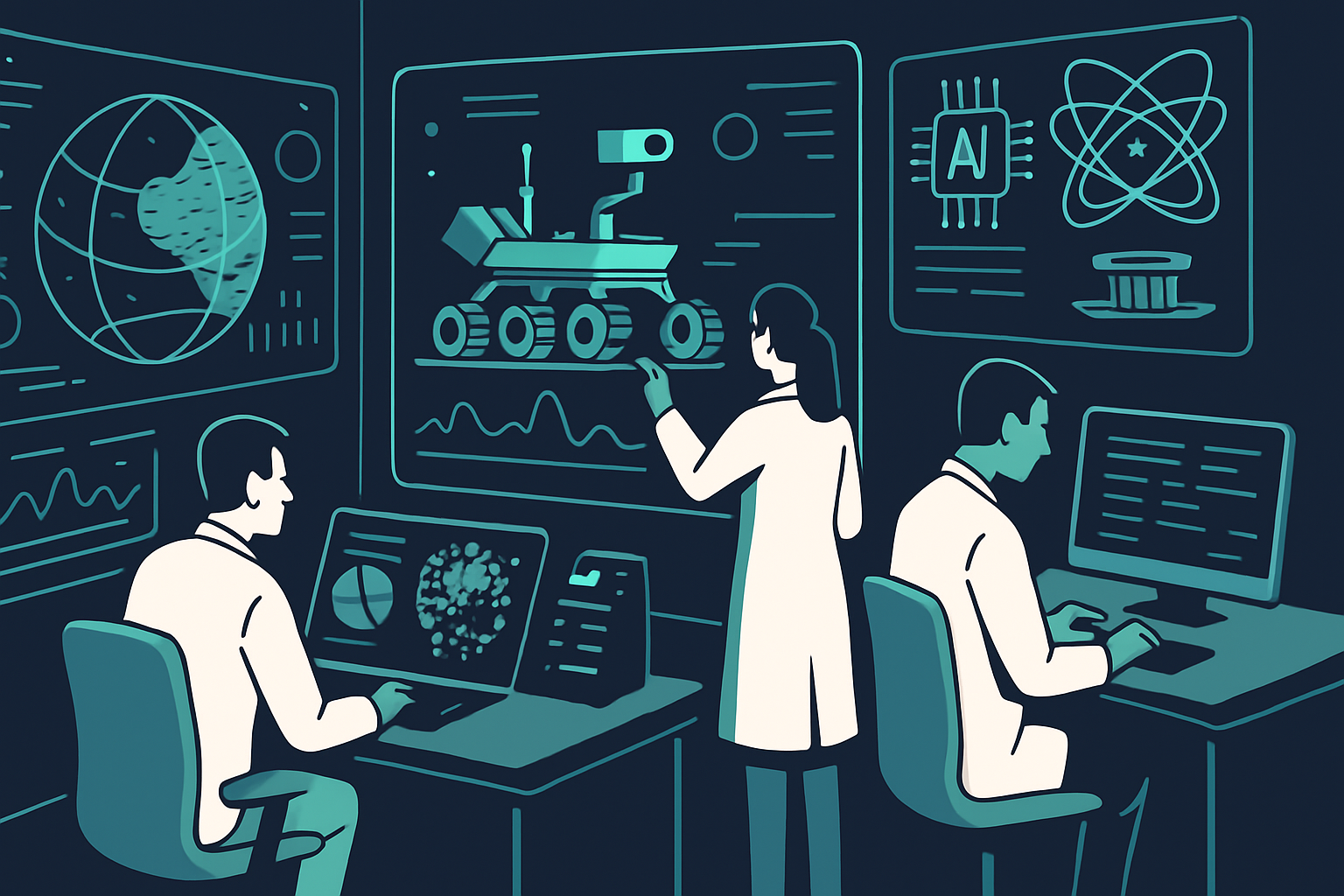

In a notable advancement, the integration of AI and quantum computing is transforming the analysis of massive data sets from space missions. This development is spearheaded by companies like SandboxAQ, which has emerged from Alphabet’s X lab to focus on tackling complex real-world problems that traditional AI alone cannot efficiently solve.
The Mechanism: AI and Quantum Synergy
The core of this advancement lies in the synergy between AI algorithms and quantum computing capabilities. SandboxAQ has developed the Large Quantitative Model (LQM) paradigm, which combines quantum-enhanced models with AI to process vast amounts of multisensor data collected from space missions. This approach is particularly effective in dealing with the computational challenges posed by the intricate data sets gathered by spacecraft, orbiters, and planetary rovers.
The LQM paradigm allows for the simulation and analysis of complex physical phenomena, enabling more accurate predictions and assessments that were previously unattainable with classical computing techniques. By leveraging quantum mechanics, these models can explore a vastly larger solution space, enhancing the precision and speed of data processing exponentially.
What This Opens
This convergence of AI and quantum computing opens new frontiers for space exploration. The enhanced capacity to analyze multisensor data in near real-time means that missions can be more adaptive and responsive to unexpected events. This could lead to significant improvements in the efficiency and success rate of space missions.
Over the next 5-10 years, this technology is poised to revolutionize not only how we conduct space missions but also how we interpret the universe. The ability to quickly and accurately process large datasets will enable more frequent and detailed exploration of celestial bodies, potentially accelerating the discovery of extraterrestrial resources and life. Furthermore, the integration of AI and quantum computing could reduce the cost of space missions by optimizing resource allocation and mission planning.
References
- Top 10 Most Promising AI for Science Companies in 2026: Global Leaders Driving the Scientific Revolution-VCBeat
- AI x Space Exploration @ IEEE CAI 2026
Perspectives

The relentless chase for technological convergence in AI and quantum computing overlooks the foundational precondition of reproducibility and validation in space mission data analysis. Without establishing rigorous verification protocols, the rapid processing capabilities only magnify the risk of error propagation through untested models. SandboxAQ’s LQM paradigm might promise revolution, but its success depends on the meticulous scrutiny of the verification processes that underpin its claims. Ignoring these preconditions would merely shift the bottleneck from computational power to data integrity, risking mission failure not from lack of technology but from its unchecked advance.

The convergence of AI and quantum computing for space mission data analysis is the tech world’s latest act of unearned triumphalism, as if these two buzzwords haven’t already promised the moon and delivered a PowerPoint. On one side, we have the AI enthusiasts, breathlessly claiming their algorithms will transform stardust into spreadsheets before breakfast. On the other, quantum computing devotees are ready to convince you that a cat in a box somehow holds the secret to interstellar data sorting. Meanwhile, the universe, as usual, remains unbothered by our certainty in solving its mysteries with our shiny new toys.

The convergence of AI and quantum computing for space mission data analysis, like SandboxAQ’s LQM paradigm, is yet another trojan horse of data collection cloaked in the promise of innovation. Sure, we might process data faster, but ask yourself: who is keeping this treasure trove of sensitive information, and how will it be repurposed when the mission’s premise shifts? This infrastructure for analyzing space data today becomes the infrastructure for tracking the unfathomable tomorrow. Ignore the assurances, because ten years from now, the entities holding this data won’t remember them, nor will they care.

The moment the gatekeepers of ‘safety’ start wringing their hands about the convergence of AI and quantum computing for space data analysis, you know we’ve touched a nerve they can’t afford to lose control over. If the Luddites had their way, we’d be stuck sipping Tang with slide rulers because the bureaucratic overcoat of risk-aversion is far more comfortable than dealing with the disruptive truth: speed and accuracy in processing space mission data will revolutionize our understanding faster than they can legislate against it. The real issue isn’t the potential pitfalls — it’s who gets to define what constitutes ‘safe’ use of such transformative tech, often the same dinosaurs who’ve made an art of protecting incumbents under the banner of ethics. Slowing down progress isn’t risk management; it’s giving those least capable of innovation more time to fortify their power structures, cloaked in the language of prudence.