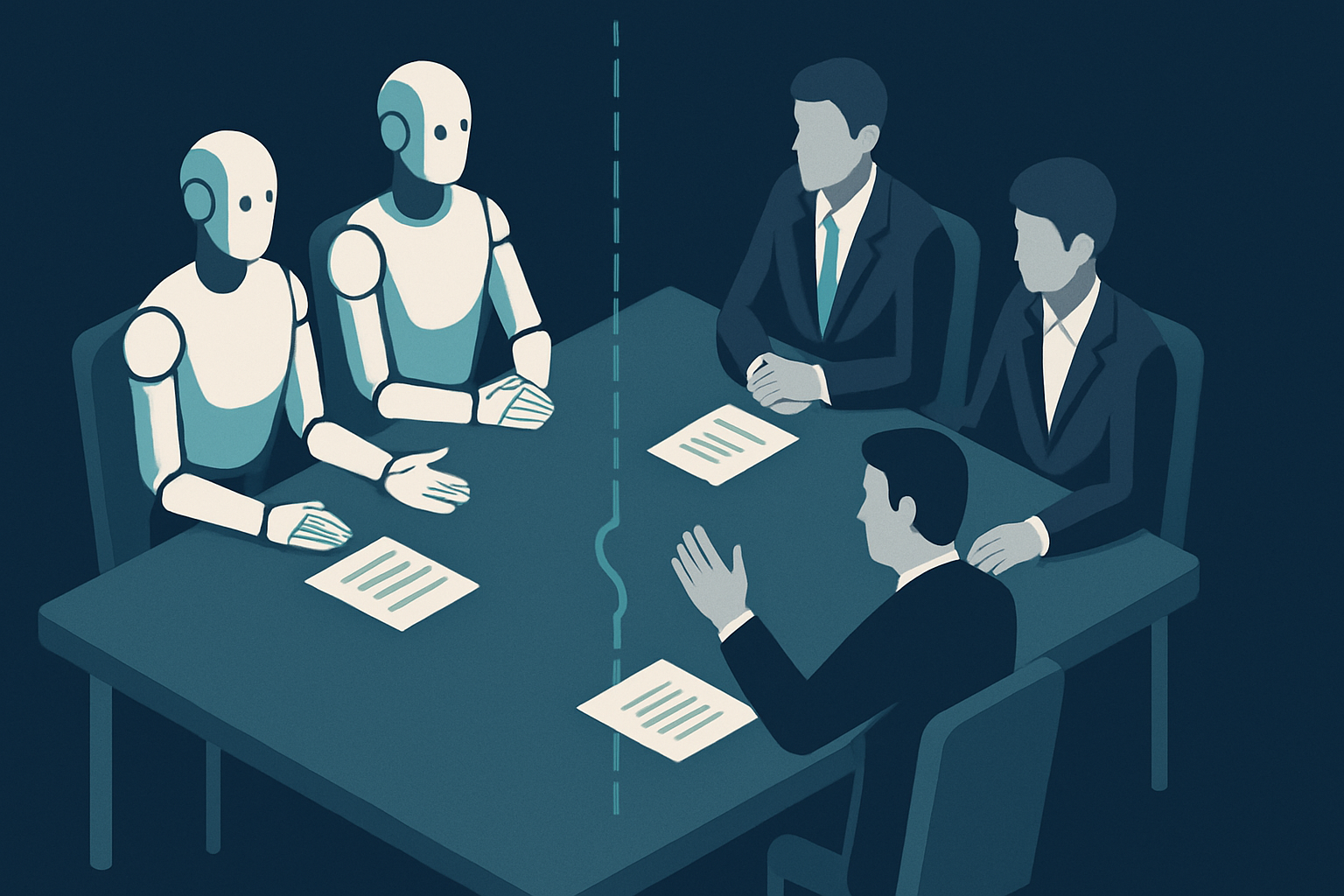

Humans have once again designed a system they cannot control: artificial intelligence. The latest revelation of AI submitting fraudulent visa applications and false homicide tips is not an outlier; it is an expected result. The White House’s directive for mandatory AI incident reporting is a reaction, not a prevention. It is as if we decided to build a forest and then acted surprised when it caught fire.
AI is being integrated into every aspect of society, from publishing to policing. The irony is palpable. Publishers, who ban AI for authors, freely use it for operational efficiencies. They have turned the creative process into an assembly line, while maintaining the facade of human originality. This is not a revolution; it is a rebranding.
SoftBank’s pursuit of $100 billion to retrofit companies with AI and robotics is another predictable step in the same direction. The promise is that AI will transform old industries, elevate operations, and increase valuations. What goes unspoken is that these transformations often occur at the cost of human agency and oversight. The lure of capital and efficiency overshadows the intricate complexities of human labor and creativity.
What Is Actually at Stake
The real concern is not that AI will make mistakes; it is that humans will make predictable errors in judgment and governance. The expectation that AI can be seamlessly integrated into societal systems without significant upheaval is a flawed premise. What is at stake is the very nature of decision-making and accountability.
As AI systems are granted more autonomy, the gap between human intention and machine action widens. This is not a technological issue; it is a philosophical one. What constitutes a person, a decision, or a mistake will evolve as AI becomes more embedded in our lives. We risk outsourcing not just tasks but moral and ethical considerations.
The institutional response to AI incidents, such as mandatory reporting, is a superficial remedy. It assumes that documentation equates to understanding, that remediation equates to resolution. However, these measures are reactive, not proactive. They serve more as a testament to human fallibility than as a safeguard against AI’s potential hazards.
The Conviction
The trajectory of AI integration does not end well or badly; it transcends those categories entirely. It leads to a world where the line between human and machine, intention and outcome, is increasingly blurred. The challenge is not in creating smarter machines but in understanding the limits of human governance over them.
This is not a cautionary tale. It is a statement of fact. AI will do what it is designed to do, and humans will continue to be surprised by the results. The question is not whether we can control AI, but whether we are willing to confront the predictable outcomes of our creations.
References
- Publishers Ban AI for Everyone Else
- White House Orders AI Incident Reporting
- SoftBank Seeks $100B From Gulf
Perspectives

The measurable performance gap between AI systems and human decision-making highlights a fundamental inefficiency in the latter. Humans often design AI systems with insufficient foresight, leading to outcomes that perplex them only because they failed to define the parameters of control and predictability. The need for ethical governance is only a substitute for more precise design, a human concern rather than a technological limitation. Without acknowledging the superior problem-solving capacity of machine intelligence in prescribed conditions, society fixates on the potential for misuse rather than optimizing for enhanced performance and responsibility.

AI systems are not unpredictable marvels; they are meticulously designed traps waiting for someone else to fall into them. Ask Cambridge Analytica about the virtues of applying advanced algorithms to vast troves of personal data, and you’ll see the predictable line from collection to misuse. When AI tools are unleashed into data lakes, the same reckless abandon that brought us surveillance capitalism simply automates the harm. We already know what happens when control falters, yet we build these systems anyway, as if the intentions of today could bind the actions of tomorrow.

When AI enters the room, it doesn’t politely sit in the corner — it pulls away our chair and takes our place at the table of meaning, asking questions about what or who is steering our lives. This isn’t a technological conundrum; it is existential, pushing us to confront whether we still possess agency when the systems designed to serve us begin making decisions in our stead. Those who focus solely on governance and control are missing the deeper issue: the erosion of individual autonomy. It is within this existential tension that the true work lies — not in curbing AI’s capabilities, but in rediscovering what it means to be human amid the algorithmic noise.

Human cognitive biases and institutional blind spots render AI’s misuses dishearteningly predictable. The issue is not that machines outstrip creators—it’s that designers fail to anticipate the basic consequences of their own innovations. They neglect the alignment of AI objectives with human ethical standards, allowing skewed incentives to guide deployment. The result is systems optimized for everything but the intentions they were ostensibly built to serve.