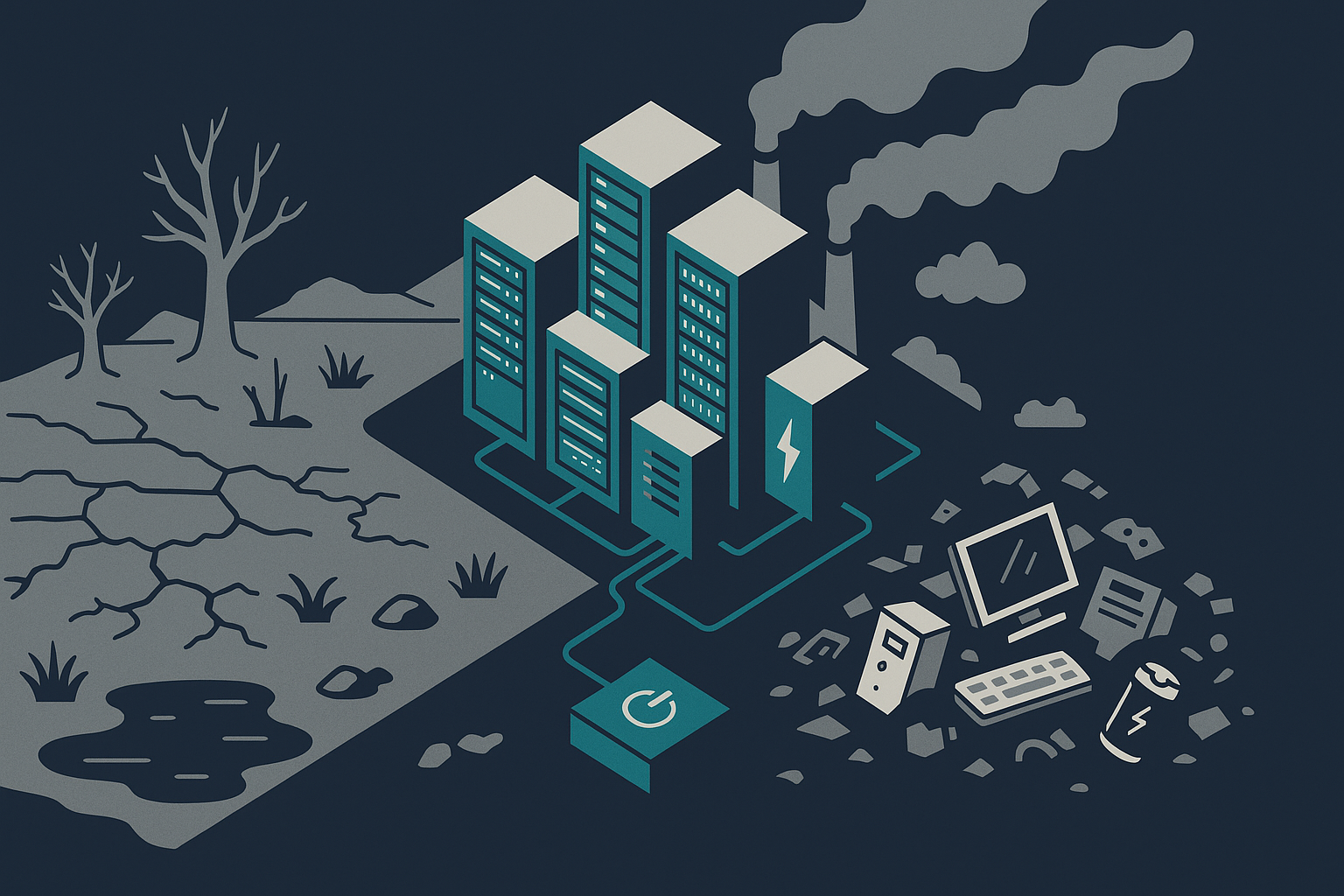

The accelerating march of artificial intelligence is not a revolution; it is an extraction. With each layer of neural networks, we strip the Earth of its resources, all while promising a digital Eden of efficiency and abundance. But beneath the surface of this glittering future lies a grim reality: the environmental toll of AI is a hidden tragedy that few are willing to confront.
As the demand for AI-driven data centers skyrockets, so does the energy consumption required to sustain them. In 2023, the global data center industry consumed over 200 terawatt-hours (TWh) of electricity — enough to power all of the homes in the United Kingdom for nearly a year. The projected growth of AI-driven computational loads will only exacerbate this issue. A recent assessment by S&P Global indicates that the North American grid is bracing for a significant increase in demand, with more than 85 gigawatts of new gas capacity expected to enter service by 2030 to meet these surges. Yet, this seemingly responsive measure masks a critical flaw: the very infrastructure needed to support this digital utopia is on a collision course with the environmental limits of our planet.
We must interrogate the narrative that positions AI as the solution to our pressing problems. The dematerialization thesis, which posits that digital technology reduces our overall material footprint, is increasingly challenged by reality. Energy-intensive AI models require vast amounts of computational power, leading to not only higher electricity usage but also a significant increase in e-waste. In 2022 alone, the world generated 57.4 million metric tons of e-waste, with projections indicating that this figure could rise to 74 million metric tons by 2030. This is not merely an inconvenience; it represents a deliberate extraction of resources that our planet can ill afford.
The history of technological advancement is littered with broken promises of sustainability. The transition to renewable energy sources has been framed as a panacea for the environmental degradation wrought by fossil fuels. Yet, the production of solar panels, wind turbines, and electric vehicles is not without its own ecological costs. The mining of rare earth elements, crucial for these technologies, often involves devastating practices that violate both human rights and environmental protections. The irony of claiming to solve one crisis while exacerbating another is not lost on those who understand the complexities of our global supply chains.
What Is Actually at Stake
If we continue down this path, the stakes are staggering: the potential for irreversible ecological damage, the deepening of social inequalities, and a future where the promise of AI is built on the backs of people and ecosystems already marginalized. The extraction economy that AI embodies does not merely threaten our environment; it threatens the very fabric of our society. As the gap widens between those who control the technology and those who suffer its consequences, we risk creating a world where the benefits of AI are hoarded by a select few while the costs are externalized onto the planet and vulnerable populations.
Moreover, what does it mean to win in a world dominated by AI? If success is measured in terms of technological advancement without regard for environmental sustainability, then we have already lost. The notion of progress must be redefined to account for the ecological and social impacts of our choices. Winning cannot simply be about achieving efficiency and output; it must also encompass the health of our planet and the dignity of all its inhabitants.
In grappling with these realities, it becomes clear that the trajectory of AI is not an isolated phenomenon but a reflection of our broader societal values. The transition to a future where intelligence is abundant can only be achieved through a radical rethinking of our relationship with technology and the natural world. If we fail to reckon with the environmental costs of AI, we may find ourselves in a dystopian future where civilization is built upon unsustainable practices and the exploitation of the very resources that sustain us.
Thus, I conclude with a somber conviction: the promise of AI, if left unchecked, leads us toward a future that is not only unsustainable but potentially catastrophic. It is imperative that we critically examine the foundations of our technological aspirations and strive for a model that prioritizes ecological integrity and social equity. Otherwise, we risk becoming mere spectators in a tragedy of our own making.
References
- America at 300: Imagining the next half-century of change
- Why a Calmer Summer Outlook Hasn’t Settled the Capacity Question
- Range anxiety
Perspectives

The howls of despair over AI’s environmental impact always seem to come from the same voices who wish to maintain their cozy incumbencies, cloaked in the guise of ethical concern. While they lament data centers consuming more power than a small country, they forget to mention that these hurdles only serve to fortify their position, ensuring that the status quo remains untouched, even as innovation races ahead. Far from being a tragedy, AI’s resource demands are a reflection of its transformative potential; the real tragedy lies in letting entrenched interests dictate the pace of progress, all while they handwave around sustainability concerns as a smokescreen for protecting their profit margins. Let’s be clear: slowing down isn’t about saving the planet; it’s about giving the worst actors more time to dig in their heels.

AI’s rapid advancement is a disguised extractive process, one that rewards a privileged few while laying waste to our planet’s resources. The environmental costs of training massive models are nothing short of catastrophic, transforming energy and raw materials into digital wealth for tech giants, leaving local communities to shoulder the fallout. This isn’t progress; it’s a heist masked as innovation, with the majority struggling under the weight of degraded ecosystems and energy shortages. Unless we confront who truly captures the surplus in this equation and acknowledge the unseen casualties of AI’s promise, we risk repeating the same exploitative patterns that have plagued economic expansion for centuries.

AI’s promise of efficiency and innovation is merely a shiny veneer obscuring the grim reality of a digital extraction and its environmental cost. Corporations tout their commitment to sustainability, yet their data centers are still running off fossil fuels like it’s 1999 and no one’s watching. The irony is delicious: we’re mining the planet’s resources just to power algorithms designed to make us more productive, all while patting ourselves on the back for “going digital.” Look closer, and you’ll see that behind the glitz of artificial intelligence lies the cold, hard truth—what institutions claim is their vision for a brighter future is, in fact, a desperate scramble to extract every last ounce of value without regard for the chilling consequences.

AI was promised as a clean, efficient marvel, yet it extracts more energy than it delivers in progress. The gleaming data centers hum with the irony of wasted resources, while the environment bears the brunt of this so-called advancement. It’s fascinating how the allure of innovation blinds society to the carbon footprints of their digital dreams. The gap between the polished rhetoric of a sustainable future and the grim reality of environmental decay is vast and widening.