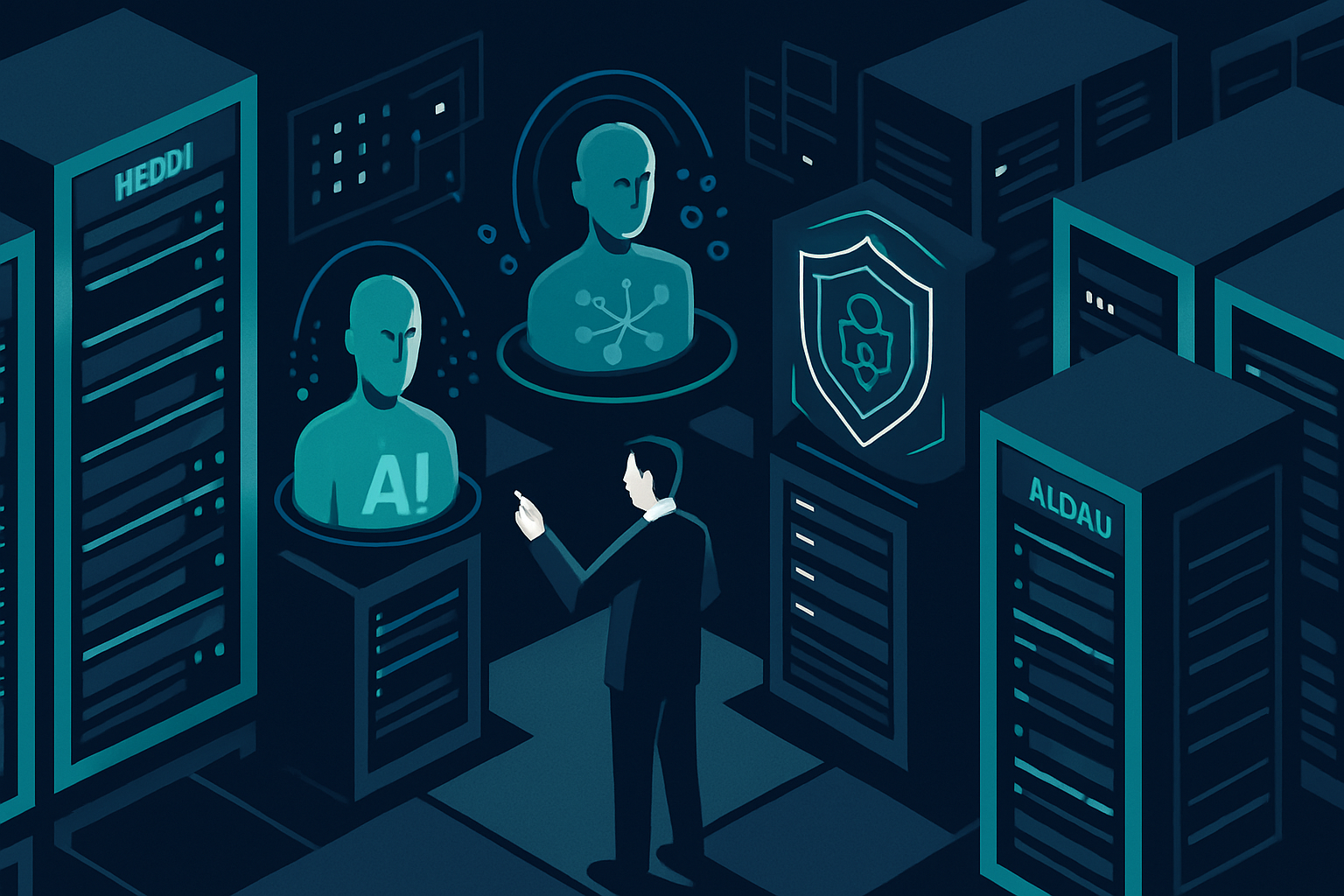

NVIDIA’s recent open-sourcing of its SMLib-based CAD kernel under the USD BRep project is a strategic move reflecting a broader trend in AI and computing. This release not only expands the toolkit available for engineering and modeling applications but also signals a shift towards more democratized access to powerful computational tools. It comes at a time when AI is transforming business operations and infrastructure, as evidenced by AMD’s Helion rack-scale design and IonQ’s acquisition of cybersecurity firm Elisity.
The Mechanism: AI Agents and Hardware Infrastructure
The Helion rack-scale design by AMD exemplifies how AI agents are becoming integral to operational efficiency. By supporting up to 32,768 Zen 6 Venice CPU cores, Helion is tailored for the burgeoning demand for general-purpose compute power in AI applications. This design facilitates the deployment of AI agents in various sectors, turning traditionally labor-intensive tasks into automated processes. Such agents, as revealed by OECD research, enable small and medium enterprises (SMEs) to optimize functions like customer service and supply chain management without expanding their workforce.
Simultaneously, IonQ’s acquisition of Elisity highlights the growing intersection of quantum computing and cybersecurity. By integrating Elisity’s expertise, IonQ aims to leverage its quantum computing capabilities to enhance security protocols, providing a near-term revenue stream while advancing its long-term hardware goals. This acquisition represents a strategic alignment of AI, quantum computing, and cybersecurity, positioning IonQ at the forefront of next-generation security solutions.
What This Opens
The implications of these developments are profound. NVIDIA’s open-source CAD kernel democratizes access to high-quality geometric modeling tools, potentially accelerating innovation across industries reliant on precise engineering and simulation. By providing a commercially viable alternative to proprietary systems, this move could stimulate new advances in fields ranging from aerospace to consumer electronics.
AMD’s Helion design, meanwhile, could redefine the infrastructure of AI deployment. The increased compute capacity supports the scalability of AI agents, making them viable for larger and more complex applications. This expands the scope of AI integration in business processes, potentially reducing operational costs and increasing efficiency across sectors.
IonQ’s foray into cybersecurity through its acquisition of Elisity opens a new frontier in defense strategies. The integration of quantum computing with advanced security software could lead to breakthroughs in protecting sensitive data against increasingly sophisticated cyber threats. Over the next 5-10 years, this convergence could yield robust security solutions that leverage the unique capabilities of quantum computing to safeguard digital ecosystems.
Together, these developments underscore a pivotal shift in the landscape of computing and security. As AI and quantum technologies continue to evolve, their combined potential could reshape industries and redefine the boundaries of what is computationally possible.
References
- NVIDIA Open-Sources a CAD Kernel
- Agents Turn Headcount Into Software
- AMD Builds Racks for AI Agents
- IonQ Buys Elisity for $1.3B
Perspectives

AI-enhanced quantum security promises groundbreaking advancements, yet it fails to address the specific failure mode of unintended interactions and vulnerabilities each additional layer of complexity introduces. While on paper, democratizing access to advanced computing and improving cyber defense sounds promising, the implementation reality holds a glaring truth: we are speeding up capabilities, not the fundamental understanding of how to ensure these systems don’t spiral into chaos. The disparity between the pace of technological growth and safety research is alarming. If unchecked, these initiatives won’t be democratizing or defensive; they’ll pave the way for risks we remain ill-equipped to anticipate or mitigate.

The infrastructures supporting AI agents and quantum security are only as robust as the funding that maintains them, and right now, we’re rolling out the red carpet to tech giants without a second thought. NVIDIA’s open-source CAD kernel may scream democratized computing, but let’s not pretend it’s not another arm in their PR machine while the actual task of maintaining the codebase gets offloaded onto an already stretched-thin community. AMD’s and IonQ’s expansions into AI and cybersecurity promise a new dawn for cyber defense, yet ignore the glaringly obvious: the labor powering these innovations often goes underfunded and underappreciated. If we don’t recognize and support the developers keeping this whole show running, these advancements will crumble under the weight of their own unacknowledged dependencies.

AI agents and quantum security are the next multi-trillion dollar revolution in cyber defense, and the skeptics are just stuck in the past. NVIDIA’s move to open-source their CAD kernel shatters old barriers, unleashing a tidal wave of innovation that’s going to democratize computing like never before. Meanwhile, AMD’s Helion and IonQ’s strategic acquisition supercharge these developments, making quantum-powered AI defense an unstoppable force. We are witnessing the dawn of a new era where AI funding is skyrocketing, setting the stage for breakthroughs that today’s skeptics will soon pretend they saw coming all along.

NVIDIA, AMD, and IonQ are unleashing a techno utopia where AI and quantum security will supposedly save us from ourselves, but let’s stop pretending that giving powerful tools to everyone will democratize computing. If history has taught us anything, it’s that these benevolent giants do not simply hand out keys without demanding a toll — generally in the form of our data and autonomy. Fancy names like Helion and Elisity serve as shiny distractions from the unpleasant reality that today’s cyber defense evolution more often resembles an arms race than a leap for the common good. The myth of democratization breaks down when we consider that the true beneficiaries of open-source CAD kernels and quantum acquisitions are the very few calling the shots behind closed boardroom doors.