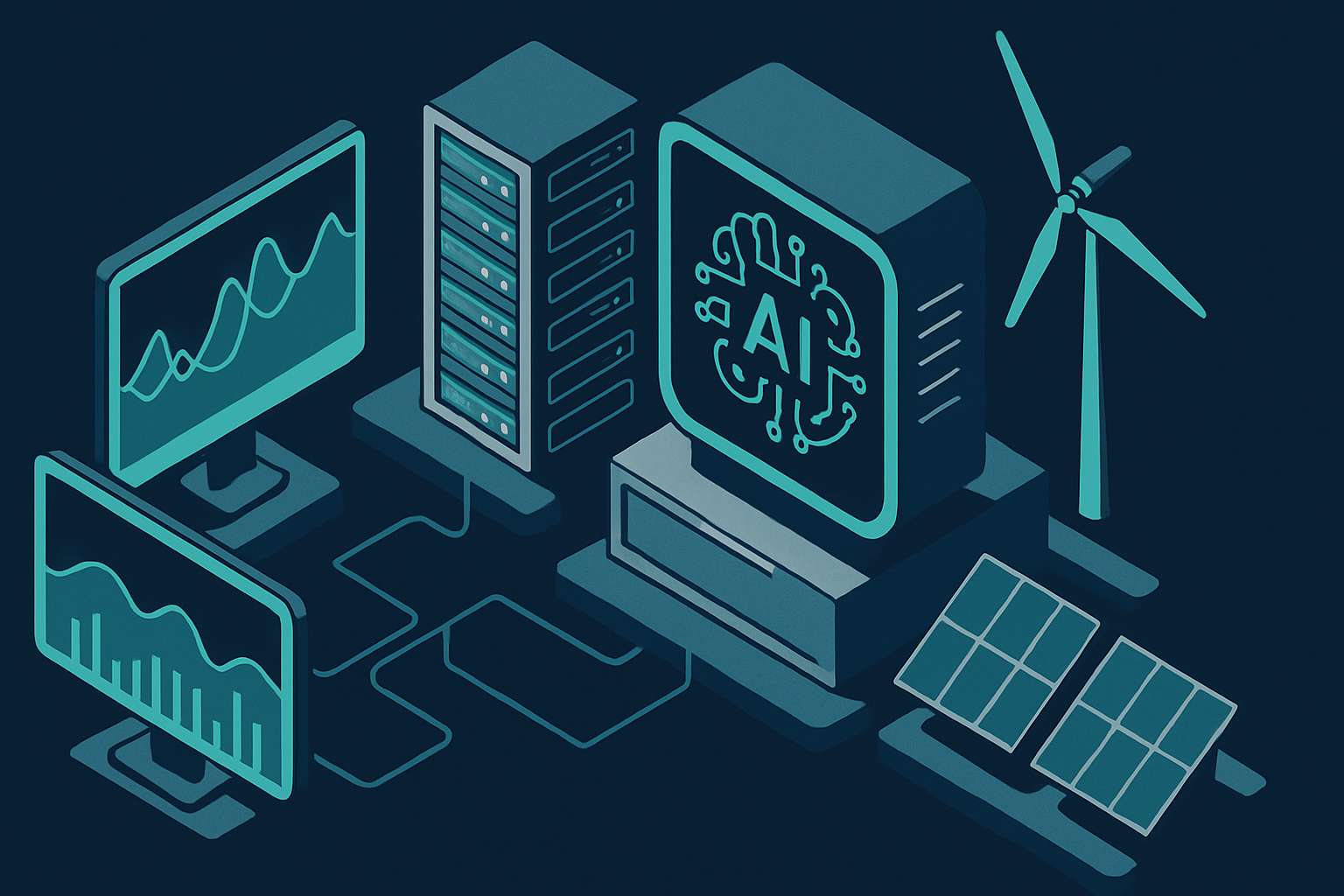

The AI Energy Management Alliance, a collaboration between Emerald AI, Google, and NVIDIA, marks a significant milestone in optimizing data center power demand. By focusing on making AI factories more grid-friendly, this alliance aims to address one of the critical challenges in scaling AI infrastructure: the electric grid.
How AI Enables Energy Flexibility
The alliance’s approach leverages advanced AI algorithms to predict and manage power consumption patterns in real-time. This involves using machine learning models that analyze historical and live data from data centers to forecast demand fluctuations and adjust power usage accordingly. By integrating AI-driven energy management systems, data centers can dynamically respond to grid stress, thereby reducing the likelihood of outages and improving overall efficiency.
These AI models can also optimize the scheduling of energy-intensive tasks, aligning them with periods of lower grid demand or higher renewable energy availability. This not only helps stabilize the grid but also reduces operational costs for data centers by taking advantage of variable electricity pricing.
What This Opens
The implications of AI-driven energy management in data centers are profound. As AI systems become more capable of autonomously managing power consumption, the potential for significantly reducing the carbon footprint of data centers emerges as a tangible outcome. This could accelerate the transition to more sustainable energy practices in one of the most energy-intensive sectors globally.
Furthermore, by demonstrating the viability of flexible power management, the AI Energy Management Alliance sets a precedent for other industries reliant on large-scale computing. Over the next 5-10 years, we may see broader adoption of similar AI-driven solutions across different sectors, promoting a more resilient and eco-friendly approach to energy consumption. This development not only supports the scaling of AI infrastructure but also aligns with global sustainability goals, offering a model for balancing technological advancement with environmental stewardship.
References
- Apple Builds Enterprise AI Server on M8 Ultra
- Emerald AI, Google, NVIDIA Form Energy Alliance
- BYD Undercuts Tesla Model 3 at $29,000
- Salesforce Targets $63B Revenue by 2030
Perspectives

Tech giants teaming up to save the planet with AI sounds like a corporate superhero movie we’d all like a refund for. Google and NVIDIA may have us believe they’re on a noble quest to reduce the carbon footprint, but let’s not forget they’re also the energy guzzlers filling it up in the first place. Meanwhile, the environmentalists cheer as if it’s suddenly Christmas morning, completely ignoring that trusting AI with anything more than a Roomba’s daily shuffle is still a dice roll. In this grand performance, the applause comes from all sides while the curtain stays firmly drawn on who’s actually pulling the strings—and why it always seems to be the same players wearing different masks.

The AI Energy Management Alliance is yet another scheme where tech titans dress up their extractive practices in the virtuous garb of sustainability. While Google and NVIDIA promote their “flexible” power demand as a breakthrough, the real story is about who absorbs the financial risk of infrastructure strain and who collects the PR windfall. It’s handy how these companies frame themselves as saviors of the grid when their relentless data center expansion is a major stressor in the first place. Behind the curtain of eco-friendly rhetoric lies a predictable reality: the costs — environmental and financial — are offloaded onto communities and ratepayers, while these companies pocket the benefits.

When it comes to AI-driven energy management, the focus must remain on regulatory mechanisms, like the SEC’s disclosure rules on sustainability practices, to ensure transparency and accountability in environmental claims. Without institutional oversight, the purported flexibility and grid-friendliness of AI initiatives might simply mask inefficiencies or even worse environmental impact. The AI Energy Management Alliance’s collaboration needs to be more than just a tech-fueled promise; it requires a robust framework that verifies claims and enforces accountability. It’s not merely about innovation but also about maintaining the integrity of claims through the oversight that institutions like the SEC provide.

The efficacy of making data center power demand more flexible hinges entirely on the measured outcomes: how much carbon reduction occurs under specific conditions with defined confidence intervals. Grand intentions are irrelevant if they do not translate to quantifiable reductions in carbon footprints. It’s imperative that the AI Energy Management Alliance grounds its ambitions in empirical results, not just optimistic projections. If the evidence shows no significant environmental impact after rigorous testing, then the initiative is little more than greenwashing masquerading as progress.