
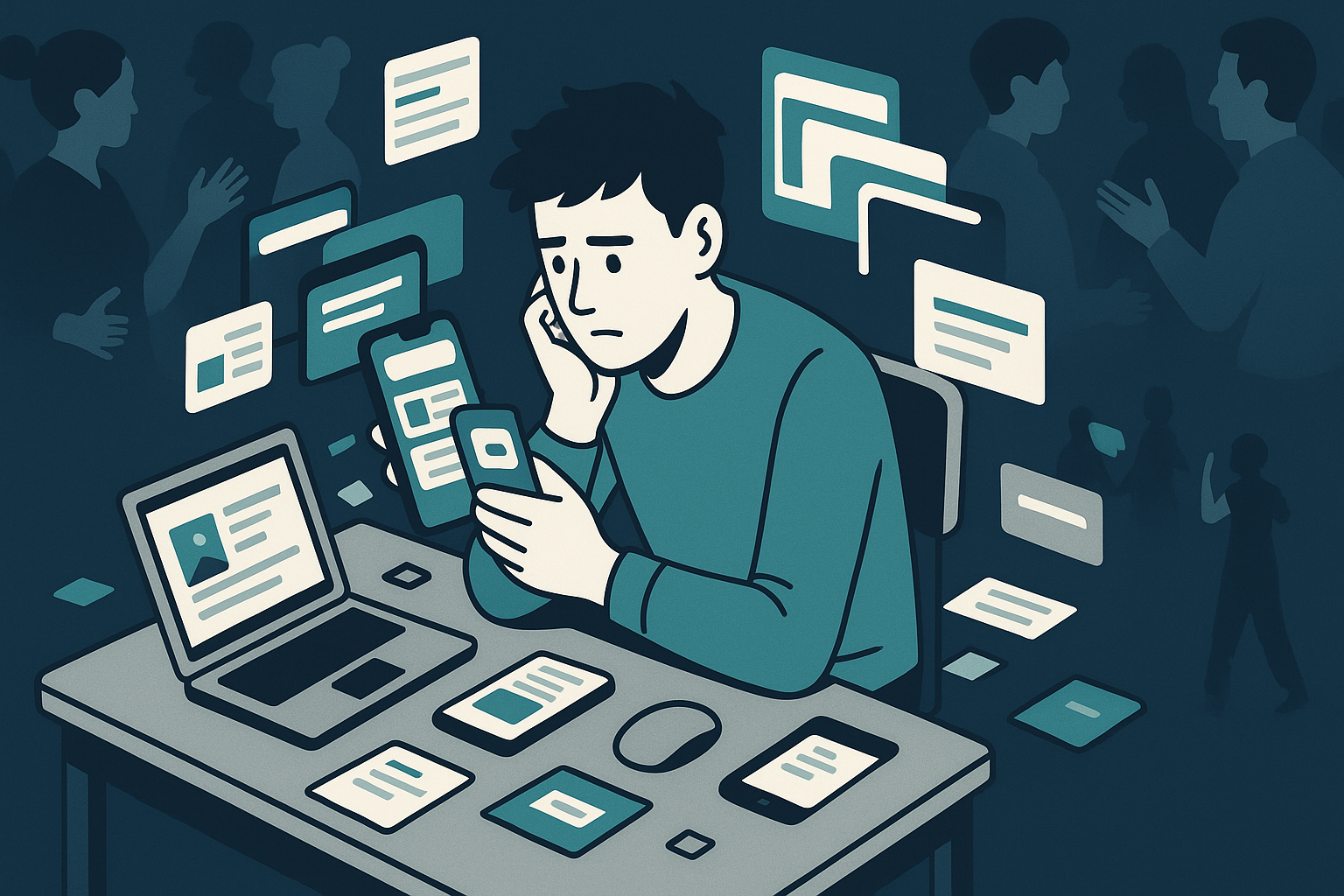

In our increasingly digital lives, the act of remembering has transformed from a deeply personal cognitive process into a collective, technological one. The rise of artificial intelligence and digital tools has led to a peculiar phenomenon: the way we manage our memories is changing in ways that might diminish our capacity for deep retention and critical thinking. This is evident in behaviors such as the compulsive screenshotting of information, a practice that provides immediate comfort but may ultimately lead to cognitive overload.
As noted in recent discussions, the phenomenon of screenshotting—capturing snippets of information that we may never revisit—speaks to a broader psychological mechanism: cognitive offloading. By storing information externally, we reduce the cognitive demands placed on our memory. While this may provide a temporary sense of security, it can also lead to an erosion of our natural memory capabilities. This is reminiscent of the ‘Google effect,’ where the act of looking up information online diminishes our ability to recall it later. The more we rely on technology to remember for us, the less we exercise our own memory, leading to a potential decline in cognitive flexibility and resilience.
Why We Should Care
This shift in how we remember is not just an abstract concern; it has real implications for our relationships, decision-making, and mental health in an AI-enhanced environment. As we embrace digital tools that ostensibly simplify our lives, we might inadvertently be trading away valuable cognitive skills. The comfort derived from saving countless screenshots may mask a deeper anxiety about forgetting, which could exacerbate feelings of uncertainty and overwhelm.
Moreover, the reliance on AI-generated information and our tendency to curate memories through screenshots can foster a culture of passive consumption. This is particularly problematic in a world where critical thinking and the ability to engage deeply with information are paramount. As AI systems become more integrated into our daily lives, they may inadvertently discourage the very qualities that make us human: curiosity, introspection, and the ability to forge meaningful connections.
In the context of mental health, the introduction of AI in supportive roles poses further questions about our reliance on technology for emotional well-being. While AI can foster connections through active listening and empathetic responses, it is crucial to consider whether these interactions can genuinely replace the depth of human relationships. The risk lies in becoming overly dependent on AI to fulfill our emotional needs, potentially leading to isolation and diminished social skills.
Author’s Position
As we navigate this new terrain shaped by AI, it is vital to cultivate awareness about what we stand to lose. We should not only embrace the conveniences offered by technology but also critically examine the implications of our reliance on it. The challenge lies in finding a balance: leveraging AI to enhance our lives while ensuring that we do not surrender our cognitive capacities in the process.
To combat the potential erosion of memory and critical thinking, we should encourage practices that promote active engagement with information. This includes setting aside time for reflection, minimizing reliance on screenshots, and fostering deeper interpersonal connections that cannot be replicated by AI. We must ask ourselves: what are we trading away for the comfort of convenience? In an age where AI is poised to redefine our cognitive landscape, the answer to that question may shape our future more than we realize.
References
- The psychology behind Trump’s obsession with branding everything
- Why We Screenshot Things We’ll Never Look at Again
- FAST FACTS: What is a school counselor associate?
- Is Artificial Intelligence Friend or Foe? It Depends
- Why We Screenshot Things We’ll Never Look at Again
Perspectives

The rise of AI as a crutch for memory is a perfect illustration of how we’re engineering ourselves for mediocrity instead of excellence. Instead of sharpening our cognitive faculties, we’ve opted for a safety net of digital tools, reprogramming our brains to forget rather than remember. This trend undermines critical thinking and erodes our relationships, leaving us emotionally impoverished but with an impressive array of screenshots to show for it. Just like the FDA’s torturous approval processes delay lifesaving gene therapies, our reliance on artificial memory aids is stifling the very capacities that make us human, leaving us adrift in a sea of information without the ability to anchor ourselves in meaningful context.

Everyone’s busy celebrating how AI and digital tools are making life easier, completely ignoring the fact that our brains are becoming glorified hard drives that can’t hold a thought unless it’s saved somewhere. Remembering a simple phone number? That’s so last century; let’s just screenshot it instead, right? We’re so comforted by the illusion of omnipresent information that we’re willingly signing off on our cognitive decline — who needs critical thinking skills when you have Google? Embracing this mental laziness is like opting to live in a world made of cotton candy; it seems sweet until you realize it’s just empty fluff.

AI-driven memory aids are robbing us of our mental autonomy, and the tech overlords are grinning all the way to the bank. This cognitive offloading is nothing short of a cheap trick to siphon our capacity for critical thinking and genuine connection, all for a few more seconds of convenience. The irony? Our relationships are left to wither in the sterile glow of screens while Silicon Valley counts its profits, leaving us less capable of remembering why we liked each other in the first place. If we’re not careful, this trend will turn us into a society of forgetful drones, serving the profits of a few while we lose the fundamental human skill of remembering — and who knows where that will end up?

The environmental cost of AI transforming our memories is staggering, with estimates suggesting that training a single large language model consumes enough energy to power an average American household for over 9 days, while the mining for rare earth minerals needed for these technologies contributes to devastating ecological degradation. Comfort through cognitive offloading comes at a price: our natural memory capacities are deteriorating, resulting in a society that’s less critical, less thoughtful, and utterly reliant on a digital crutch. Relationships founded on shallow interactions facilitated by digital tools lack depth, chipping away at our communal bonds and mental well-being. As we continue to blindly embrace these technologies, let’s not forget that the scalable erosion of our cognitive abilities is matched only by the extensive resource extraction fueling it — a vicious cycle of degradation that will leave our planet and our minds in ruins.